How Many Stars Were on the U.S. Flag in Each Year? Full Chart
Discover exactly how many stars the American flag had in any year, from the original thirteen to the current fifty. Explore all 27 official star-count versions with a complete dated chart, historical pictures and a year finder.
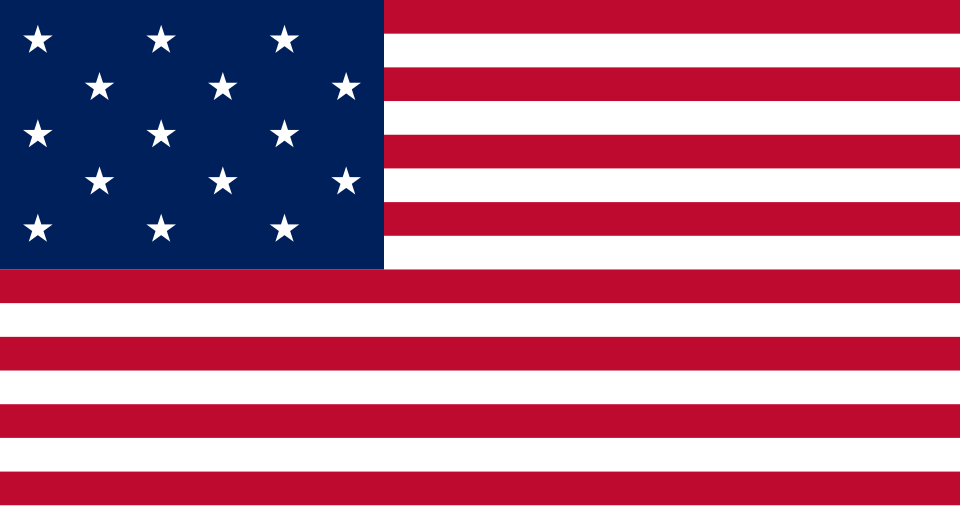

Historic U.S. flags are often dated by the number of stars in the blue union. That count is a useful clue, but it does not always equal the number of states on the day a photograph was taken. For more than two centuries, the flag has followed a legal process that often delayed a new star until Independence Day.
This page is a complete star-count reference rather than another overview of the national flag’s colors or meaning. For the general history, symbolism and federal proportions, see the main American flag guide or our shorter 1777–1960 flag-history article.
Find the number of stars on a U.S. flag in any year
Enter a year to see which official star-count version was in use on July 4 of that year. For dates before 1818, the display follows the official flag versions authorized by Congress. This is a reference tool, not a way to establish the manufacturing date of any particular historic flag.
The lookup uses the count in force on July 4, not necessarily the date a new state was admitted. The full table below remains available even without JavaScript.
Complete chart: U.S. flag stars by year, 1777–2026
The table lists every successive official star-count version and the state admissions responsible for its introduction. Except for the opening periods, a new count began on July 4 of the year shown. The star count skipped some numbers when multiple states entered before the same Fourth of July.
| Years used | Stars | Stripes | Newly represented state(s) | Illustration |
|---|---|---|---|---|
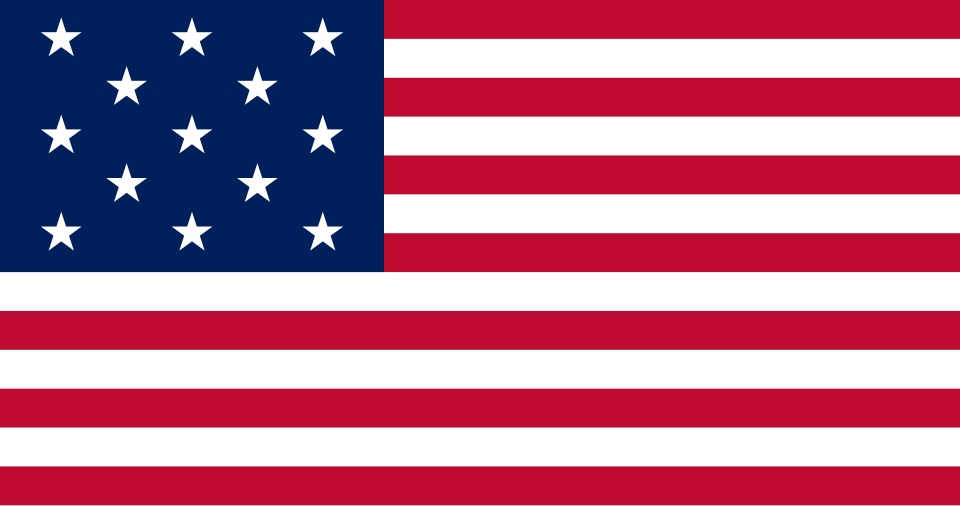
| Jun 14, 1777 – Apr 30, 1795 | 13 | 13 | Original thirteen states (original group) | See picture ↓ |
| May 1, 1795 – Jul 3, 1818 | 15 | 15 | Vermont; Kentucky | See picture ↓ |
| Jul 4, 1818 – Jul 3, 1819 | 20 | 13 | Tennessee; Ohio; Louisiana; Indiana; Mississippi | See picture ↓ |
| Jul 4, 1819 – Jul 3, 1820 | 21 | 13 | Illinois | — |
| Jul 4, 1820 – Jul 3, 1822 | 23 | 13 | Alabama; Maine | — |
| Jul 4, 1822 – Jul 3, 1836 | 24 | 13 | Missouri | — |
| Jul 4, 1836 – Jul 3, 1837 | 25 | 13 | Arkansas | — |
| Jul 4, 1837 – Jul 3, 1845 | 26 | 13 | Michigan | — |
| Jul 4, 1845 – Jul 3, 1846 | 27 | 13 | Florida | — |
| Jul 4, 1846 – Jul 3, 1847 | 28 | 13 | Texas | — |
| Jul 4, 1847 – Jul 3, 1848 | 29 | 13 | Iowa | — |
| Jul 4, 1848 – Jul 3, 1851 | 30 | 13 | Wisconsin | — |
| Jul 4, 1851 – Jul 3, 1858 | 31 | 13 | California | — |
| Jul 4, 1858 – Jul 3, 1859 | 32 | 13 | Minnesota | — |
| Jul 4, 1859 – Jul 3, 1861 | 33 | 13 | Oregon | — |
| Jul 4, 1861 – Jul 3, 1863 | 34 | 13 | Kansas | — |
| Jul 4, 1863 – Jul 3, 1865 | 35 | 13 | West Virginia | — |
| Jul 4, 1865 – Jul 3, 1867 | 36 | 13 | Nevada | — |
| Jul 4, 1867 – Jul 3, 1877 | 37 | 13 | Nebraska | — |
| Jul 4, 1877 – Jul 3, 1890 | 38 | 13 | Colorado | — |
| Jul 4, 1890 – Jul 3, 1891 | 43 | 13 | North Dakota; South Dakota; Montana; Washington; Idaho | — |
| Jul 4, 1891 – Jul 3, 1896 | 44 | 13 | Wyoming | — |
| Jul 4, 1896 – Jul 3, 1908 | 45 | 13 | Utah | — |
| Jul 4, 1908 – Jul 3, 1912 | 46 | 13 | Oklahoma | — |
| Jul 4, 1912 – Jul 3, 1959 | 48 | 13 | New Mexico; Arizona | See picture ↓ |
| Jul 4, 1959 – Jul 3, 1960 | 49 | 13 | Alaska | See picture ↓ |
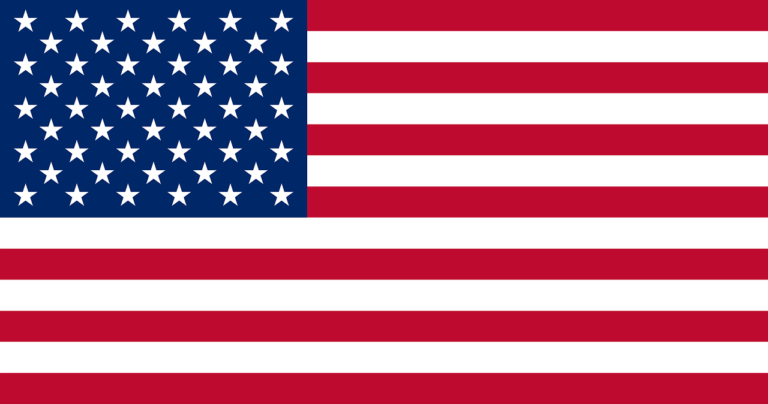
| Jul 4, 1960 – present | 50 | 13 | Hawaii | See picture ↓ |
Source: Smithsonian Institution, “Facts about the United States Flag,” cross-checked with the federal star-addition rule. Ranges show official star-count periods, not dates of individual flag manufacturing or the full list of star arrangements. The 1795 flag began under the 1794 Flag Act; from 1818 onward, new counts begin on July 4.
Notice that the list has no official 14-, 22-, 39-, 40-, 41-, 42- or 47-star period. A collector may encounter a surviving flag with one of these counts, but that alone does not make it a version mandated by federal law. These differences are important when researching antiques, Civil War memorabilia or museum collections.
Pictures of six important historical U.S. flags
These six illustrations show how the star field developed. The blue union and red-and-white stripes form a recognizable visual family, but the number of stripes is not always identical: the 1795–1818 flag has fifteen. Star placement also varied widely before 1912, so a historic photograph need not match one modern reconstruction pixel for pixel.
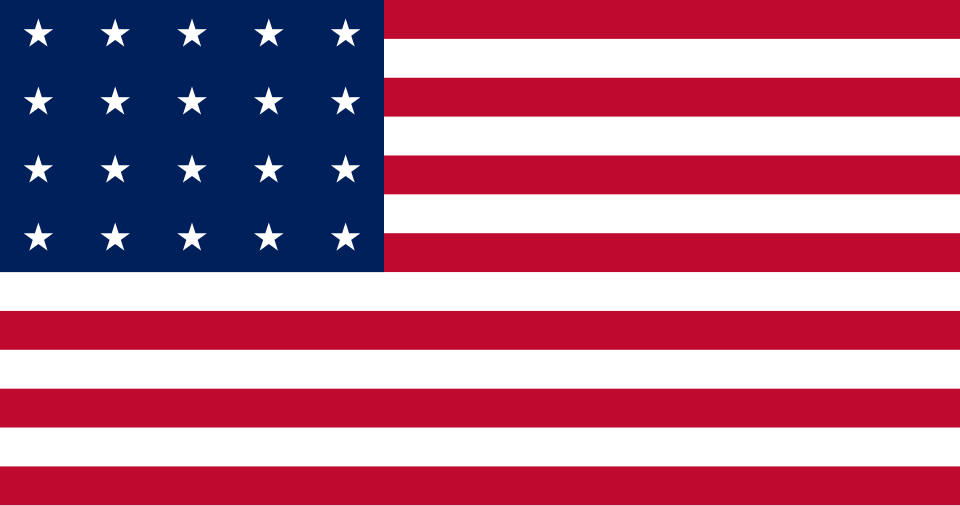
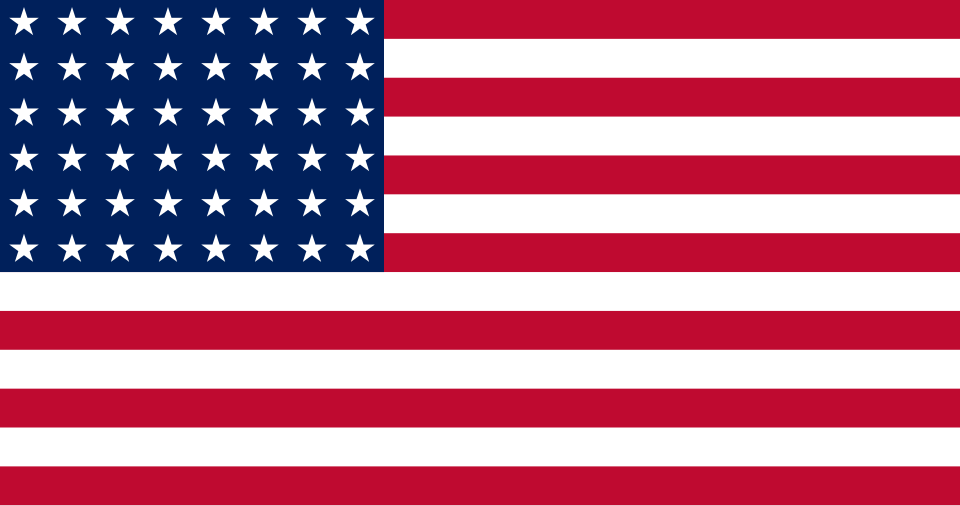
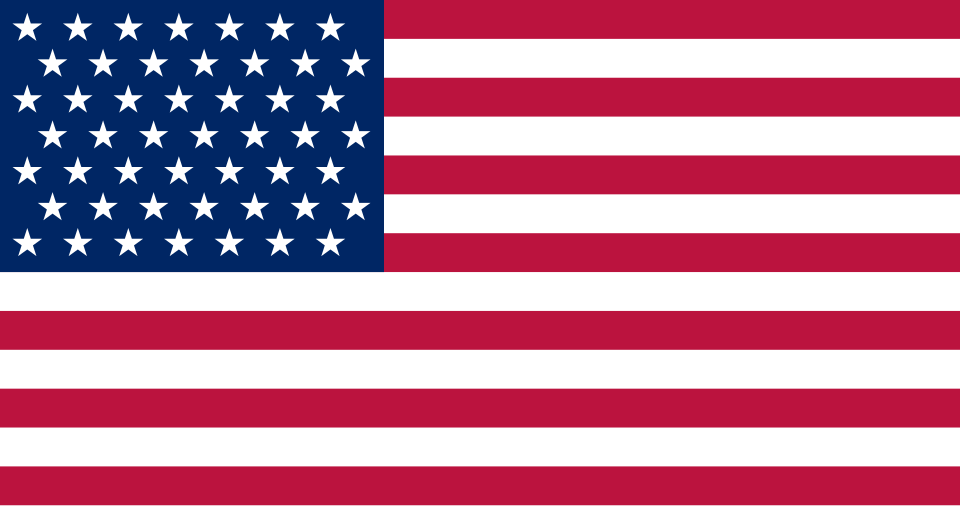
The illustrations were imported into the FlagExplorers media library from public-domain Wikimedia Commons files. They represent the specified star counts and visually informative layouts. The exact 1777, 1795 and 1818 star patterns were not prescribed as one mandatory arrangement, so treat those images as examples.
How the flag changed: six major turning points
1777 — the first Stars and Stripes
On June 14, 1777, the Continental Congress called for thirteen alternating red and white stripes and thirteen white stars on blue. It did not set a single star layout. This is why different historic or reconstructed thirteen-star flags may display stars in circles, rows or other geometric arrangements. The thirteen symbolized the states originating from the colonies fighting for independence.
The familiar story that Betsy Ross designed the first national flag is part of American tradition, but the 1777 resolution does not name a designer and surviving documentary evidence is insufficient to assign that role conclusively. A careful timeline distinguishes the congressional record from later recollections.
1795 — fifteen stars and fifteen stripes
Vermont joined the Union in 1791 and Kentucky in 1792. Congress authorized a design with fifteen stars and, temporarily, fifteen stripes. This was the flag carried into the War of 1812 era, including the famous large banner at Fort McHenry in Baltimore.
Mary Pickersgill made the 1813 garrison flag now preserved by the Smithsonian, which inspired Francis Scott Key in 1814. It originally had fifteen stars, although one star and portions of its fabric were later removed as keepsakes. Our illustration is a reconstructed flag, not a photograph of that surviving artifact.
1818 — thirteen stripes become permanent
By 1818, five more states had joined since the fifteen-star flag was introduced: Tennessee, Ohio, Louisiana, Indiana and Mississippi. Congress faced a practical problem. Adding a new stripe for every state would quickly make the banner complicated and change its proportions.
The Flag Act of April 4, 1818 settled the pattern: thirteen stripes for the original colonies, while stars represent the growing number of states. From July 4, 1818, the official flag displayed twenty stars and thirteen stripes. New state admissions would add stars on the next July 4, a principle carried into today’s federal law.
1912 — the 48-star pattern is standardized
New Mexico and Arizona became states in January and February 1912. By the Fourth of July, the official count rose from 46 to 48. President William Howard Taft’s June 24, 1912 executive order standardized proportions and placed the stars in six horizontal rows of eight. Earlier flagmakers had used many creative star layouts without a uniform federal standard.
The 48-star flag flew through the First and Second World Wars and remained official until July 3, 1959. Its forty-seven years of service made it the longest-used star-count design until the 50-star version eventually surpassed that record.
1959 — Alaska brings the 49th star
Alaska became a state on January 3, 1959. Its new star appeared on the flag on July 4, 1959, not the day of admission. The 49-star union used seven staggered rows of seven stars, established by presidential order. Because Hawaii entered the Union the same year, this design remained official for just twelve months.
Historic photographs from the middle of 1959 therefore require attention to dates. An official flag still had 48 stars in the first half of the year, even though Alaska had already been admitted. After July 4 it had 49. The star count does not always change on the exact day the number of states changes.
1960 — Hawaii and the modern 50-star flag
Hawaii became the fiftieth state on August 21, 1959. Federal rules made the new 50-star flag effective on July 4, 1960. Its star field has nine staggered horizontal rows: five rows of six stars interleaved with four rows of five. The flag has continued unchanged since 1960 and, by 2026, is the longest-serving star-count version in U.S. history.
The modern flag still has thirteen stripes. A proposed 51- or 52-star design can be an interesting piece of art, but no new star becomes official merely because statehood is debated. Only admission of a new state would activate the legal process.
Why some U.S. star counts were skipped
Congress did not issue a flag update after every individual state joined. In the 1790s the rules were changed by statute; from 1818 onward, a new star count took effect on the same day each year: Independence Day. This produced sudden jumps rather than a perfect sequence of 13, 14, 15, 16 and so on.
The 47-star count was also skipped. Oklahoma had brought the flag to 46 stars in 1908. New Mexico and Arizona both became states before July 4, 1912, so the next official version had 48 stars. In all these cases the absence of an official count follows the timing of state admissions rather than an error in the chronology.
Unofficial examples with unusual counts sometimes survive. A maker might have predicted a star count, anticipated a change or designed a ceremonial banner. A historic 42-star flag can be an authentic artifact without representing a formal 42-star national design. When researching one, date the actual object and consult archival documentation rather than assuming its stars alone establish legality.
How many stars were on the U.S. flag during the Civil War?
The national flag was not reduced to represent only the states remaining loyal to the Union during the American Civil War. The United States continued to count the seceded states in its flag. The official version had 34 stars beginning on July 4, 1861, following Kansas’s admission that January.
When West Virginia became a new state in June 1863, the count rose to 35 on July 4, 1863. Nevada joined in October 1864, so a 36-star national flag took effect on July 4, 1865, after the war’s major fighting had ended. Nebraska then brought the flag to 37 stars in 1867.
Thus a Civil War-era photograph might show a 33- or 34-star flag depending on its exact date, and later scenes can show 35 stars. The pattern and arrangement are less reliable than the known date because makers used different star layouts before 1912.
Were the early star patterns official?
For most of the flag’s history, the law required a number of stars but did not specify precisely where each star should go. American flags appeared with stars forming circles, concentric rings, rows, diamonds and large star-shaped clusters. Two authentic banners could have different arrangements while sharing the same official number of stars and stripes.
The federal government began standardizing layout and proportions more fully with the 1912 executive order for the 48-star flag. President Eisenhower later specified the arrangement for both the 49-star and 50-star versions in 1959. When an educational chart draws an earlier flag using tidy rows, it is showing one representative arrangement, not the only permissible historical pattern.
For a practical guide to the modern flag’s dimensions, see how to draw the U.S. flag. For why the stars and stripes represent different historical groups, see why the U.S. flag has 50 stars and 13 stripes.
Frequently asked questions
Did the U.S. flag always have 13 stripes?
No. The 1795 design had fifteen stripes as well as fifteen stars. Congress restored thirteen stripes in 1818 and made the star count increase when states were admitted.
Did the U.S. flag ever have 14 stars?
Not as an official national star-count version. Vermont became the 14th state in 1791, but Congress did not change the flag until the act that provided fifteen stars and stripes after Kentucky also joined.
Why was there never an official 22-star flag?
Alabama and Maine had both entered the Union before July 4, 1820, so the official count increased from 21 straight to 23.
Was there an official 42-star flag?
No. Five states entered before July 4, 1890, and the recognized national count jumped from 38 stars to 43. Manufacturers sometimes made unofficial counts or proposed patterns, but those are not an official 42-star period.
When was the 48-star U.S. flag used?
From July 4, 1912 through July 3, 1959. It represented New Mexico and Arizona alongside the other 46 states and remained in official use for 47 years.
How long was the 49-star American flag official?
One year: July 4, 1959 to July 3, 1960. It followed Alaska’s statehood and was replaced by the 50-star flag after Hawaii’s admission.
Can you identify the exact year by counting the stars?
Usually you can narrow a flag to an official star-count period, but many counts remained in use for several years. A 48-star flag, for example, does not by itself tell you whether it was manufactured in 1914 or 1945.
Did the United States remove stars during the Civil War?
No. The national flag kept representing all states; its star count increased as new states such as Kansas, West Virginia and Nevada entered the Union.
Is each star assigned to a specific state?
No. Each star represents a state collectively, but individual positions on the modern flag do not officially designate particular states.
When will a 51-star flag become official?
Only if an additional state is admitted to the Union. Under 4 U.S.C. §2, an additional star would take effect on the July 4 after admission. No such change has been enacted for the present flag.
The first thirteen-star flag did not have one legally fixed arrangement. Compare the Grand Union, Betsy Ross-style and other early American flags to see how star layouts and historical traditions differ.
For an exact breakdown of the Civil War years, including Fort Sumter, Gettysburg and Appomattox, read our 33-, 34-, 35- and 36-star American Civil War flag comparison. It explains why star counts and state admissions did not always match on the same date.
Our Fort McHenry’s 15-star, 15-stripe flag reference examines the original Star-Spangled Banner made in 1813 and explains why the surviving museum artifact is missing one star.
By the time Apollo 11 landed in July 1969, the official U.S. flag already had fifty stars. Explore our six American flags on the Moon comparison to see how the modern national design was planted during Apollo missions from 1969 to 1972.
Smithsonian Institution — Facts about the United States Flag (complete star-count chronology and laws)
U.S. House, Office of the Law Revision Counsel — 4 U.S.C. §2, addition of stars
National Museum of American History — Star-Spangled Banner artifact description
National Flag Foundation — History and evolution
Historical illustrations (13-, 15-, 20-, 48- and 49-star examples) from Wikimedia Commons public-domain files, saved locally in the FlagExplorers media library. Source files: 13-star, 15-star, 20-star, 48-star and 49-star. The contemporary 50-star illustration comes from the FlagExplorers media library. Historical and legal facts reviewed November 2026.