U.S. State Flags That Look Alike: 10 Pairs Compared
See ten side-by-side examples of similar U.S. state flags. Learn the fastest ways to tell them apart, with pictures, symbolism and links to all twenty state guides.
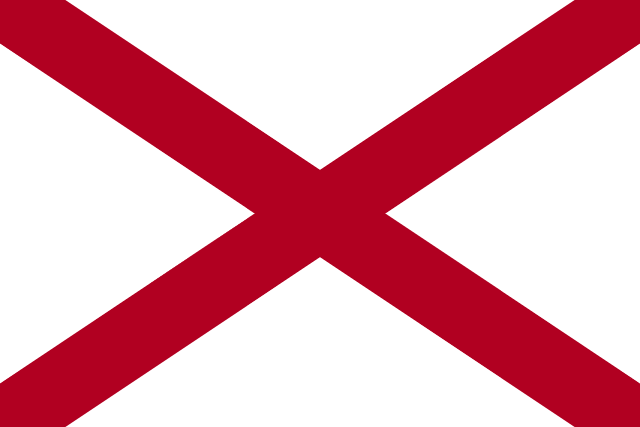 AlabamaExplore the Alabama flag →
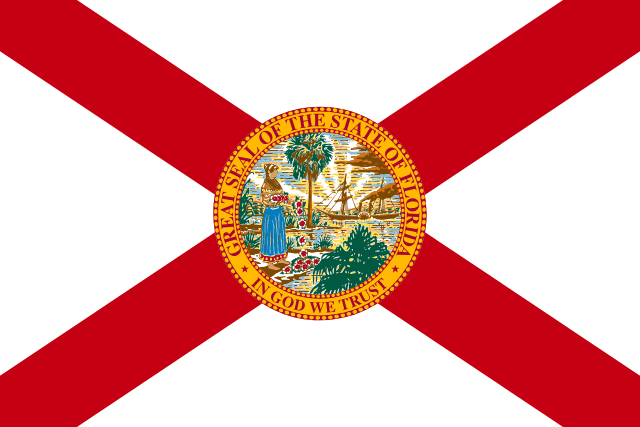 FloridaExplore the Florida flag →
Some U.S. state flags are easy to recognize immediately: Ohio has a swallowtail outline, Maryland has quartered heraldic patterns and California features a large bear. Others become confusing when printed as tiny icons or displayed in a chart of all fifty states. Shared colors, red crosses, blue fields and detailed seals can hide meaningful differences.
This guide compares ten pairs of current state flags side by side. Instead of asking you to memorize fifty images, it focuses on a simple detail you can spot in seconds: the color order, the position of a state name, the number of stars or the animal supporting a shield.
These are teaching comparisons, not claims that each pair has a shared designer or identical history. A few are genuinely close in appearance; others share a design category but are easy to distinguish when enlarged. Every pair links to the relevant detailed state guides, and our complete 50-state flag gallery is available if you want to compare the rest.
At a glance: what separates each pair?
This table is designed as a quick reference. Choose a pair to jump directly to its photographs and deeper explanation, or work through the images in order if you’re learning the flags for the first time.
| Look-alike flags | Fastest visual test |
|---|---|
| Texas / North Carolina | White above red = Texas. Red above white plus N and C = North Carolina. |
| Alabama / Florida | Red X alone = Alabama. Red X and circular seal = Florida. |
| Idaho / Montana | Red name ribbon below = Idaho. Large gold state name above = Montana. |
| Arkansas / Delaware | Red and star-lined diamond = Arkansas. Blue, buff diamond and 1787 date = Delaware. |
| Kansas / Wisconsin | Sunflower on top = Kansas. WISCONSIN on top and 1848 below = Wisconsin. |
| New York / Pennsylvania | Two women = New York. Two black horses = Pennsylvania. |
| Iowa / North Dakota | Tricolor with broad white middle = Iowa. Dark blue and 13 stars above eagle = North Dakota. |
| Alaska / Nevada | Eight gold stars in a constellation = Alaska. One silver star with sagebrush = Nevada. |
| Maine / Vermont | Moose with farmer and sailor = Maine. Cow, mountains and deer crest = Vermont. |
| Nebraska / South Dakota | Seal alone = Nebraska. Sunburst around seal = South Dakota. |
1. Texas vs. North Carolina
Why they are compared: Both flags place a white star against blue at the hoist and use red and white horizontal stripes to the right. A quick look at a small flag thumbnail can conceal their different stripe order and details.
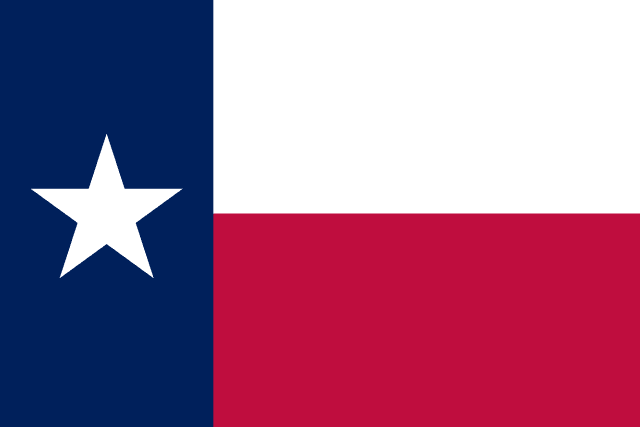 Texas
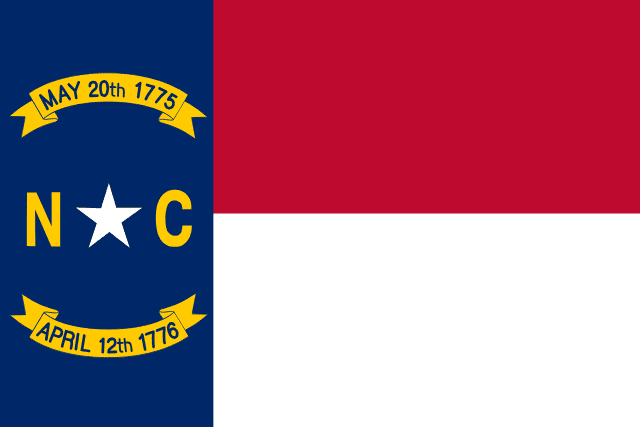 North CarolinaExplore the North Carolina flag →
How to tell them apart
Texas has a full-height vertical blue stripe and a white upper stripe above a red lower stripe. North Carolina puts red above white and adds gold N and C letters and dated scrolls around the star. Its blue union contains more information than the Lone Star’s.
What the designs mean
Texas adopted its Lone Star design in 1839 as the Republic of Texas. North Carolina’s current design dates to 1885; its dates commemorate the Halifax Resolves of April 12, 1776 and the claimed Mecklenburg Declaration of May 20, 1775, whose authenticity historians dispute.
2. Alabama vs. Florida
Why they are compared: Alabama and Florida are classic look-alikes because both place a red diagonal X, or saltire, on a white background. Their outlines are so similar that the distinguishing detail must be found in the very center.
AlabamaExplore the Alabama flag →FloridaExplore the Florida flag →How to tell them apart
Alabama’s crimson bands meet without a separate emblem. Florida’s flag adds its large, round, multicolored state seal in front of the red X; the bands reach the seal’s edge. A flag showing only the crossing red bands is Alabama, not Florida.
What the designs mean
Alabama adopted its saltire flag in 1895. Florida added diagonal bars to its earlier white flag with a state seal in 1900, partly because the plain white background could resemble a surrender banner when hanging still. The Florida seal itself was separately refined in later years.
3. Idaho vs. Montana
Why they are compared: Both flags show crowded round state emblems on navy blue. The mountainous and industrial imagery in their seals can become difficult to recognize at small sizes, so reading the large text outside the seal is much faster.
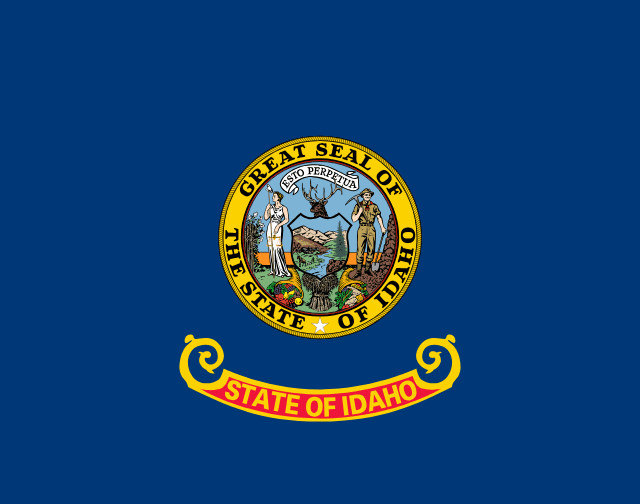 Idaho
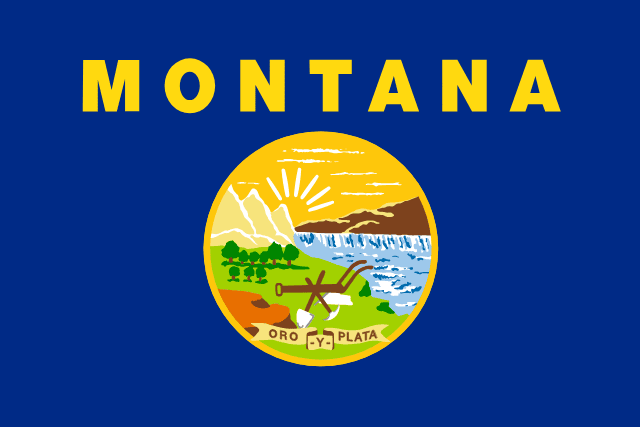 Montana
How to tell them apart
Idaho has a separate red banner below the seal reading STATE OF IDAHO. Montana places MONTANA above the seal in large gold block letters and does not have Idaho’s red name ribbon. Montana’s seal includes the words ORO Y PLATA, Spanish for gold and silver.
What the designs mean
Both flags grew out of military banners used around the turn of the twentieth century. Montana adopted its flag in 1905 and Idaho in 1907. Montana added its large name in 1981 and specified lettering in 1985 to improve recognition among blue-field state flags.
4. Arkansas vs. Delaware
Why they are compared: Arkansas and Delaware both have a prominent central diamond, although the resemblance ends when their colors and symbols are examined closely. They make a useful classroom exercise about looking beyond a shared geometric shape.
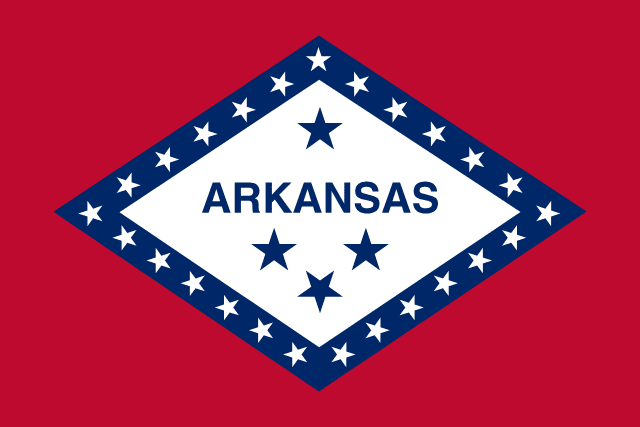 ArkansasExplore the Arkansas flag →
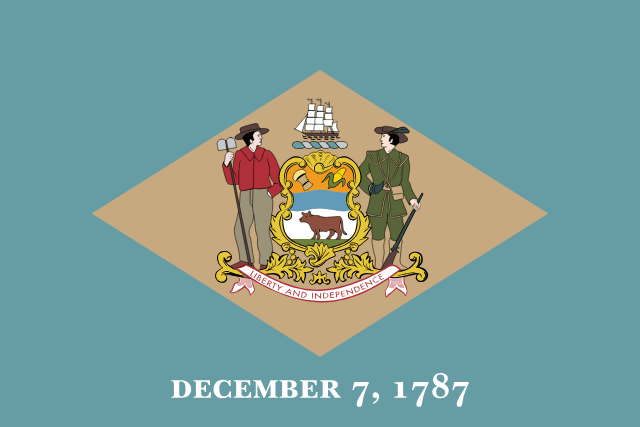 DelawareExplore the Delaware flag →
How to tell them apart
Arkansas has a red background and a white diamond with a blue border carrying 25 white stars. The diamond contains ARKANSAS and four more blue stars. Delaware uses a blue background and a buff-colored diamond with its coat of arms; DECEMBER 7, 1787 is printed underneath.
What the designs mean
Delaware’s date marks its ratification of the U.S. Constitution as the first state. Arkansas’s 25 border stars mark admission as the 25th state. Its upper interior blue star officially commemorates the Confederacy, a historical association that should not be omitted in an explanation.
5. Kansas vs. Wisconsin
Why they are compared: Both designs are navy blue with a multicolored central emblem and large state-name lettering. The names appear in opposite places, which makes them an easy pair to identify without decoding every part of the arms.
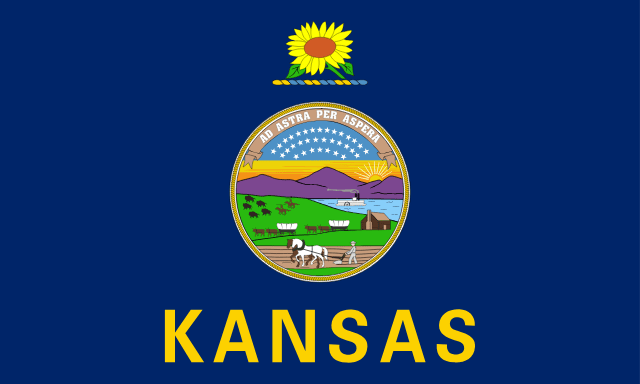 Kansas
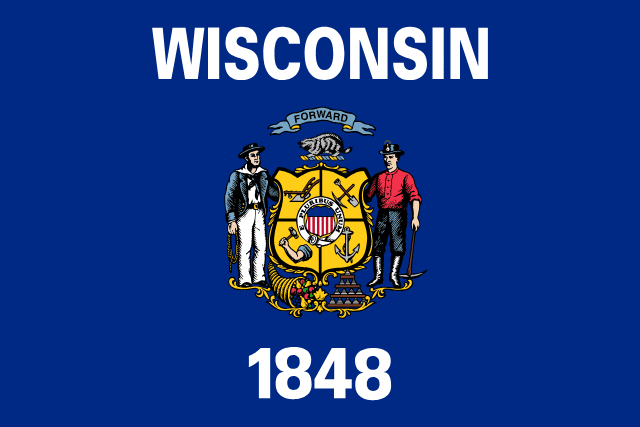 WisconsinExplore the Wisconsin flag →
How to tell them apart
Kansas has a sunflower above its round seal and KANSAS below. Wisconsin displays WISCONSIN above its heraldic coat of arms and the year 1848 below. Wisconsin’s crest includes a badger and its arms include a miner and sailor; the Kansas seal illustrates historic life on the plains.
What the designs mean
Kansas adopted its basic flag in 1927, adding the state name in 1961. Wisconsin’s coat-of-arms flag dates to 1913; the large name and 1848 lettering were added in 1979. In both cases, the added text made the flag more recognizable among similar blue designs.
6. New York vs. Pennsylvania
Why they are compared: New York and Pennsylvania share dark-blue backgrounds and heraldic devices with figures standing to either side of central shields. In a small image, those supporters may be mistaken for one another.
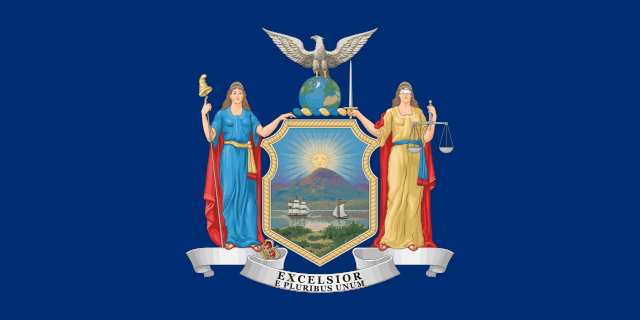 New YorkExplore the New York flag →
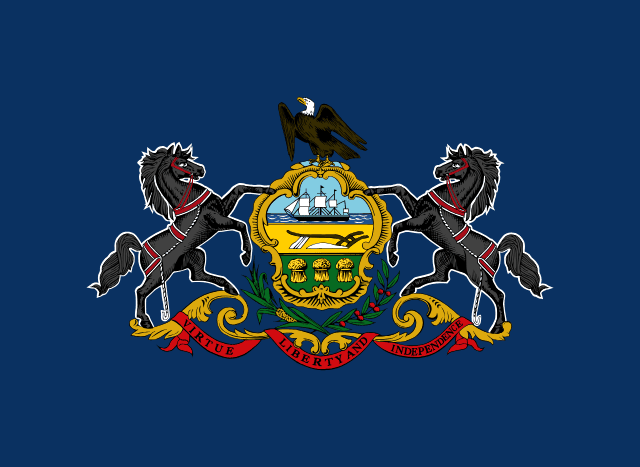 PennsylvaniaExplore the Pennsylvania flag →
How to tell them apart
New York uses two human figures, Liberty and Justice, flanking a river-and-mountain shield; an eagle stands on a globe above. Pennsylvania has two black horses supporting a shield that depicts a ship, plow and wheat sheaves. Its eagle perches directly above the arms.
What the designs mean
New York added E PLURIBUS UNUM to the coat of arms in 2020 alongside EXCELSIOR, so authentic older images can have different motto lettering. Pennsylvania’s ribbon instead reads VIRTUE, LIBERTY AND INDEPENDENCE. The inscriptions are useful, but the supporters remain the quickest visual clue.
7. Iowa vs. North Dakota
Why they are compared: Both flags prominently feature an American bald eagle with a streamer or banner, but they come from different design traditions. Looking only at the bird hides the easiest distinction: the overall background.
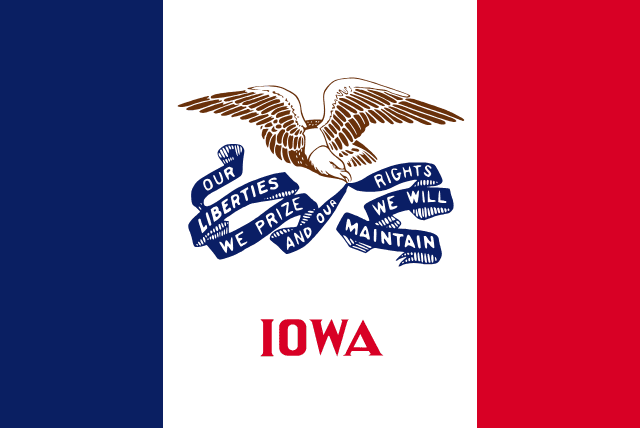 Iowa
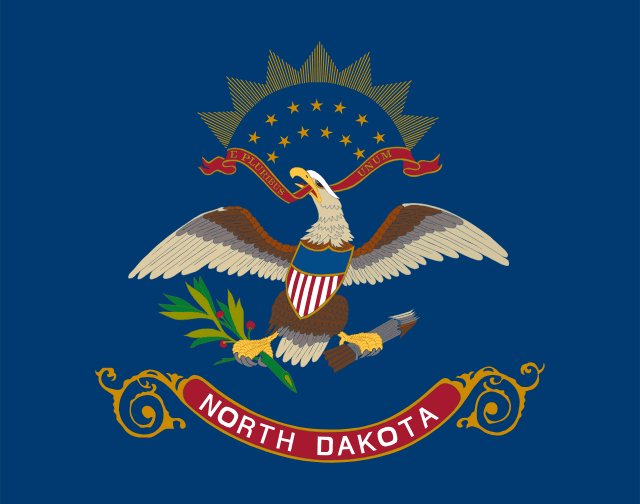 North DakotaExplore the North Dakota flag →
How to tell them apart
Iowa has vertical blue, broad white and red sections, with the eagle centered on the white panel and IOWA in red below. North Dakota uses a full dark-blue field, thirteen stars above its eagle and a separate red NORTH DAKOTA scroll below; the eagle also carries arrows and an olive branch.
What the designs mean
Iowa’s design by Dixie Cornell Gebhardt was adopted in 1921 and recalls French tricolor colors. North Dakota’s flag, adopted in 1911, adapts an infantry banner from the Spanish-American War era. The stars and stripes on North Dakota’s eagle refer to the original thirteen states.
8. Alaska vs. Nevada
Why they are compared: Neither is a detailed state-seal banner. Both use blue with star imagery, making them useful examples of how to count stars and check their placement. They are similar in their restrained layout, but their emblems have unrelated meanings.
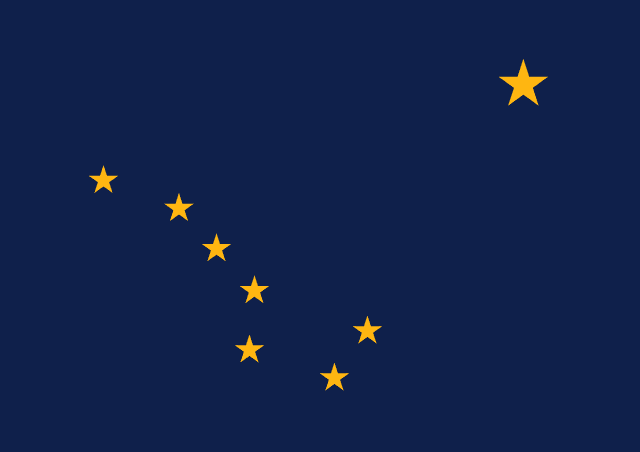 Alaska
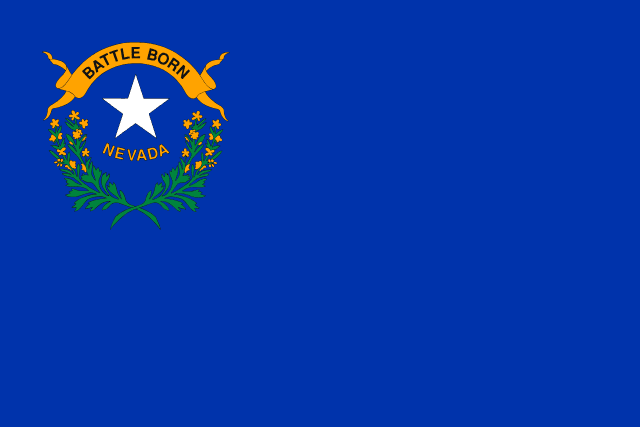 Nevada
How to tell them apart
Alaska uses eight gold stars: seven tracing the Big Dipper and an eighth for Polaris. Nevada displays one silver star in a small emblem in the upper-left quarter, with sagebrush and the BATTLE BORN inscription. Nevada’s large empty blue area makes the corner emblem especially noticeable.
What the designs mean
Alaska’s Benny Benson design was adopted in 1927 during its territorial period. Nevada chose the basis of its current flag in 1929, later clarifying the position of the word NEVADA in 1991. The star represents mining associations in Nevada rather than a constellation.
9. Maine vs. Vermont
Why they are compared: Both current state flags use blue fields and coats of arms containing natural features. Pine trees, animal imagery and historical heraldry create a family resemblance, particularly in simplified clip-art versions.
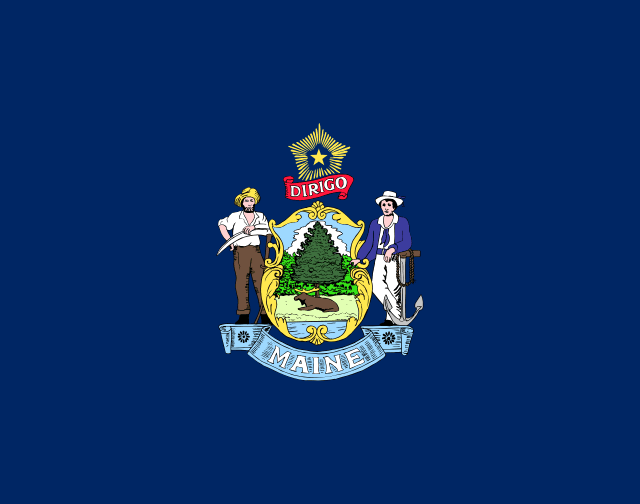 Maine
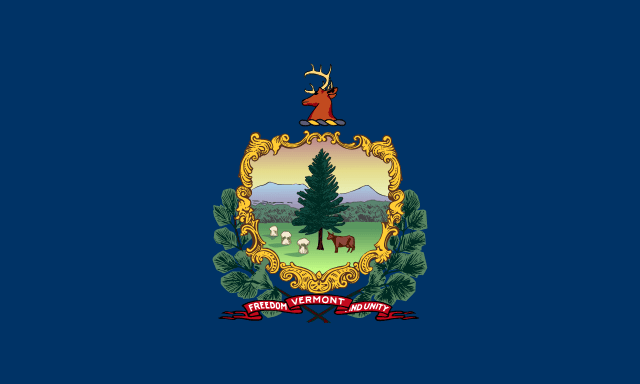 Vermont
How to tell them apart
Maine’s shield features a moose beneath a pine tree, supported by a farmer and a sailor, with a star above. Vermont’s coat of arms shows a cow, pine tree and mountain scene, topped with a deer-head crest; its ribbon reads FREEDOM AND UNITY. The supporters and animals are different.
What the designs mean
Maine voters rejected replacing the current blue coat-of-arms design with a pine-tree flag in November 2024. Vermont has used its current blue flag since 1923; the separate Green Mountain Boys banner is historical rather than today’s official state flag.
10. Nebraska vs. South Dakota
Why they are compared: In a large flag chart, these can both appear as a circular multicolored or golden emblem against blue. The central artwork includes older industries and transportation, so identifying the surrounding treatment is a better first step.
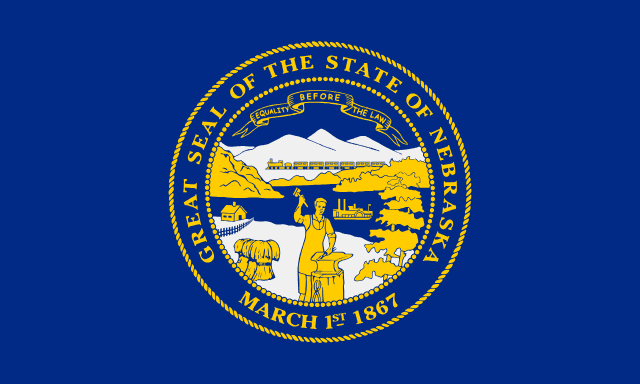 NebraskaExplore the Nebraska flag →
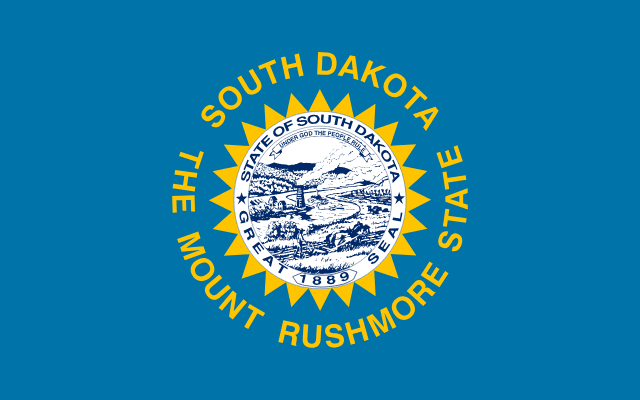 South DakotaExplore the South Dakota flag →
How to tell them apart
Nebraska uses a dark-blue field with a gold-and-silver seal and little additional decoration. South Dakota uses a lighter sky-blue background, places the seal inside a golden sunburst, and adds SOUTH DAKOTA and THE MOUNT RUSHMORE STATE around it.
What the designs mean
Nebraska adopted its flag in 1925; the 1867 shown on the seal marks statehood. South Dakota combined separate front-and-reverse elements into its current single design in 1963, then replaced SUNSHINE STATE with THE MOUNT RUSHMORE STATE in 1992.
Try identifying flags without reading their names
There is a simple way to turn the comparisons into a classroom or family activity. Hide the state names under each picture, look at the pair for five seconds, and say one exact visual difference before revealing either label. This tests observation rather than rote recognition.
Begin with Alabama and Florida, then Texas and North Carolina. Move to Idaho and Montana once you’re comfortable identifying a ribbon above or below a central seal. Finish with Kansas, Wisconsin and the heraldic states, where it helps to inspect supporters, dates and the placement of large lettering.
Challenge 1: Which flag has a red X with no center seal?
Alabama. Florida has a large state seal at the intersection.
Challenge 2: Which flag has the year 1848 beneath its arms?
Wisconsin. Kansas has a sunflower above its state seal.
Challenge 3: Which flag has a buff diamond inside a blue background?
Delaware. Arkansas has a white diamond with a star-lined blue border on a red field.
Challenge 4: Which flag includes a constellation?
Alaska. Its gold stars depict the Big Dipper and Polaris, unlike Nevada’s single silver star.
Challenge 5: Which flag is surrounded by a golden sunburst?
South Dakota. Nebraska displays a smaller gold-and-silver seal on dark blue without the sun rays.
Once you can identify the ten pairs, try our full U.S. state flags quiz or use the printable flags worksheet and answer key. Those activities cover all fifty states, including flags with designs that are much more distinctive than the pairs above.
Why do so many U.S. state flags look similar?
A large number of state flags were adopted in the late nineteenth and early twentieth centuries, when legislatures often selected existing state seals as the central device. A dark-blue military-style field offered a familiar background. The result was recognizable in an official setting but often hard to distinguish when dozens of flags appeared together.
Later changes sometimes made those flags easier to identify without discarding their seals. Montana, Kansas and Wisconsin added large state names; other states kept highly detailed imagery but introduced more prominent wording or revised seals. The growing popularity of simpler geometric designs explains why redesign debates continue.
For a separate review of which proposals became official flags and which did not, see our U.S. state flag redesign timeline. Historical banners should not be mixed into a gallery of current flags unless the illustration is clearly labeled.
Frequently asked questions
Which state flags are most commonly confused?
Alabama and Florida have closely similar red diagonal crosses; Texas and North Carolina share a star in a blue hoist area and red-and-white bands. They are particularly useful pairs for a quick identification challenge.
Why are so many state flags blue with seals?
A wave of state-flag adoptions in the late nineteenth and early twentieth centuries often reused established state seals on dark-blue military-style banners. This made official symbols recognizable but left many flags visually similar at small scale.
Are all of these flags official in 2026?
The comparisons use the current state designs described in the linked state guides. Historical proposals, including Maine’s rejected 2024 pine-tree referendum, are identified as historical or proposed rather than substituted for the present flag.
How should a school worksheet use these comparisons?
Show both flags at the same size, hide the labels, ask pupils to name a distinguishing feature, then reveal each state’s name and explanation. Avoid stretching images or hiding small emblems with decorative effects.
Can I use these flags for a quiz or classroom poster?
The flag designs are public symbols, but individual digital illustrations may have licensing conditions. For a publication or commercial product, check the image source and applicable license, and use high-resolution or vector artwork where possible.
Texas State Library — State Flag Description
North Carolina General Statutes §144-1
Florida Department of State — State Flag
Arkansas Secretary of State — History of the Flag
Delaware Government — State Symbols and Flag
Montana Secretary of State — State Flag
State Historical Society of North Dakota — Flag
Nevada Revised Statutes §235.020
NCSL — Flags Across America (updated 2026)
Flag illustrations are drawn from the FlagExplorers media library, using vector-derived flag artwork previously imported from Flagpedia/FlagCDN. For the exact legal forms and history, refer to the official state sources above and to the linked state guides. Reviewed November 2026.