Dominica Coat of Arms & National Symbols: Meaning Explained
Explore Dominica’s coat of arms, including the two Sisserou parrots, coconut and banana plants, crapaud, Carib canoe, lion crest and the motto ‘After God the Earth.’
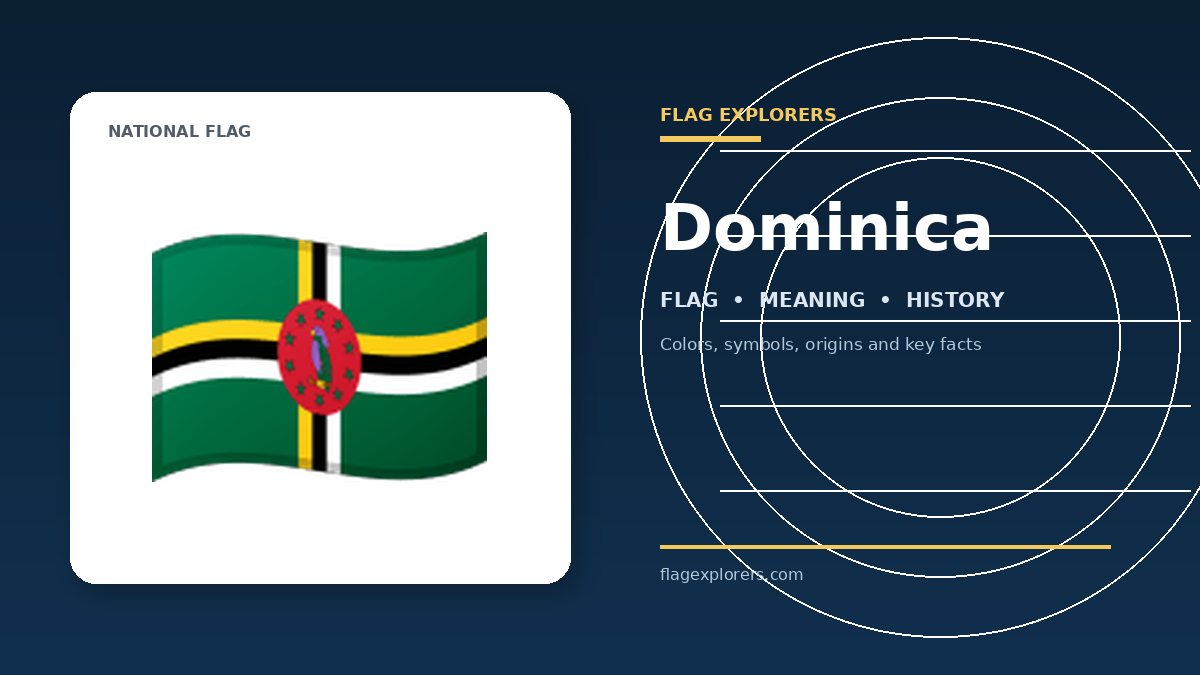
What is on the Dominica coat of arms?
The coat of arms combines a quartered shield, a gold lion crest, two Sisserou parrots and the motto “Après Bondie C’est La Ter”—translated by the government as “After God the Earth.”
What do the four quarters represent?
Why are there two Sisserou parrots?
Two Sisserou parrots serve as supporters on either side of the shield. This creates a direct visual connection between the national coat of arms and the national flag, where a single Sisserou appears at the center.
What does “Après Bondie C’est La Ter” mean?
The government translates the motto as “After God the Earth.” It emphasizes the importance of land and soil to Dominica, particularly in a society historically shaped by agriculture.
How is the coat of arms connected to the flag?
The flag’s Sisserou parrot comes from the coat of arms. Government descriptions explicitly say this links the bird on the flag with the official seal of the country.
The two symbols also share wider themes: lush land, agriculture, native wildlife and the national relationship with the island’s natural environment.
Dominica coat of arms FAQ
What animals are on the coat of arms?
Two Sisserou parrots and the crapaud/mountain chicken frog.
What does the motto mean?
“After God the Earth.”
Why is there a canoe?
It appears in the third quarter and reflects Dominica’s Caribbean setting and Indigenous heritage.
Is the same parrot on the flag?
Yes. The national flag’s central parrot comes from the coat of arms.
Government of Dominica — Coat of Arms
Government of Dominica — National Symbols