Manitoba Flag: Red Ensign, Bison & Union Jack Meaning
Why does Manitoba’s flag show a bison and the Union Jack? Explore the red ensign, St George’s cross, 1965 royal approval and May 12, 1966 proclamation.
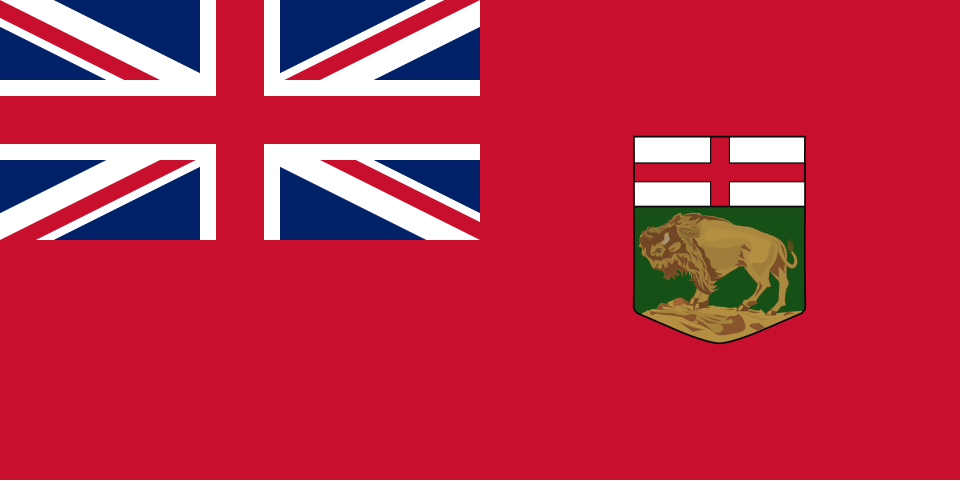
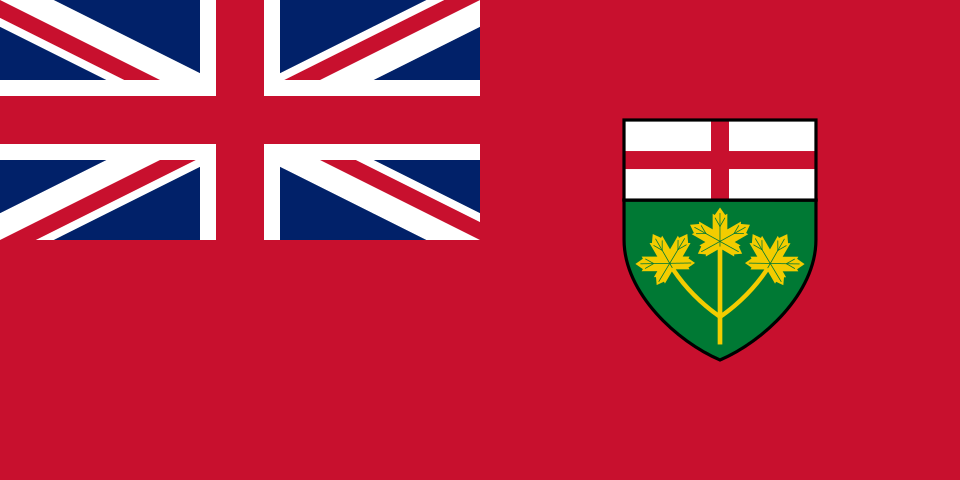
Manitoba’s provincial flag is one of Canada’s two familiar red ensign provincial banners, along with Ontario. Both retain the Union Jack and a provincial shield, but the details are distinct: Manitoba features a bison, while Ontario’s shield contains three golden maple leaves.
The Government of Manitoba’s official flag reference confirms the design and proclamation date. The Canadian Heraldic Authority explains its relationship with the earlier Canadian Red Ensign and identifies the provincial arms substituted for the old national badge.
This guide concentrates on the red ensign and the bison shield, rather than repeating the general history of the Canadian maple leaf flag. It also distinguishes the small shield on the flag from the province’s larger complete coat of arms.
Manitoba flag at a glance: red ensign and bison shield
The provincial flag has a red background, a Union Jack in the upper-left quarter, and Manitoba’s shield of arms centered on the half furthest from the flagpole. The shield has an English red cross above a prairie bison. Manitoba’s provincial government marks May 12—Manitoba Day—as the date of the official proclamation.
| Flag feature | Description |
|---|---|
| Province | Manitoba, Canada (capital Winnipeg) |
| Flag pattern | Red Ensign |
| Upper hoist | Union Jack |
| Main emblem | Provincial shield with bison |
| Shield top | Red St George cross on white |
| Lower shield | Bison standing on rock against green background |
| Royal approval | October 1965 |
| Flag proclamation | 12 May 1966 |
| Related banner | Pre-1965 Canadian Red Ensign |
Why is there a bison on Manitoba’s flag?
The bison is a major symbol of Manitoba’s Prairie landscape and history. On the provincial shield, a bison stands on a rock beneath a red St George cross. It reflects the importance of bison to the region’s natural and cultural heritage long before Manitoba became a Canadian province.
Plains bison were central to the lives, food systems and economies of Indigenous peoples of the Prairies, including First Nations and Métis communities. The shield’s use of an animal does not convey all that history; it is a compact heraldic representation. It should not be reduced to an idea that bison were merely a resource discovered by European settlers.
The government describes the animal standing against a green ground, with rock and landscape details. These distinguish Manitoba’s shield from those of neighboring Alberta, where a landscape of mountains and wheat appears without a bison.
To identify a small Manitoba flag, look for the stocky animal silhouette on the shield, rather than assuming every red ensign with Union Jack is Ontario’s.
What does the red St George’s cross mean?
A red upright cross on white occupies the upper section of Manitoba’s shield. It is a St George’s cross, a heraldic emblem associated with England and British colonial institutions. It is different from the modern Union Jack, which combines several crosses.
The cross was part of Manitoba’s provincial shield long before the red ensign flag was adopted. Its use reflects historical British administrative and heraldic traditions, not a statement about the religion of every resident of Manitoba today.
When drawing the shield, keep the cross within the shield’s top panel. Do not replace the Union Jack in the flag’s upper-left corner with the St George cross alone: both appear in the official flag but in different locations and with different heraldic roles.
Why is Manitoba’s flag a Red Ensign?
The Red Ensign was widely familiar in Canada before the current national maple leaf was introduced in February 1965. Its basic design combined a red field, a Union Jack canton and an identifying badge on the fly side.
Manitoba’s flag follows that format but replaces the historic Canadian national badge with Manitoba’s own shield of arms. The Canadian Heraldic Authority directly notes this link to the pre-1965 Canadian Red Ensign.
The 1965 change to Canada’s national flag created a moment when some provinces selected a regional banner that retained the older design tradition. Ontario adopted its Red Ensign flag in 1965, and Manitoba followed with royal approval in October 1965 and proclamation in May 1966.
Manitoba’s Red Ensign is therefore a present-day provincial flag, not a claim that Canada failed to adopt the maple leaf or that its national banner remains the old ensign.
1965, 1966 and 1988: which is Manitoba’s flag adoption date?
The provincial government records that Queen Elizabeth II gave approval for the Red Ensign flag in October 1965. Manitoba’s flag was officially proclaimed on May 12, 1966, celebrated as Manitoba Day.
The current government reference also explains a legal detail often omitted in summaries: the associated Act did not come into force until February 1, 1988. That does not mean the flag only began being used in 1988. The emblem had already been approved and publicly proclaimed more than two decades earlier.
The Canadian Heraldic Authority gives May 12, 1966 as the flag’s effective proclamation date. Accordingly, 1966 is the date most useful for a school flag timeline, with 1965 noted as prior royal approval and 1988 as a later statutory-commencement detail.
Distinguishing these events also avoids confusion with the older shield of arms and with Manitoba’s establishment as a province in 1870.
The flag shield vs. Manitoba’s full coat of arms
The flag shows only a shield, not the entire full provincial coat of arms. The complete coat of arms has additional elements, including a beaver, a prairie crocus, supporters and the provincial motto Gloriosus et Liber, translated “Glorious and Free.”
These are meaningful Manitoba symbols, but the flag design remains simpler: the red ensign background, Union Jack canton and centered shield with a cross and bison. An illustration placing a large beaver or owl at the fly is not the standard provincial flag.
Canada’s provinces often distinguish between a coat of arms for ceremonial or official documents and a simpler design for the flag. This pattern also appears in Alberta, where the flag shows the central landscape shield rather than all the elements of its full heraldic achievement.
Manitoba vs. Ontario, Alberta and Canada flags
Both Manitoba and Ontario have provincial Red Ensigns with Union Jack cantons. The distinction lies in the shield: Manitoba has a single bison, while Ontario has three golden maple leaves beneath a St George cross.
Alberta uses a completely blue field with a shield featuring mountain peaks, foothills and wheat. Saskatchewan uses horizontal green and gold bands with a floral emblem. The Canadian national flag uses red and white panels with one eleven-pointed maple leaf, and no Union Jack.
A comparison of these flags makes a useful lesson in Canadian geography. Not every provincial flag contains a maple leaf and not every province chose the same heraldic style. Read our Saskatchewan flag guide to compare how the neighboring Prairie province chose a much different layout in 1969.
How to draw and recognize Manitoba’s flag
Draw a wide red rectangle with a Union Jack occupying the upper quarter near the pole. In the right half, add Manitoba’s shield. Across the shield’s upper part, draw a red St George cross against white, then place a bison standing on a rock in the lower green part.
Pay attention to the animal: a bison has a large shoulder hump and horns, making it different from a deer or an ordinary domestic cow. In a small graphic, the distinctive body shape can help identify Manitoba immediately.
For a flag quiz, compare Manitoba with Ontario and ask learners to identify the bison versus three maple leaves. The common Union Jack and red background show the historical relationship, while the different badges establish each province’s identity.
Frequently asked questions
What animal is on the Manitoba flag?
A bison standing on a rock, shown on the provincial shield.
Why is there a Union Jack?
The flag preserves the historic Canadian Red Ensign layout and its British colonial heraldic connection.
What does the red cross mean?
It is a St George cross associated with English heraldry, located in the upper portion of Manitoba’s shield.
When was Manitoba’s flag adopted?
Royal approval came in October 1965 and the flag was proclaimed on May 12, 1966.
What is Manitoba Day?
May 12, the anniversary of the Manitoba Act receiving royal assent in 1870 and also the flag’s 1966 proclamation date.
Why does the province’s reference mention 1988?
The government states the related Act came into force on February 1, 1988, despite the earlier approval and proclamation.
Is Manitoba’s flag the same as Ontario’s?
No. Both are Red Ensigns, but Manitoba has a bison shield while Ontario has three golden maple leaves.
Does the flag display the entire coat of arms?
No. It displays Manitoba’s shield without the crest, supporters and motto of the full arms.
Is this Canada’s old national flag?
It resembles the earlier Canadian Red Ensign but has Manitoba’s provincial shield instead of the historic national badge.
Manitoba’s Red Ensign with a bison looks very different from the northern territorial flags of Yukon—green, white and blue with fireweed—and Nunavut, whose red inuksuk and blue North Star recall Arctic navigation.
Official sources and illustration credits
Government of Manitoba — Manitoba’s flag
Manitoba Legislature — Official provincial emblems
Canadian Heraldic Authority — Manitoba provincial flag
Canadian Heritage — Manitoba symbols
Wikimedia Commons — Flag of Manitoba
Manitoba Red Ensign artwork from Wikimedia Commons, rasterized PNG. Ontario comparison from Commons. The Manitoba government and Canadian Heraldic Authority support the dates and shield interpretation.
Each illustration is a PNG rendition of a linked Wikimedia Commons vector imported into the FlagExplorers media library. Artwork reuse should follow its particular file-page license, and official coats of arms can have separate restrictions. Historical sources checked November 2026.