Jamaica Flag: Meaning, Colors, Saltire, History & Facts
Explore Jamaica’s black, gold and green flag, the meaning of its diagonal saltire, the 1961–62 design story, exact 1:2 construction and official display protocol.
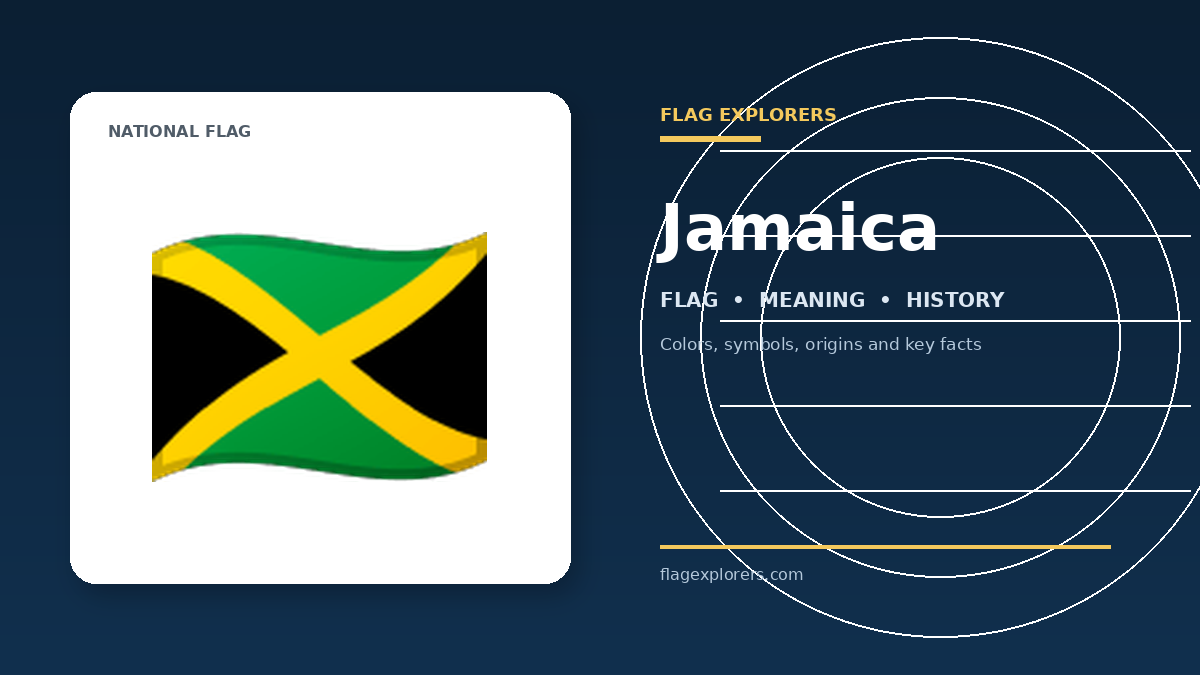
What does the Jamaican flag look like?
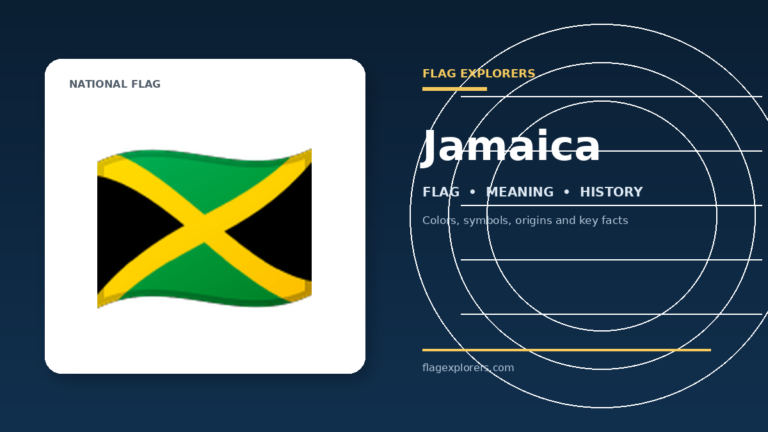
The national flag has a gold diagonal cross, or saltire, running from corner to corner. It divides the field into four triangles: green above and below, and black at the hoist and fly.
What do Jamaica’s flag colors mean?
Official Jamaican symbolism is summarized by the phrase “The sun shineth, the land is green and the people are strong and creative.”
History of the Jamaica flag
A national design competition was held in 1961 as Jamaica prepared for independence. The competition did not produce a final winning model, so a bipartisan committee of the House of Representatives developed the national flag in early 1962.
The finished design was ready for independence on August 6, 1962. The flag was first raised as British rule ended and Jamaica became an independent state.
Jamaica flag ratio and saltire construction
The flag follows the Admiralty Pattern. Its width-to-length ratio is 1:2, and each arm of the diagonal gold cross is one-sixth of the flag’s length.
| Ratio | 1:2 |
|---|---|
| Main device | Gold saltire |
| Saltire arm width | One-sixth of flag length |
| Top/bottom fields | Green |
| Hoist/fly fields | Black |
How should the Jamaican flag be treated?
Official guidance says the flag should be handled with respect. It should not touch the ground or floor and should not have words, pictures or other symbols placed on it.
When flown at half-mast, it is first raised to the peak and then lowered to half-mast. Before final lowering, it is again raised to the peak.
Jamaica’s coat of arms and national motto
Jamaica’s State Arms are distinct from the flag but form another major national emblem. They include male and female Taino supporters, a shield with a red cross and five golden pineapples, a Jamaican crocodile as the crest, and the motto “Out of Many One People.”
Jamaica flag FAQ
What do the Jamaican flag colors mean?
Black represents the strength and creativity of the people, gold represents natural wealth and sunlight, and green represents hope and agricultural resources.
What is the cross called?
A saltire, meaning a diagonal cross.
What is the Jamaica flag ratio?
1:2.
Who designed the flag?
The final design was developed by a bipartisan committee of the Jamaica House of Representatives after a 1961 national competition failed to produce a winning model.
When was it first raised?
At the transition to independence in August 1962.