History of the Jamaica Flag: 1961 Competition to 1962 Independence
Trace Jamaica’s national flag from the 1961 public design competition through the bipartisan committee that created the final saltire design and its first raising at independence.
The 1961 national flag competition
As Jamaica prepared for independence, a national competition was held in 1961 to find a suitable flag. According to the Jamaica Information Service, the competition did not produce a single winning model that could simply be adopted.
A bipartisan committee develops the flag
In early 1962, a bipartisan committee of the House of Representatives took responsibility for developing the final design. The goal was to create a flag ready for the independence celebrations scheduled for August 6, 1962.
The black, gold and green saltire
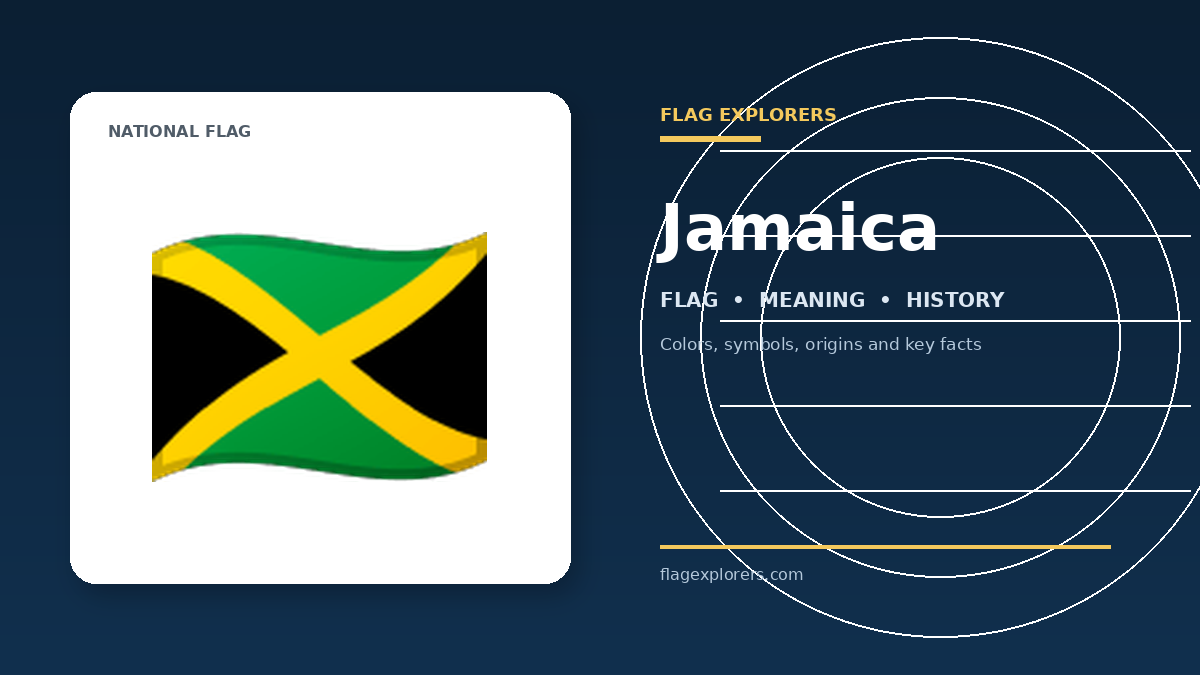
The final design used a gold diagonal cross, or saltire, dividing the field into four triangles. The upper and lower triangles are green, while the hoist and fly triangles are black. The official construction follows a 1:2 ratio.
August 1962: the first raising
The Jamaican flag was unfurled and hoisted at midnight as British rule ended and the new independent state emerged. Independence Day is August 6, 1962.
Why the design has endured
The combination of a simple geometric layout, three national colors and a highly distinctive diagonal cross has made the flag durable and easy to identify. Its symbolism continues to be summarized by the official phrase about sunlight, green land, and the strength and creativity of the Jamaican people.
Jamaica flag history FAQ
Who designed the Jamaican flag?
The final flag was developed by a bipartisan committee of the Jamaica House of Representatives after the 1961 competition did not produce a winning model.
When was the flag first raised?
At independence in August 1962.
Why is there a diagonal cross?
The final design adopted a gold saltire to divide the field into four triangular sections.