Céspedes Flag vs Cuba’s Lone Star Flag: History and Differences
Understand why two important independence-era flags appear in Cuban history and how the Lone Star flag became the national flag while the Céspedes banner retained a special institutional role.
Why are there two famous Cuban independence flags?
Cuba’s nineteenth-century independence movement used more than one important revolutionary banner. The two best known are the flag associated with Carlos Manuel de Céspedes and the earlier Lone Star flag first raised at Cárdenas in 1850.
What is the Céspedes flag?
The Céspedes flag is linked to the uprising that began the Ten Years’ War in 1868. It became a major symbol of the Republic in Arms and remains an important historical emblem.
What is the Lone Star flag?
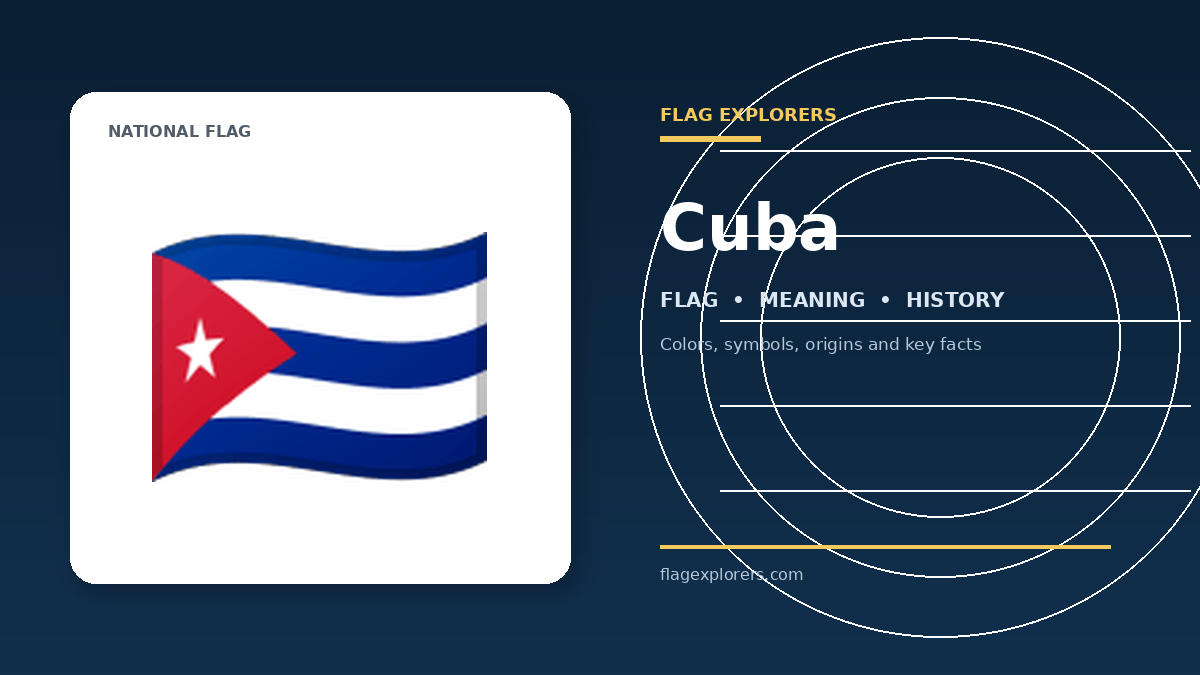
The Lone Star flag predates the Ten Years’ War. It was first raised at Cárdenas in 1850 and uses the familiar five blue-white stripes, red triangle and white star that define Cuba’s modern national flag.
What happened at Guáimaro in 1869?
The Assembly of Guáimaro adopted the Lone Star flag as the principal national banner. The Céspedes flag retained ceremonial and historical importance rather than disappearing from national memory.
What roles do the flags have today?
The Lone Star flag is Cuba’s national flag. The Céspedes flag continues to represent the early Republic in Arms and is associated with the National Assembly of People’s Power.
| Lone Star flag | National flag of Cuba |
|---|---|
| Céspedes flag | Historic independence banner with institutional ceremonial significance |
| Key decision | Assembly of Guáimaro, 1869 |