Cuba Flag: Meaning, Lone Star, History, Ratio & Facts
Explore Cuba’s five blue-white stripes, red triangle, single white star, 1:2 construction and independence-era history from Cárdenas to Guáimaro.
What does the Cuban flag look like?
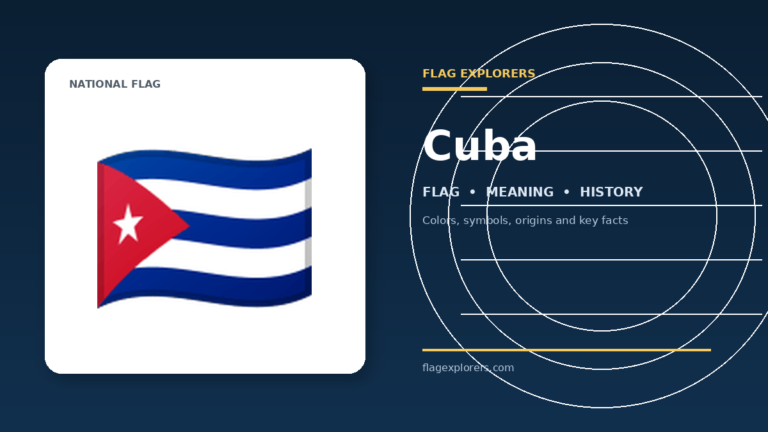
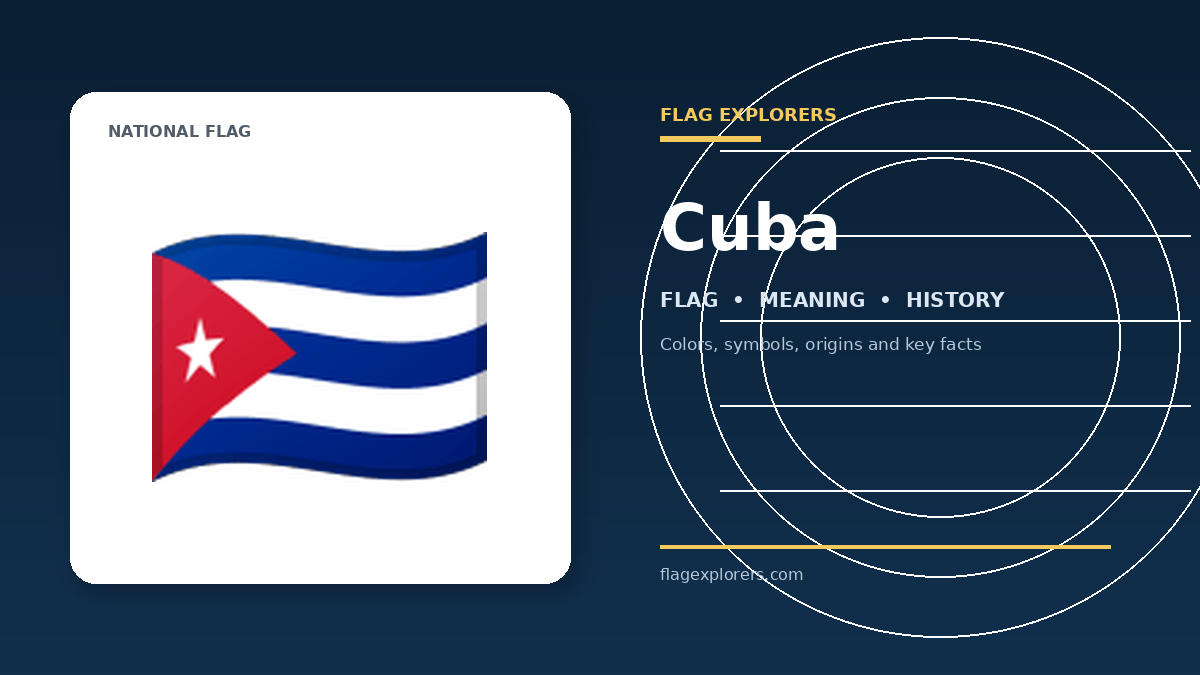
Cuba’s flag has five equal horizontal stripes arranged blue, white, blue, white and blue. A red equilateral triangle fills the hoist edge and contains a single white five-pointed star.
What do the Cuba flag colors and symbols mean?
The three blue stripes reflect the island’s historic divisions and patriotic aspirations, the two white stripes represent purity and virtue, the red triangle is associated with liberty, equality, fraternity and sacrifice, and the white Lone Star represents freedom and sovereign national aspirations. For the symbolism in detail, see the Cuba flag colors and Lone Star guide.
History of the Cuba flag
The Lone Star design is associated with Narciso López and Miguel Teurbe Tolón. It was first raised at Cárdenas in 1850 and adopted by the Assembly of Guáimaro in 1869. For the full independence-era story, see the history of the Cuba flag; for the competing historic banner, see Céspedes flag vs Lone Star flag.
Cuba flag ratio and construction
The Cuban flag uses a 1:2 ratio, five equal horizontal stripes, a red equilateral triangle at the hoist and a white five-pointed star. For measurements and star placement, see how to draw the Cuba flag.
Cuba’s coat of arms and the “Key of the Gulf”
Cuba’s coat of arms includes a golden key, rising sun, royal palm and other national symbols. The key is commonly associated with Cuba’s strategic position at the entrance to the Gulf of Mexico—the idea behind the historic “Key of the Gulf” description. For the emblem and that symbolism in detail, see the Cuba coat of arms guide.
Cuba flag FAQ
Why is it called the Lone Star flag?
Because a single white five-pointed star appears in the red triangle.
What is the Cuba flag ratio?
1:2.
When was it first raised?
May 19, 1850 at Cárdenas.
When was it adopted at Guáimaro?
April 11, 1869.
What do the three blue stripes represent?
They refer to the three principal divisions of colonial Cuba when the design was created and are also associated with patriotic aspirations.
Cuba Travel — National Symbols
Cuba Travel — History of Granma
Law 128/2019 on National Symbols