Ireland Flag: Green, White & Orange Meaning, History & Facts
Explore the Irish tricolour’s green-white-orange symbolism, Thomas Francis Meagher’s 1848 design, 1916 and 1922 history, 1:2 ratio and why the third color is orange—not gold.
What does the Irish flag look like?
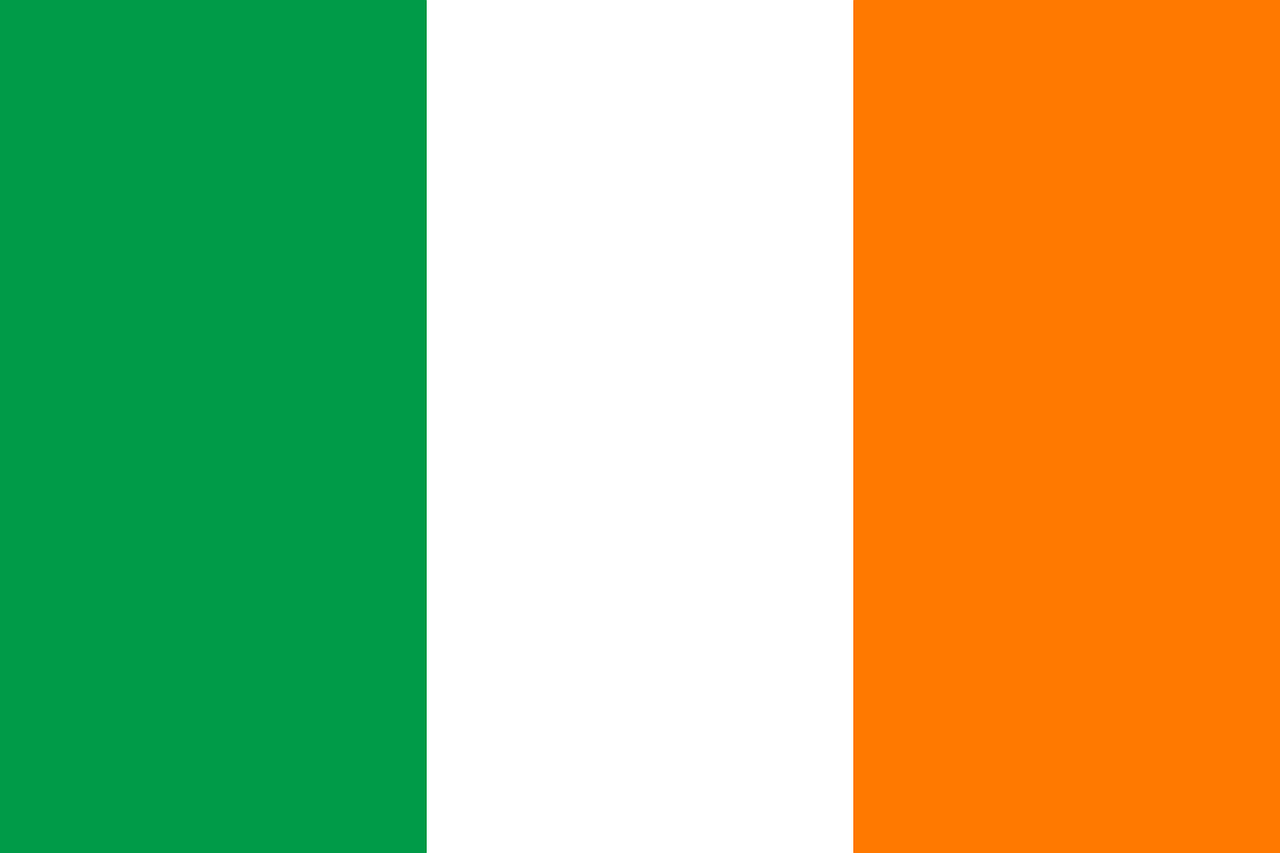
The Irish tricolour has three equal vertical bands: green at the hoist, white in the center and orange at the fly. The Department of the Taoiseach states that the flag is twice as wide as it is high, giving a 1:2 height-to-length ratio.
What do green, white and orange mean?
Green
Associated historically with Ireland’s nationalist and Catholic tradition.
Orange
Associated with the Protestant and Orange tradition.
White
Represents the aspiration for peace and lasting unity between the green and orange traditions.
When Thomas Francis Meagher explained the flag in 1848, he described the white center as a lasting truce between Orange and Green.
Is the Irish flag orange or gold?
The official color is orange, not gold or yellow. Irish government guidance specifically warns that replacing orange with yellow or gold is a misrepresentation of the national flag.
When was the Irish tricolour first flown?
Thomas Francis Meagher first flew the tricolour at 33 The Mall, Waterford, on March 7, 1848. The design was influenced by the European tricolour tradition of the revolutionary era.
It did not immediately become Ireland’s universally accepted national flag. Its significance grew during the independence movement, especially after it was flown over the General Post Office during the 1916 Easter Rising.
When did Ireland officially adopt the flag?
The tricolour was used by the Irish Free State from 1922. It received explicit constitutional recognition in 1937, when Article 7 of Bunreacht na hÉireann stated that the national flag is the tricolour of green, white and orange.
Irish flag protocol
The Department of the Taoiseach has general responsibility for national-flag guidance. The flag should be treated with respect, displayed with green nearest the staff and should not be allowed to touch the ground.
The guidance is advisory rather than a comprehensive statutory flag code, but it provides the accepted conventions for official and respectful display.
Ireland flag quick facts
| First flown | March 7, 1848 |
|---|---|
| Associated with | Thomas Francis Meagher |
| Used by Irish Free State | 1922 |
| Constitutional status | 1937, Article 7 |
| Ratio | 1:2 |
| Band order | Green, white, orange |
Ireland flag FAQ
What does the white stripe mean?
It represents the aspiration for peace and unity between the traditions represented by green and orange.
Is the Irish flag green-white-orange or green-white-gold?
Green, white and orange. Gold or yellow is incorrect.
Which color goes next to the flagpole?
Green.
What is the Ireland flag ratio?
1:2.
When was the Irish flag first flown?
March 7, 1848 in Waterford.
Department of the Taoiseach — The National Flag
Irish Defence Forces — The National Flag