France Flag: Meaning, Tricolore History, Colors & Facts
Explore the French Tricolore, the documented origins of blue-white-red, the 1794 design, the 1814–1830 interruption and why common color-meaning myths differ from the historical record.
What does the French flag look like?
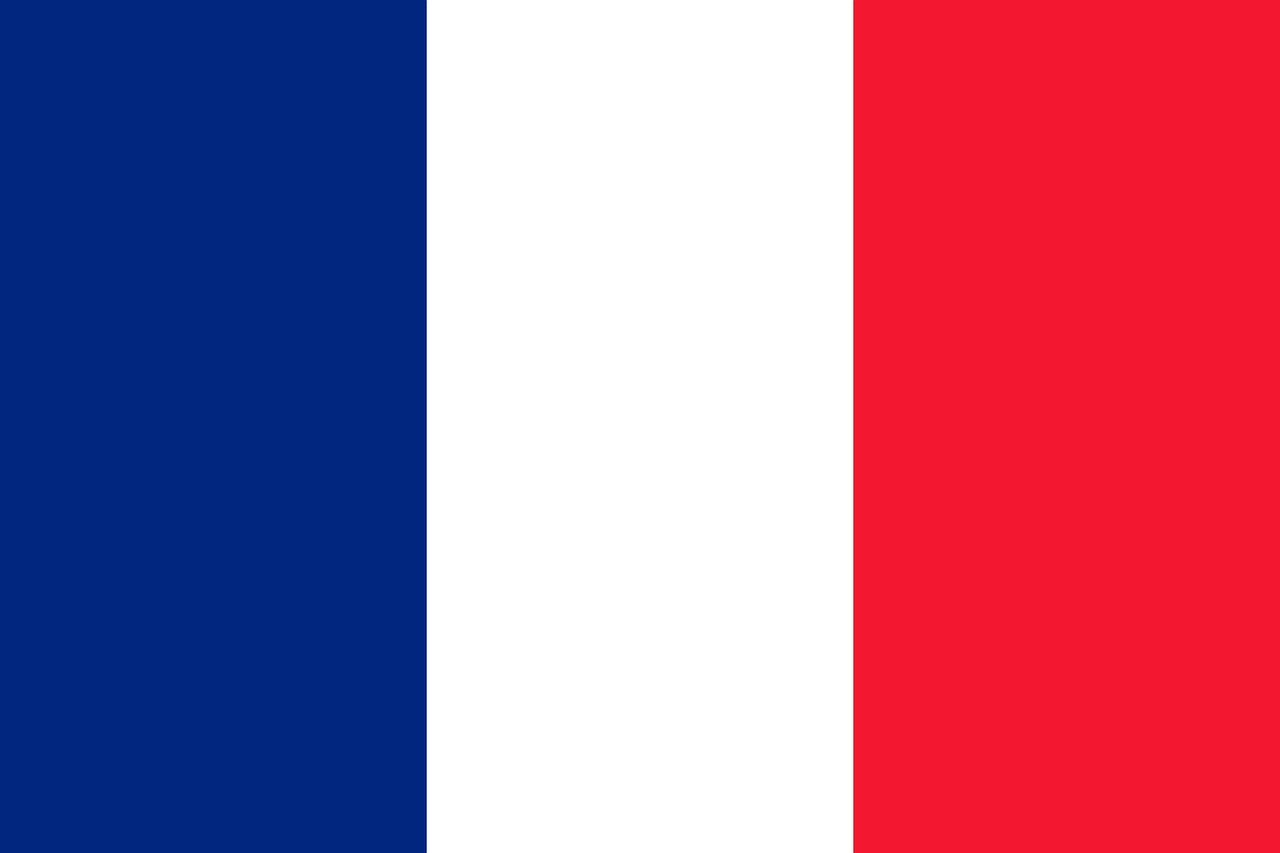
The French flag consists of three vertical bands: blue, white and red. Article 2 of the current French Constitution identifies the national emblem as the tricolor “bleu, blanc, rouge.”
The equal-band vertical form became the enduring national arrangement during the French Revolution and remains one of the world’s most influential flag designs.
Where did the blue, white and red colors come from?
The Élysée explains the historical combination as a union of blue and red, the colors of Paris, with white, historically associated with the monarchy. Before the tricolor became a flag, those colors appeared together in the revolutionary cockade.
How did the French Tricolore develop?
In 1790, revolutionary France introduced tricolor naval flags with vertical bands, although their order and widths differed from the modern design.
On February 15, 1794, the National Convention established the arrangement that became standard: blue at the hoist, white in the center and red at the fly.
The tricolor disappeared during the Bourbon Restoration from 1814 to 1830, when the royal white flag returned. It reappeared during the July Revolution of 1830 and has remained France’s national emblem through subsequent republican regimes.
Why is the French flag so influential?
The French tricolor became an important visual model for later national and revolutionary flags. Its three-band structure was easy to reproduce, visually distinctive and strongly associated with the political transformations of the late eighteenth and nineteenth centuries.
What does the French Constitution say?
Article 2 of the Constitution of the Fifth Republic states that France’s national emblem is the blue-white-red tricolor. The same article also names the Marseillaise as the national anthem and “Liberté, Égalité, Fraternité” as the national motto.
Keeping these constitutional symbols separate is useful: the motto is not an official three-part definition of the flag’s colors.
France flag quick facts
| Common name | Le Tricolore |
|---|---|
| Colors | Blue, white and red |
| Layout | Three vertical bands |
| Modern order fixed | February 15, 1794 |
| Restoration interruption | 1814–1830 |
| Constitutional status | Article 2 of the Constitution |
France flag FAQ
Why is the French flag blue, white and red?
Historically, blue and red were associated with Paris, while white was associated with the monarchy.
Does each color officially mean liberty, equality and fraternity?
No. That is a popular later interpretation, not the documented historical origin of the colors.
When did the modern French flag appear?
The modern blue-white-red vertical order was fixed in 1794.
Which color is nearest the flagpole?
Blue.
What is the French flag called?
It is commonly called the Tricolore.