Czechia vs Philippines Flag: Triangle Colors, Stripes and Symbols
Side-by-side identification, documented history and practical measured comparison.
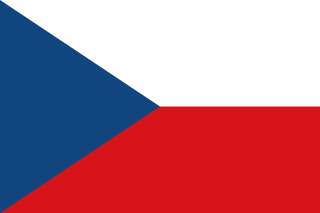
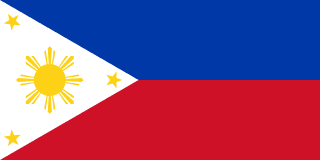
Czechia and the Philippines both use two horizontal color fields and a triangle at the hoist. Czechia uses white above red and a solid blue triangle, with no emblem. The Philippines uses blue above red in peacetime, a white triangle, a gold sun and three gold stars. The Philippine flag reverses its blue and red fields for a legally defined wartime orientation. The triangle color, symbols and proportions are the clearest distinctions.
Comparison at a glance
| Feature | Czechia | Philippines |
|---|---|---|
| Upper field (normal orientation) | White | Blue |
| Lower field | Red | Red |
| Hoist triangle | Solid blue | White with gold devices |
| Triangle geometry | Apex at half flag length | Equilateral; side equals height |
| Symbols | None | Sun with 8 rays; 3 stars |
| Height:length | 2:3 | 1:2 |
| Wartime color reversal | No special reversal in this comparison | Red uppermost in war |
The quickest recognition features
Start by locating the triangular shape beside the pole. A blue triangle with no internal emblem is the Czech design. A white triangle with a golden sun and three golden stars is the Philippine design. The difference is visible even if the horizontal stripes are partly folded.
The upper horizontal field provides a second test. On the standard Czech flag the upper half is white, while the lower half is red. On the Philippine flag in peacetime the upper half is blue and the lower half is red. Thus the two flags share the lower red region but not the upper field or triangle.
The Philippine flag has an important exception to its usual color order. Its flag code provides for the red field to be uppermost in time of war. That arrangement is still Philippine, with the same white triangle and golden devices. The Czech flag has no corresponding wartime color arrangement described by the sources used here.
Do not identify the flags solely by counting three colors. Czechia’s main colors are white, red and blue. The Philippine flag also contains gold in its sun and stars, which is sometimes omitted in a very small or poorly printed picture.
A partial graphic may show only the right side, with two horizontal fields. Czechia’s white over red section can resemble the Polish flag when the blue triangle is outside the crop. The Philippine blue over red fly can also be insufficient evidence by itself.
Find the hoist shape and then check for the gold symbols. These are stronger identifying features than comparing the exact shade of blue or red on a phone display.
Czechia’s flag and its simple geometric triangle
Czechia’s national flag has two equally high horizontal bands, white above red, and a blue isosceles triangle extending from the hoist to the middle of the flag. Its standard height-to-length ratio is two to three.
On a thirty-centimeter-long and twenty-centimeter-high drawing, the horizontal dividing line lies ten centimeters below the upper edge. The triangle’s base occupies the full twenty-centimeter hoist height. Its point lies fifteen centimeters from the hoist and ten centimeters below the top.
Draw the underlying rectangle as a white upper half and red lower half. Overlay a blue triangle with vertices at the upper-left corner, the central point and the lower-left corner. The triangle covers the ends of both horizontal bands nearest the pole.
The triangle reaches exactly halfway across the flag. Its point is also the geometric center of the rectangle. The white and red horizontal boundary starts visibly at that point and continues toward the fly edge.
On a nine-hundred-by-six-hundred-pixel artboard, the triangular vertices are (0,0), (450,300) and (0,600). The horizontal band boundary is y equals 300. This makes the design particularly easy to reproduce using vector polygons.
The area of the triangle is one-quarter of the entire flag, because its base is the full flag height and its altitude is half the length. The remaining three-quarters are shared equally between the exposed white and red areas.
There is no star, seal, coat of arms or text inside the blue triangle. Some Czech regional flags have heraldic emblems, but those are separate designs. The national reference flag has three plain colored regions.
The flag’s blue triangle is a central part of the national design, not a removable decorative marker. Without it, the remaining white-red bicolor could be mistaken for another flag.
The Philippine flag: a white equilateral triangle and golden devices
Republic Act 8491 defines the flag of the Philippines as a blue and red horizontal bicolor with a white equilateral triangle at the hoist. The white region contains a golden sun and three golden five-pointed stars.
The statute specifies a length twice the height, with the sides of the white triangle equal to the height. Take a rectangle forty centimeters long and twenty centimeters high. The triangle’s base is the full twenty-centimeter hoist edge, and its altitude is ten times the square root of three, approximately 17.32 centimeters.
Mark the midpoint of the left edge at ten centimeters down. Along the horizontal centerline, place the triangle apex 17.32 centimeters from the hoist. Connect that point to the upper and lower hoist corners. Unlike Czechia’s triangle, this apex does not lie halfway across the flag.
The sun is placed within the triangular field. It has eight rays, which official Philippine accounts connect with the first provinces associated with the revolution against Spanish rule. Its stylized rays have a defined appearance, so use a reliable official reference rather than an arbitrary clip-art sun.
The three golden five-pointed stars sit near the three corners of the triangle. They represent the country’s main geographic island groups in conventional national explanations. Their precise placement and orientation should be reproduced from the flag code and official reference artwork.
Keep all four gold devices on the white field. A design with a star in the blue or red band does not match the national flag. Nor should the sun be enlarged until it touches the three stars.
For a digital drawing one thousand pixels long and five hundred pixels high, the triangle’s equilateral altitude is approximately 433.013 pixels. Its inward point is at x equals 433.013 and y equals 250. Use the statutory image to complete the sun and star details.
These mathematical examples follow the stated length, height and triangle side relationships. They do not replace the more detailed official construction and color specifications where a formal reproduction is required.
Why the triangle proportions differ
At an identical height of twenty centimeters, Czechia’s flag is thirty centimeters long and the Philippines flag is forty centimeters long. The Czech triangle extends fifteen centimeters across the rectangle; the Philippine triangle extends about 17.32 centimeters.
In absolute centimeters, the Philippine triangle reaches farther from the pole in this example. Relative to the complete flag length, however, the Czech triangle reaches farther: fifty percent compared with approximately 43.3 percent. Those two statements are compatible because the rectangles have different lengths.
The Czech triangle covers one-quarter of its complete rectangle. On the thirty-by-twenty centimeter example, its area is 150 square centimeters out of 600. The white and red regions each occupy 225 square centimeters.
For the Philippines, the equilateral triangle area is one-half of its twenty-centimeter base multiplied by its altitude, or approximately 173.2 square centimeters. The full flag rectangle has an area of eight hundred square centimeters, so the triangle covers about 21.65 percent.
The blue and red regions each occupy roughly 313.4 square centimeters before considering the gold shapes, which are contained entirely inside the white triangle. The visible white area is slightly less than the calculated triangle area because the sun and stars occupy part of it.
The triangle’s geometric center also differs from the geometric center of the full flag. A designer should not position the Philippine sun at the center of the entire rectangle. Use the official arrangement for the center of the sun within the triangle.
These measurements are helpful for a classroom comparison using rulers and graph paper. They show why copying the Czech blue triangle, recoloring it white and placing symbols inside it would not produce an accurately constructed Philippine flag.
Preserve the proportions of both reference illustrations when placing them side by side. Forcing both into a standard three-to-two frame may hide the distinction in relative triangle width and stretch the Philippine sun into an oval.
Understand the Philippine wartime orientation
The Philippine flag code distinguishes peacetime and wartime orientation. In ordinary peacetime horizontal display, blue is above red. In time of war, red is above blue. The white triangle and its sun and stars remain the flag’s defining elements.
This rule is not a reason to treat every image with red at the top as evidence of an actual wartime event. A historical picture, an illustrative diagram, an incorrectly hung flag or an image manipulated in editing can show the reverse arrangement. The context must support any conclusion about why it is displayed that way.
The Philippine flag code also contains instructions for vertical display. When studying photographs of flags hanging down, consult the applicable display rule rather than simply rotating an image and drawing conclusions from the viewer’s left and right.
A Czech flag with red above white is not the standard front-facing Czech arrangement. The Philippine exception does not apply to Czechia merely because the two designs have superficially similar structures.
In a geography quiz, use the normal peacetime Philippine flag unless the question specifically asks about wartime display. A diagram comparing both Philippine orientations should label them clearly. It should not present them as the flags of two different countries.
For a database, store the country identity separately from the display variant. That approach allows educational materials to describe the wartime arrangement without assigning it an unrelated country identifier or silently replacing the regular flag image.
The key identification feature remains the white triangle with a gold sun and three stars. It continues to identify the Philippine design regardless of which horizontal band appears uppermost in a correctly described display.
Different historical origins of the two triangle flags
The Czech Ministry of Foreign Affairs explains that the design emerged in 1920, shortly after the formation of independent Czechoslovakia. Earlier Czech lands had a white and red color tradition, and the addition of blue produced the distinctive three-color flag adopted by the new state.
Czechoslovakia’s existence ended with the establishment of the Czech Republic and Slovakia as separate states in January 1993. Czechia retained the earlier flag. Slovakia adopted its own white-blue-red horizontal tricolor with a coat of arms. The Czech flag therefore has a historical continuity extending beyond the establishment of the current Czech state.
The Philippine flag developed in the independence movement against Spanish rule at the end of the nineteenth century. Its first major historical use belongs to 1898 and the proclamation of independence in that period. The design has a distinct revolutionary history and developed under different political circumstances from Czechoslovakia’s flag.
The sun and three stars express elements of Philippine identity and revolutionary history. Their presence makes the design more than a geometric arrangement of three colored fields. The symbols are absent from the Czech flag, whose historical explanation instead focuses on its tricolor and the formation of the Czechoslovak state.
The Philippines became an internationally independent republic in 1946 following a later period of American sovereignty. This date should not be substituted for the earlier history of the flag and the 1898 independence proclamation.
The Philippine flag code of 1998 provides detailed contemporary regulations for the national symbol. The Czech government’s description and relevant state-symbol law provide the corresponding basis for Czechia. These are independent national legal frameworks.
There is no need to infer that the Czech or Philippine design was directly copied from the other. The triangle-and-two-bands structure is an effective way to organize flag colors, and the documented historical origins are different.
Compare other triangle flags without misidentifying them
Poland’s flag has two horizontal bands, white above red, but no blue triangle. If a photograph of Czechia’s flag is cropped to its fly end, the result can resemble Poland. A full view resolves that ambiguity.
Puerto Rico uses a blue triangle at the hoist containing one white star. Its fly has five red and white stripes rather than two broad fields. Cuba has a red triangle with a white star and five blue and white stripes. Both differ from Czechia’s plain triangle and the Philippines’ gold sun and three stars.
The flag of the Bahamas uses a black triangle at the hoist and three horizontal bands in aquamarine, gold and aquamarine. The triangle’s color and the number of bands distinguish it from this pair.
South Africa includes a black triangular region at the hoist within a more complex multicolor design. Its green Y-shaped device is a much stronger recognition feature than any broad description referring to a triangle.
These comparisons show the value of looking beyond geometry alone. A triangle may be plain or charged with an emblem, can have different colors and can extend a different distance into the rectangle. The number and sequence of horizontal fields further narrow the possibilities.
A flag-identification system should record those structural details independently. A user searching for a blue triangle and a white-red field should be directed toward Czechia, while a white triangle with a sun and three stars should identify the Philippines.
In an image with limited visibility, preserve uncertainty rather than selecting a country based on a partial match. A reliable country label or a second view of the flag may be necessary where the triangle or emblems are obscured.
A measured drawing and recognition activity
Give learners two rectangles each twelve centimeters high. Make the Czech rectangle eighteen centimeters long and the Philippine rectangle twenty-four centimeters long. Mark the horizontal centerline six centimeters down from the top in both.
For Czechia, place the triangle point nine centimeters from the hoist. For the Philippines, calculate the equilateral triangle altitude as six times the square root of three, about 10.39 centimeters. Join each point to the upper and lower hoist corners.
Color the Czech triangle blue, the upper field white and the lower field red. Color the Philippine triangle white, the upper field blue and the lower field red. Add the gold sun and three stars using the official reference.
Ask learners to measure the triangle reach in each design and express it as a fraction of the complete horizontal length. They can then explain why the Czech apex is at the center but the Philippine apex is not.
For a second exercise, cover the country names and show the flags at thumbnail size. Identify each by triangle color and presence or absence of symbols. A historical discussion can then distinguish the 1920 Czechoslovak design from the Philippine independence-era design of 1898.
The practical recognition rule remains consistent: Czechia has a plain blue triangle with white above red, whereas the Philippines has a white triangle with gold devices and blue above red in peacetime. Its special wartime orientation is a separate documented feature.
Frequently asked questions
Which flag has the blue triangle?
Czechia.
Which flag has a gold sun?
The Philippines.
Are the triangles the same shape?
No. Czechia’s triangle reaches half the flag length; the Philippine triangle is equilateral.
Which flag uses red uppermost in wartime?
The Philippine flag has that legally defined wartime orientation.
Sources and artwork
Czech Foreign Ministry: Czech state symbols
Czech Foreign Ministry: state symbols and legal geometry
Philippines Republic Act 8491: National Flag and Heraldic Code
Philippine Supreme Court E-Library: implementing rules
Reference artwork: Flagpedia/FlagCDN, public-domain flag images. Educational comparison, not official endorsement. Reviewed November 2026.