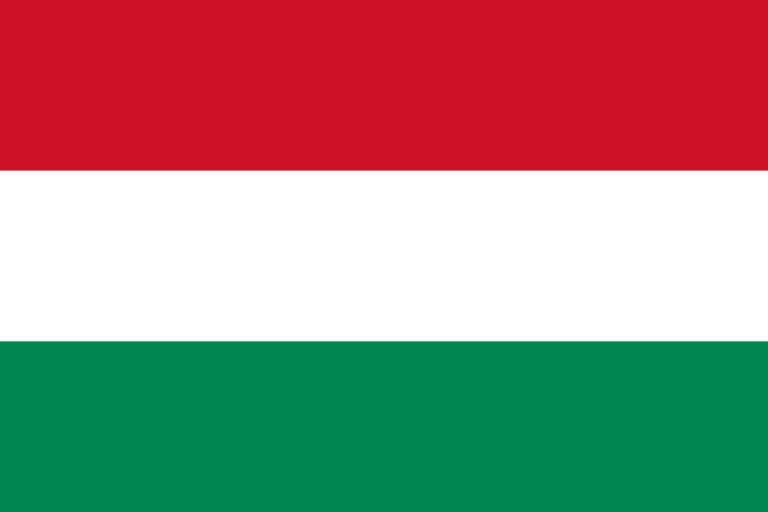
Ireland vs Ivory Coast Flag: Reversed Colors, Proportions and History
Side-by-side national flag identification, visual differences, historical context and practical examples.
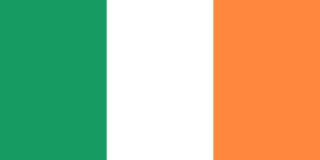

Ireland and Côte d’Ivoire (Ivory Coast) both use three equal vertical bands in green, white and orange, but their color orders are reversed. With the flagpole on the left, Ireland begins with green and Côte d’Ivoire begins with orange. Ireland’s official flag is also longer relative to its height. A photograph of the reverse side of either flag can resemble the other, so always establish the hoist before identifying it.
Comparison at a glance
| Feature | Ireland | Côte d’Ivoire |
|---|---|---|
| Color at hoist | Green | Orange |
| Middle | White | White |
| Color at fly | Orange | Green |
| Direction | Vertical | Vertical |
| Standard height:length | 1:2 | 2:3 (usual reference) |
| Region | Europe | West Africa |
The quickest identification rule: start at the flagpole
Place the two flags next to each other with their poles on the same side. In Ireland’s case, the green band is nearest the pole, white occupies the center and orange lies at the far edge. For Côte d’Ivoire, orange is nearest the pole, followed by white and then green. The difference does not depend on whether the two greens are the same exact shade.
This ordering is more useful than memorizing which country uses a brighter orange. The three colors can vary in appearance with printing, screen settings, textile material and lighting, but the order of the bands remains the fundamental distinction in an accurately oriented view.
Notice that the white stripe stays in the middle of both designs. You cannot identify one of the flags merely from a close-up of that stripe or from a list of its three colors. Both answers remain possible until you establish which outer stripe touches the hoist.
In a conventional flag chart, the hoist is represented on the left. Therefore a green-white-orange chart illustration represents Ireland, and an orange-white-green illustration represents Côte d’Ivoire. In a photograph, the same left-to-right reading may be incorrect if the hoist is on the right.
A useful memory aid is to associate Ireland with green first. This is a mnemonic for the front view, not an assertion that green belongs exclusively to Ireland or that green has the same meaning in both national flags. Remember the physical pole side as well as the color.
Why the reverse side can look like the other country
A real fabric flag can be observed from either side. Imagine an Irish flag attached to a pole on your left: green is nearest you on the left, and orange is at the outer right. Walk around to the other side of the flag. From that new viewpoint, the pole is on your right, the green band is on the right, and the visible sequence from your left becomes orange, white and green.
The flag has not been replaced by the Ivorian flag. Its green stripe is still attached to the pole. Only your viewing position has changed. A similar reversal occurs when looking at the opposite side of a Côte d’Ivoire flag.
This issue is particularly important for flags with no text or asymmetric emblem. A letter or coat of arms can sometimes reveal whether a photograph is mirrored. These two flags have no such additional feature, so a cropped image of the cloth may offer no definitive orientation clue.
Look for a rope, sleeve, clips or flagpole in the photograph. The edge that attaches to the pole is the relevant side. If the flag has been mounted horizontally against a wall, check the intended front display rather than assuming the image has the same orientation as a chart.
A selfie or a digitally mirrored video can also reverse the apparent color order. If text elsewhere in the image appears backward, the whole image may have been reflected. The flag cannot be identified by left-to-right color order until that issue is resolved.
If a photo shows only the three bands with no visible hoist, the correct result may be ambiguous. Proportions, a reliable caption or the setting can provide additional evidence. Avoid treating an uncertain image as proof that a particular country has displayed the wrong flag.
Compare the proportions with a ruler
Ireland’s Department of the Taoiseach describes the national flag as twice as long as it is high. Thus a flag twenty centimeters tall is forty centimeters long. Because the three stripes are equal, each stripe is thirteen and one-third centimeters wide on that example.
The usual reference drawing of the Côte d’Ivoire flag uses a height-to-length ratio of two to three. A flag twenty centimeters high would be thirty centimeters long, with each stripe ten centimeters wide. The Ivorian constitutional description emphasizes the three equal vertical bands; the reference ratio should not be confused with a separately established legal color specification.
When drawn at the same height, the Irish flag therefore extends farther horizontally in the standard comparison. This provides a useful secondary clue if the edges of both images are visible and the proportions have not been altered.
In a website’s flag picker, however, images may all occupy identical thumbnail boxes. Some are resized without preserving their aspect ratio; others are cropped or padded. A squarer-looking Irish icon is not necessarily a different flag, and a long-looking Ivorian image is not conclusive evidence of incorrect identification.
For a printed learning activity, measure the actual colored rectangle rather than the white margins around it. If a twenty-by-forty centimeter rectangle is drawn with a thick white border, exclude the border from the measurements. Similarly, a screenshot may include part of the surrounding webpage.
A useful digital test is to inspect the original image’s aspect ratio before applying a display size. Use image fitting that preserves the ratio. A forty-by-twenty frame for Ireland and a thirty-by-twenty frame for Côte d’Ivoire will show the intended relative lengths without distorting the stripes.
In practice, color order relative to the hoist remains the primary identification feature. The ratio is corroboration when known, not a reason to ignore a clearly visible orange or green stripe beside the flagpole.
Ireland’s green, white and orange: historical context
The Irish tricolor is associated with the nineteenth-century aspiration toward reconciliation between different traditions on the island. Irish government guidance connects green with one tradition and orange with another, with white representing the hoped-for peace and unity between them.
Thomas Francis Meagher is associated with the flag’s introduction in 1848. The design belongs to a period of European political movements and debates about Irish identity. Its use became particularly prominent in the twentieth century, including its display at the General Post Office during the Easter Rising of 1916.
The flag was adopted by the Irish Free State in 1922, and the Constitution of Ireland in 1937 formally established it as the national flag. These are different stages in its history: a first introduction, a historically significant display, adoption by a state and constitutional confirmation.
It is important not to collapse the symbolism into a statement that the colors mechanically classify modern Irish people by religion or political opinion. The government describes an aspiration to inclusion and union between traditions. The flag is a national symbol, not a device for identifying the personal beliefs of someone displaying it.
The Irish tricolor also should not be confused with the flags used for Northern Ireland in particular contexts. Ireland and Northern Ireland have different constitutional status, and different symbols may appear at sporting events depending on the sport’s organization. Consult the context rather than assigning an Irish national flag to every event associated with the island.
For the present comparison, the historical detail matters because it shows that Ireland’s use of green, white and orange predates Côte d’Ivoire’s modern national flag and arose from its own local history. The resemblance is not an explanation of either country’s political development.
Côte d’Ivoire’s orange, white and green: its own meaning
Côte d’Ivoire is a West African country whose modern flag developed around the transition from French colonial administration to independence. The flag was adopted in 1959, before independence in 1960. Its arrangement belongs to a separate historical and cultural setting from Ireland’s tricolor.
The Ministry of Public Service describes the national emblem through three equal vertical bands: orange, white and green. This is the design requirement that provides the most direct comparison with Ireland. Both official descriptions specify an ordered tricolor rather than a picture of a person, animal or building.
Ivorian diplomatic explanations associate orange with the northern savanna and the land, white with peace and unity, and green with the southern forests, nature and prospects for the future. Interpretations can be expressed differently across official educational material, but the contrast with Ireland is clear: similar colors can carry distinct local meanings.
The country’s name may appear in English as Ivory Coast or in French as Côte d’Ivoire. The modern state uses the name Côte d’Ivoire internationally. These names in a flag collection refer to the same country, not to two separate flags.
The vertical tricolor form is shared with France and several other countries. This structural resemblance is useful historical context for a former French colony, but it does not imply that every color carries a French meaning. The individual colors and their interpretation are tied to Ivorian national identity.
A flag comparison should therefore preserve both the correct order and the distinction between the histories. Calling one design merely a backward version of the other is an easy visual shorthand, but it is not a complete historical description. Each is a national symbol in its own right.
Distinguish both flags from Italy and other tricolors
Italy uses three vertical bands of green, white and red. In its standard front view, the order starts with green, just as Ireland does, but the fly stripe is red rather than orange. This difference can be easy to see in a reliable color illustration and more difficult in faded or poorly lit material.
If the final stripe appears reddish orange in a photograph, avoid treating a single pixel as a definitive national identity. Check whether the context indicates Italy or Ireland, or whether the original source provides a label. A red stripe can acquire an orange appearance in warm light.
Mexico also uses green, white and red in vertical bands, with a distinctive national coat of arms in the middle. The eagle and associated emblem provide a useful additional clue when visible. A crop of the outer stripes could conceal that difference.
India has orange or saffron, white and green in horizontal rather than vertical bands, with a navy-blue wheel in the central white band. The orientation and central emblem distinguish it immediately from Ireland and Côte d’Ivoire in a full view. Niger likewise uses horizontal orange, white and green with an orange disc in the center.
In an identification chart, organize these flags by band direction first. Divide the vertical group from the horizontal group, then check the central area for an emblem. Among the remaining plain vertical tricolors, use the sequence of colors relative to the hoist.
This visual process is more robust than a search for any flag containing the words green, white and orange. Several countries share all or part of the palette, and the arrangement is often the most meaningful distinguishing feature.
Draw a side-by-side comparison at the same height
Start with two rectangles twenty centimeters high. Make Ireland’s rectangle forty centimeters long and the usual Côte d’Ivoire reference rectangle thirty centimeters long. Keep the hoist on the left for both, and write each country name on a separate label below its outline.
Divide Ireland’s rectangle into three equal widths. The first division lies thirteen and one-third centimeters from the left, and the second lies twenty-six and two-thirds centimeters from the left. Color the areas green, white and orange in that order.
For the Ivorian reference, mark the divisions ten and twenty centimeters from the left. Color the first stripe orange, keep the middle white, and color the last green. Use a separate reference if a formal artwork reproduction requires particular national color standards.
Inspect the two completed flags together. The white areas are both central, but the outer colors trade positions. Ireland is visibly longer at the same height. If you made the outlines the same width, you have unintentionally removed the proportions comparison.
Now turn each drawing over and trace the visible colored areas onto the reverse, or hold the paper to the light if it is thin enough. Mark the original hoist edge on both sides. Ask which country each drawing represents when the colors appear reversed. The answer should remain tied to the hoist rather than the viewer’s left.
This simple project works as both a geometry exercise and an introduction to flag orientation. It also illustrates why educational flag images should retain country captions and not be identified solely by their visible left-to-right sequence when taken out of context.
Practical rules for quizzes, sports and maps
In a flag quiz, assume the conventional front view only when the quiz uses labeled standard illustrations. Green on the left indicates Ireland; orange on the left indicates Côte d’Ivoire. If the question instead uses a photograph with a pole on the right, reverse the reading direction.
At a sporting event, read the team’s country name or country code. The flags may be shown as compressed rectangles beside the names of players, and the original aspect ratio may not be preserved. A clear country label prevents errors caused by the nearly identical palette.
For a map exercise, identify Ireland in northwestern Europe and Côte d’Ivoire in West Africa before matching the flags. The countries are far apart and their national histories are distinct. Geography is an independent way to confirm a label rather than an explanation for the colors themselves.
In a flag database, preserve the two country records and the source of each graphic. A software routine that mirrors an icon for a right-to-left interface could inadvertently make one design resemble the other. Keep the artwork orientation correct and use interface layout changes that do not reflect the image.
The dependable rule is to read from the hoist, use proportions only when they are preserved, and rely on context where orientation is unknown. Both designs are simple, but recognizing them accurately requires more than listing their three shared colors.
Frequently asked questions
Which flag starts with orange?
Côte d’Ivoire, when read from the hoist.
Which flag is longer?
Ireland has a 1:2 height-to-length ratio; the usual Côte d’Ivoire reference is 2:3.
Why does an Irish flag sometimes look like Ivory Coast’s?
It may be viewed from the reverse side or shown in a mirrored image.
Is Italy’s flag the same?
No. Italy has a red fly stripe, not orange.
Sources and artwork
Ireland Department of the Taoiseach: The National Flag
Irish Defence Forces: history of the national flag
Côte d’Ivoire Ministry of Public Service: symbols of the republic
Côte d’Ivoire Embassy in the United States: national symbols
Flag artwork: Flagpedia / FlagCDN, public-domain reference artwork. Colors on screen are illustrative. Independent educational comparison; no official endorsement implied. Reviewed November 2026.