Guinea vs Cameroon Flag: Stripe Order, Gold Star and Pan-African Colors
Side-by-side identification, documented history and practical measured comparison.
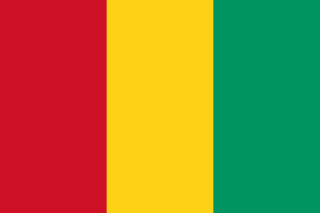
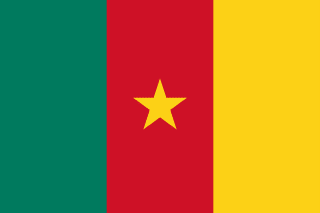
Guinea has a plain vertical red-yellow-green tricolor. Cameroon uses a vertical green-red-yellow tricolor with a gold five-pointed star at the center of the red band. Both flags use the same broad Pan-African palette, but the sequence and emblem differ. Guinea’s 2025 Constitution confirms the red-yellow-green order; Cameroon’s constitutional description specifies the gold star and green-red-yellow order.
Comparison at a glance
| Feature | Guinea | Cameroon |
|---|---|---|
| First band from hoist | Red | Green |
| Middle band | Yellow | Red |
| Fly band | Green | Yellow |
| Band widths | Three equal bands | Three equal bands |
| Central symbol | None | Gold five-pointed star |
| Common reference ratio, height:length | 2:3 | 2:3 |
Start with the center stripe, then the star
These flags are most easily distinguished by their central regions. Guinea has a yellow middle stripe with no additional symbol. Cameroon has a red middle stripe containing a gold five-pointed star. Even a narrow crop around the middle stripe can therefore provide a useful clue, provided it shows the actual colored field rather than an unrelated background.
Read the colors from the hoist to the fly in a conventional flag chart. Guinea begins with red, continues with yellow and ends with green. Cameroon begins with green, continues with red and ends with yellow. This is not a simple exchange of the outer stripes, because the central color changes as well.
A mirrored image will exchange the apparent left and right outer bands but will not change the middle stripe’s color. Consequently, the yellow versus red middle is particularly useful for identifying these designs in photographs whose viewing orientation is unclear.
The gold star offers a second independent test. Its five points and central position are specified in the constitutional description of Cameroon’s flag. Guinea’s current flag has no such emblem. A Cameroon flag with the star obscured can still be identified from the red center and the remaining colors if the complete tricolor is clear.
Do not assume that every green-red-yellow object is a Cameroon flag. It could be part of an unrelated decoration or regional symbol. The three equal vertical fields and gold central star together provide a stronger match.
Likewise, a plain red-yellow-green vertical tricolor could appear reversed in a photograph of Mali’s flag. When distinguishing Guinea from other plain tricolors, establish the hoist using the pole or attachment edge. For the Guinea–Cameroon pair, the middle stripe and star already give two robust visual distinctions.
Guinea’s current flag and its constitutional definition
The Constitution of the Republic of Guinea promulgated in September 2025 identifies its national emblem as a tricolor of red, yellow and green, arranged in equal vertical bands from left to right. The wording continues the familiar national design rather than introducing a new central emblem.
Guinea’s earlier constitutions also described the same basic vertical tricolor. The specialist reference on Guinean flag legislation reproduces successive historical definitions. This continuity is useful when checking a flag guide that may have been written under a previous constitutional framework.
It is important to distinguish a constitutional change from a flag change. A country can adopt a new constitution while retaining its existing national colors and design. In Guinea’s case, the 2025 text confirms the plain red-yellow-green sequence.
The constitution identifies the colors and the equal-width bands. It does not establish all the practical details needed to manufacture a textile flag from the short national-symbol description alone. A complete production specification may require other official sources.
For an ordinary educational reference, use the familiar two-to-three height-to-length proportions and three equal bands. The ratio is a reference convention for the drawing in this guide, not a claim that the quoted constitutional wording independently establishes that ratio.
Avoid adding an emblem to the yellow band. A coat of arms on a government document is a separate national symbol, not necessarily a feature of the flag. Guinea’s ordinary national flag consists of the three solid-colored regions.
Guinea is sometimes called Guinea-Conakry to distinguish it from other countries whose English names contain Guinea. This informal geographic qualifier does not designate a separate flag. The red-yellow-green tricolor discussed here belongs to the Republic of Guinea.
Cameroon’s constitutional tricolor and unity star
Article 1 of Cameroon’s Constitution defines three equal vertical stripes in green, red and yellow. It places a gold star in the center of the red stripe. This establishes both the color order and the star’s position.
The gold star is commonly described in the context of national unity. Its single shape is a significant part of the flag’s development from earlier designs associated with Cameroon’s federal period. Historical flags from that period may contain a different star arrangement.
The earlier independent Republic of Cameroon used a green-red-yellow vertical flag. Following the formation of the federal republic in 1961, two stars were used on an earlier flag version. The present single central star became associated with the later unitary state and was adopted in 1975.
These successive designs should be treated as distinct historical versions rather than errors in the modern image. An archive photograph containing two gold stars in the green band can be historically meaningful even though it does not reproduce the present national flag.
The current star has five points. It belongs in the central red field, not in the green or yellow bands. In an accurate modern reference, it is gold or yellow and contrasts with the red background.
Do not add the national motto, coat of arms or seal to the ordinary tricolor. These are separate national symbols, described in the broader constitutional framework. A flag with a shield or writing may need to be identified as a specific variant or a different design.
For a student drawing, preserve the equal band widths and central location of the star before attempting precise artistic detail. For formal production, consult current official artwork. The constitutional description identifies the features but does not itself provide every vertex coordinate for the star.
Compare the flags with identical drawing dimensions
Draw two rectangles thirty centimeters long and twenty centimeters high. This common reference format permits a direct comparison without allowing unequal image sizes to dominate the appearance.
Divide each rectangle into three equal vertical regions. Mark lines ten and twenty centimeters from the hoist. Each band is ten centimeters wide, and each has an underlying area of two hundred square centimeters.
For Guinea, color the first band red, the second yellow and the third green. Leave all bands plain. For Cameroon, color the first band green, the second red and the third yellow.
The Cameroonian star belongs at the center of the red stripe, fifteen centimeters from the hoist and ten centimeters below the upper edge. Use the verified reference to scale its five-pointed shape within that field.
The three underlying bands have equal areas in both illustrations. However, the visible area of Cameroon’s central red field is reduced by the gold star. Correspondingly, gold or yellow appears in both the fly band and the additional central symbol.
A useful geometry exercise is to compare the underlying stripe area before adding the star and the final visible red area after adding it. If a drawing application reports the actual star area, subtract that number from two hundred square centimeters. Do not infer a legally specified star area from a classroom example.
For a digital illustration, use nine hundred pixels horizontally and six hundred vertically. The band boundaries occur at x equals 300 and x equals 600. The star center on the Cameroon image is x equals 450, y equals 300.
Both flags can be built from exact rectangular shapes, followed by the star path on Cameroon. The equal-width division is supported by the constitutional descriptions. The chosen outer canvas and transferred star measurements are identified separately as educational reference dimensions.
Independent paths to Pan-African flag colors
Guinea gained independence from France in 1958. Its national flag emerged in that independence-era context and used the familiar red-yellow-green palette in a vertical arrangement. The current constitutional description retains those colors in their established order.
Cameroon’s independence history involved territories previously administered by France and Britain. The independent Republic of Cameroon emerged in 1960, followed by the federal arrangement in 1961 after the union involving Southern Cameroons. The modern flag reflects subsequent changes in the country’s state structure.
These different political histories are important when explaining the resemblance between the flags. Both draw on a broader African color tradition, but their actual band order and use of the star arose within separate national contexts.
The Pan-African colors are often associated with Ethiopia’s historic green-yellow-red flag tradition and their wider adoption by African independence movements. Some countries chose horizontal stripes, others vertical bands, and others added stars or different geometric shapes.
The use of the same colors should not be presented as proof that one of these flags was directly copied from the other. The documented regional and historical tradition explains the shared palette without requiring an unsupported claim about individual designers’ intentions.
For a timeline lesson, separate the adoption of Guinea’s independence-era tricolor from Cameroon’s earlier plain and two-star flag versions and its current single-star design. This helps learners understand how flags can evolve while retaining a recognizable color family.
It is also important not to interpret the modern flag’s colors as a complete statement of a country’s present political circumstances. The flags identify the countries; particular constitutional structures and historical episodes require separate sources and explanations.
Distinguish Guinea from Guinea-Bissau and Equatorial Guinea
The Republic of Guinea is not the only country with Guinea in its English name. Guinea-Bissau, Equatorial Guinea and Papua New Guinea each have separate national flags and distinct political histories.
Guinea-Bissau uses a red vertical hoist area with a black five-pointed star. The fly contains horizontal yellow and green fields. Although it shares all three broad colors with Guinea, its base geometry is not a three-band vertical tricolor.
Equatorial Guinea uses horizontal green, white and red bands, with a blue triangle at the hoist and a coat of arms in the central white area. The additional white and blue, triangle and central emblem distinguish it from both Guinea and Cameroon.
Papua New Guinea uses a diagonally divided black and red design featuring white stars and a yellow bird of paradise. Its geography and graphic design are entirely different from the West African Republic of Guinea.
If a geography quiz asks for the flag of Guinea, without any other qualifier, use the plain red-yellow-green tricolor. If it asks for Guinea-Bissau, look for the black star in the red hoist band. Do not choose between countries from a flag image’s filename alone if the name has been truncated.
This distinction is useful for website search and accessibility. A descriptive alternative text label should identify the actual country rather than just saying Guinea flag for all related names. A country identifier should distinguish the Republic of Guinea from Guinea-Bissau and Equatorial Guinea.
For historical materials, the qualifier French Guinea may refer to the former colonial territory. Use the correct historical label and flag evidence for the period rather than automatically inserting the modern flag into every reference.
Compare Senegal, Mali and Ghana by structural features
Mali uses vertical green, gold and red bands without a central emblem. Compared with Guinea, it reverses the positions of red and green while retaining a yellow or gold central stripe. A photo from the back of a flag can therefore make those two designs appear similar.
Senegal also uses green, gold and red vertical bands, but adds a green star in the central gold field. Cameroon uses a gold star in a red central field. The star color and central stripe color distinguish the two starred designs even when their outer bands are cropped.
Ghana uses horizontal red, gold and green bands, with a black star in the gold middle band. Its stripe direction provides the first difference from Guinea and Cameroon. Its star color and placement provide additional evidence.
Benin uses a full-height green hoist region and two horizontal fly bands in yellow and red. This divides the field into three colored regions of different shapes rather than three equal vertical stripes.
These examples support a simple recognition process. Identify whether the bands are vertical or horizontal. Determine the middle color, then identify any central star, including its color. Finally confirm the hoist and fly order if the image is not a conventional front-facing illustration.
A color-only classification can correctly identify these as related palettes but cannot assign their individual country names. For a useful flag finder, the combination of visual features matters more than a precise numerical match to a red, green or yellow shade.
If the image is a historical flag, use the same structural process but check its date and source. The current flags and historical variants are separate records, especially in the case of Cameroon’s former two-star design.
Recognition exercises for geography lessons and visual databases
Give learners two uncolored rectangles with three vertical sections. Ask them to label the middle stripe yellow for Guinea and red for Cameroon before filling the outer colors. Starting with the center reinforces a feature that remains reliable even in a mirrored photograph.
Next add a gold star to the Cameroon drawing and leave the Guinea drawing plain. Cover one outer band at a time and ask whether the remaining evidence is enough to identify the flag. The central stripe and star usually provide a strong answer.
For a second exercise, compare Guinea’s flag with Mali’s by turning one paper drawing over. If the reverse side shows through the paper, the apparent outer colors exchange positions. Mark the original hoist on both sides so students understand why the physical flag has not changed nationality.
A historical activity can present a modern Cameroon flag and a clearly labeled image of a former two-star version. Ask students to locate the differences and link them to the country’s historical development without modifying the current flag.
When designing a digital map, retain text labels and the correct country codes. Guinea and Cameroon should remain separate records even though they share a palette. Include a description of the middle stripe and star where the images need to be accessible to users who cannot distinguish colors well.
The reliable conclusion is red-yellow-green with no emblem for Guinea, and green-red-yellow with a gold star in the red center for Cameroon. The shared colors are historically meaningful, but their arrangement is what makes the two designs identifiable.
Frequently asked questions
Which flag has a gold star?
Cameroon.
Which country has red, yellow and green from the hoist?
Guinea.
Did Guinea’s 2025 Constitution introduce a different flag?
No; the text retains the equal vertical red-yellow-green bands.
Is Guinea-Bissau’s flag the same as Guinea’s?
No. Guinea-Bissau uses a different layout and a black star.
Sources and artwork
Guinea Constitution of September 26, 2025, consolidated text
FAOLEX: Guinea Constitution record
UNHCR: Cameroon Constitution, Article 1
Comparative Constitutions Project: Cameroon Constitution
Flags of the World: Guinea flag legislation and historical continuity
Reference artwork: Flagpedia/FlagCDN, public-domain flag images. Educational comparison, not official endorsement. Reviewed November 2026.