Australia vs Fiji Flag: Blue Ensigns and National Symbols
Learn to distinguish Australia’s white stars from Fiji’s agricultural shield on a sky-blue field.
Sky-blue field with Union Jack and shield.
View official flag reference →Two Pacific flags with the same canton
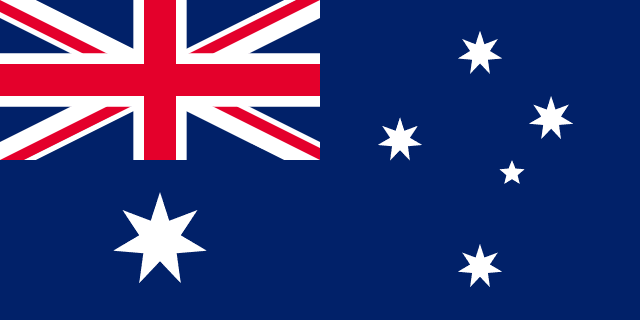
Australia and Fiji share a British-derived flag structure, with the Union Jack occupying the upper corner nearest the flagpole. In a complete image, the rest of each flag identifies the country. Australia’s national flag is dark blue and contains white stars. Fiji’s field is light blue and its principal device beyond the Union Jack is a heraldic shield. The quickest reliable distinction is therefore stars versus shield, supported by the different background shades.
A flag’s upper hoist quarter is called a canton. Someone who sees only the canton in a folded photograph could easily confuse these two flags. The Union Jack is shared, rather than a feature that uniquely identifies either Australia or Fiji. Look below it and toward the far end of the flag. Australia has a prominent white star beneath the canton and a constellation toward the fly. Fiji has a relatively open lower hoist area and a shield toward the fly. That arrangement makes the comparison particularly useful when part of a flag is concealed.
The colors offer an additional clue, but color should not be the only criterion. A bright photograph may make a dark blue field appear lighter. A picture taken in shadow can make a pale field look darker. A low-resolution icon may also reduce a complicated shield to a small white or multicolored patch. Check whether the visible device is made of distinct stars or a compact shield before deciding which country is represented.
The comparison concerns the national flags rather than the many maritime ensigns, regional flags and institutional banners that share a similar canton. Some of those designs have stars or shields of their own. Identification becomes more demanding when the available choices extend beyond Australia and Fiji.
| Feature | Australia | Fiji |
|---|---|---|
| Canton | Union Jack | Union Jack |
| Main field | Dark blue | Sky blue |
| Other devices | Commonwealth Star and Southern Cross | Shield from the coat of arms |
| Design history | 1901 competition; Flags Act 1953 | Independence, October 10, 1970 |
Identify Australia’s Commonwealth Star and Southern Cross
Australia’s national flag has two separate groups of white stars. A single large Commonwealth Star appears below the Union Jack. The other five stars represent the Southern Cross constellation and occupy the fly area. These two groups are different in arrangement and historical significance. The Commonwealth Star is not simply another member of the constellation, although it shares the same white color.
The Australian government’s national-symbol booklet explains that the Commonwealth Star’s seven points represent the federal system: six states and the territories collectively. The seventh point was introduced in 1908 to recognize the territories. This account gives a more accurate explanation than the common shortcut that every point stands for a separate state. Australia has six states, not seven.
In the Southern Cross group, four of the stars have seven points and the smaller star has five. The arrangement is intentionally uneven. It represents a constellation rather than a row of identical stars positioned at regular intervals. When examining an icon, you may not be able to count each point. First identify the constellation as a group and the larger star beneath the canton. A detailed official drawing is needed to evaluate the exact geometry.
A useful reading exercise is to separate the flag into its left and right halves. In the left half, locate the Union Jack above and the Commonwealth Star below. In the right half, identify the group of five constellation stars. The result is an arrangement of six stars in total, but the placement provides more information than the count alone.
The Australian government also identifies the Union Jack as an element reflecting historical ties with Britain. Its component crosses occupy a single rectangular canton. The crosses should not be redrawn as a separate device elsewhere on the Australian field. For official star sizes and positions, consult the construction references in the Australian Flags booklet rather than treating a decorative miniature as a measurement chart.
Read the shield on Fiji’s flag
Fiji’s foreign ministry describes the flag as a sky-blue ensign bearing a shield derived from the country’s coat of arms. The shield is a compact device on the fly side. Unlike Australia’s constellation, its details are concentrated within a single bounded shape. This difference is especially helpful when two pictures have been reproduced at small sizes.
The upper portion of the Fijian shield is red and contains a lion holding a cocoa pod. Below it, a red cross divides a white area into quarters. The foreign ministry identifies sugarcane, a coconut palm, a dove and bananas in those compartments. These motifs give the shield a distinctive relationship to the country’s history and economic life. They should not be treated as a random assortment of plants and animals.
The flag does not display the entire elaborate coat of arms with all its external heraldic components. It uses the shield portion. That distinction matters when someone finds a larger official illustration of the national arms and attempts to place it on a sky-blue flag. A full armorial achievement is a separate symbol. Adding external elements to the shield would change the appearance of the national flag.
At ordinary distance, readers will usually recognize the white shield and its red dividing lines before distinguishing individual crops or the dove. For an educational quiz, that is enough to separate the flag from Australia’s white stars. For a lesson about national symbolism, a larger official illustration is preferable because it allows the individual devices to be inspected.
A reader unfamiliar with heraldry can approach the shield as a hierarchy. Identify its outline first, then its red upper area, then the cross and its four compartments. Finally name the individual motifs using the foreign ministry’s reference. This method avoids the need to memorize all the details at once and makes it easier to explain why a shield is fundamentally different from a constellation.
Compare the layout without distorting either flag
A flag comparison chart should preserve each artwork’s original shape and give it enough space to show the complete design. Both examples have the familiar elongated ensign format, with the Union Jack in the upper hoist. A display box may be the same size for each illustration, but that box should not stretch the artwork or obscure the fly-side symbols.
For the Australian flag, a simple planning diagram can begin with a rectangle ten centimeters high and twenty centimeters long. Divide its height and length into halves. The upper-left quarter is the canton. The lower-left area accommodates the Commonwealth Star, while the right half contains the Southern Cross. This partition is an aid to understanding the layout, not an instruction to draw borders between the quarters.
If using the same size reference outline to study Fiji, identify the canton and the fly-side shield instead of trying to position a constellation. The lower-left region outside the canton remains part of the sky-blue background. The shield requires an accurate heraldic model. Do not substitute a generic cross inside a shield if the task is to reproduce the actual design. For a basic recognition chart, a written label identifying the shield’s features can be used alongside the official reference.
The comparison also illustrates the difference between background area and visual weight. Australia’s stars are distributed across a substantial part of the field. Fiji’s shield concentrates a number of fine details into a small region. A viewer may therefore notice several separate white marks on the Australian flag but a more concentrated white area on the Fijian design.
When preparing printed worksheets, place captions below the pictures rather than over the flags. Use a thin neutral frame around any image that would otherwise blend into the paper. Maintain the original proportions of the source illustrations. These presentation choices help learners recognize the actual designs rather than accidental features introduced by the layout of the worksheet.
For a construction task requiring exact Fijian flag measurements, consult an authoritative design specification rather than relying on the size of the illustration displayed by a government website. The foreign ministry page confirms the design and adoption history; the reference image alone is not a complete manufacturing specification.
Different histories behind the shared ensign structure
Australia’s official flag history begins with federation and the 1901 flag competition. The Australian government explains that the eventual Commonwealth blue ensign developed from the competition-winning entries. Its use and legal status evolved, including the later Flags Act 1953. The government also records changes to the star specifications during the early twentieth century. A historical drawing of a competition entry should not automatically be labeled the final modern flag.
The ensign structure reflects the historical use of British flag designs. Australia developed its own combination of the canton, federal star and Southern Cross. Its red ensign uses related devices on a red field and has a separate maritime history. This relationship can explain why a reader encountering older Australian photographs might see red rather than blue without necessarily encountering an unrelated country.
Fiji’s current flag was adopted at independence on October 10, 1970. The foreign ministry notes that the sky-blue field represents the Pacific Ocean and the Union Jack recalls the connection with the United Kingdom. The shield derives from arms granted in 1908, before independence. The modern national flag therefore incorporates heraldic material with an earlier origin.
Fiji subsequently became a republic in 1987. The flag remained the same despite proposals for change. This is a useful reminder that a constitutional change does not necessarily produce a new national flag. Likewise, a proposal to replace an existing flag is not proof that the proposed design became official.
The common canton consequently tells only one part of the historical story. Each country has its own timeline of constitutional development, national symbols and flag adoption. A comparison of the designs helps show the shared historical vocabulary, while the stars and shield illustrate different national choices. It does not establish a shared government or any particular contemporary political position.
For a classroom history project, create two separate timelines and add the dates from the official sources. Distinguish adoption, later amendments and constitutional changes. This approach prevents a student from using the dates of earlier heraldic devices as if they were the adoption dates of the complete modern flags.
Other ensigns that may resemble these designs
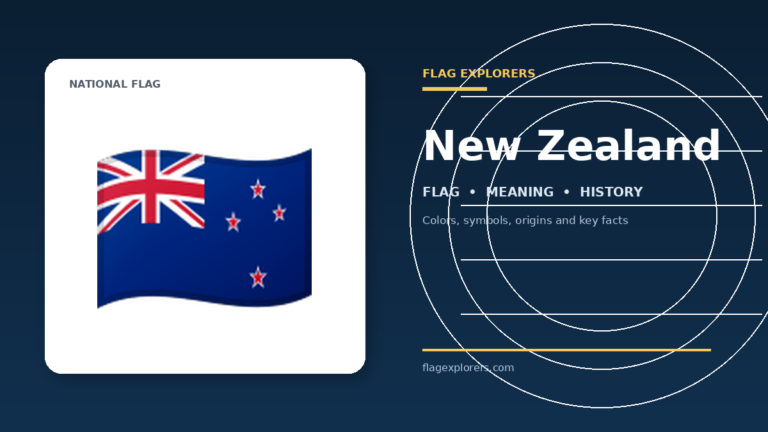
New Zealand is an obvious additional country to include in a Pacific flag exercise. Its dark blue national flag also has a Union Jack and a Southern Cross arrangement, but the stars are red with white borders and the Commonwealth Star beneath the canton is absent. The existing Australia versus New Zealand comparison on FlagExplorers deals with that particular distinction in more depth.
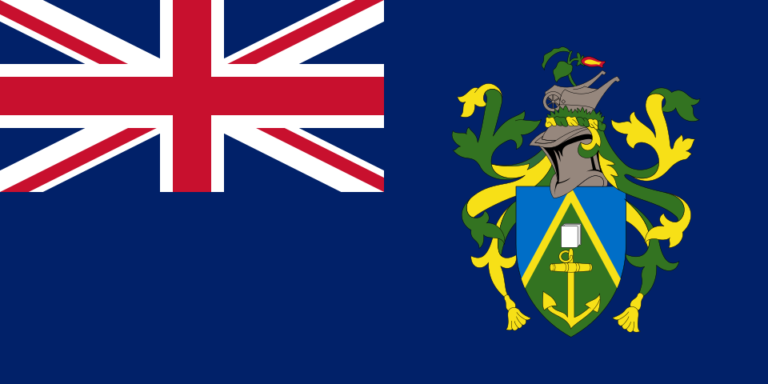
Other Pacific flags can combine a British-derived canton with a distinct badge or shield. A learner who identifies every light-colored ensign with a badge as Fiji may therefore make mistakes when studying territories or historic designs. Inspect the actual shield and read its caption before selecting the country. The presence of plants in a heraldic emblem is a useful clue only when the entire arrangement matches the Fijian design.
Australian state flags also complicate a broad recognition exercise. Several have a dark blue field with a Union Jack and a state badge. The state badges distinguish them from the national flag’s constellation and Commonwealth Star. For instance, a flag with a compact emblem on the fly does not automatically represent Fiji merely because it lacks the national Australian star arrangement.
To sort a set of such flags, first group the examples according to their canton. Then divide them into those with constellations, those with individual stars and those with heraldic badges. Finally examine the main field color and the detailed devices. This approach is more reliable than selecting a country solely because a familiar British-derived component is visible.
Always distinguish a national flag from a flag associated with a particular region, ship service or institution. A flag may be correctly identified at one level yet mislabeled at another. The Regional Flags directory provides useful comparisons for the Australian state designs. A caption such as Australian state flag is not equivalent to Australian National Flag.
Using reference artwork respectfully
Australia’s Department of the Prime Minister and Cabinet provides specific guidance on use of its national flag image. Commercial representation is generally permitted without prior formal permission, subject to the separate requirements it describes for matters such as imports and trademark or design registration. The guidance emphasizes an accurate and complete depiction that respects the symbol. This article uses an ordinary uncropped educational image rather than adding labels or other objects directly on top of it.
Fiji’s Parliament lists a National Flag Protection Act passed in 2015. However, a later Fiji Times report quotes a lawyer saying the Act had not been brought into force by a commencement notice. The legal status of that Act and any other applicable emblem restrictions should not be assumed from its passage alone. This comparison does not provide a definitive conclusion about the current scope of commercial permission.
For that reason, readers are directed to Fiji’s Ministry of Foreign Affairs reference illustration rather than newly reproducing the Fijian flag graphic in this article. The distinction is a precaution pending further verification, not an assertion that ordinary educational depiction is prohibited. The official page remains valuable for inspecting the shield and background directly.
Flagpedia describes its supplied flag images as public-domain artwork. Copyright permission for an image file and national-symbol regulations concern different questions. A publisher should keep both in mind, particularly when a design contains a shield derived from a coat of arms. Using the image as an educational illustration should not be presented as a government endorsement of the website.
Readers producing flags, merchandise or promotional materials should consult the relevant national rules and qualified advice where needed. This comparison is a visual and historical resource rather than a permission certificate or a guide to all the legal requirements governing official symbols.
Test recognition with a structured exercise
Open the official Fijian reference and compare it with the Australian picture. Cover the captions. Identify the common feature in the upper-left quarter, then name the distinguishing feature toward the right. A correct answer should describe Australia’s separate white stars and Fiji’s compact shield rather than simply naming two shades of blue.
Next, cover the upper-left quarter of both designs. The flags remain distinguishable because the important country-specific features are elsewhere. Reverse the exercise by showing only the canton. Explain why that view is insufficient to identify either country confidently. This illustrates a central principle of flag recognition: a shared feature may help identify a family of flags but does not uniquely establish one member of that family.
Add New Zealand and an Australian state ensign to the set. Ask the learner to describe the devices rather than guess the name immediately. A person who has recognized the constellation can proceed to inspect star colors and the presence or absence of the Commonwealth Star. Someone who has identified a shield should examine its individual compartments.
Finally, use a dated historical illustration and an official current reference for one of the flags. Compare their captions and document any differences. Do not assume that an older graphic is wrong merely because it differs from the modern legal design. Identification depends on knowing what period and type of flag the source intends to represent.
These exercises can be completed without copying restricted artwork into a new product. Links to official references, written observations and correctly labeled educational materials are sufficient. The goal is to recognize the countries and explain the distinguishing design features in a way that remains useful when the flags appear in unfamiliar settings.
Frequently asked questions
Do Australia and Fiji have the same flag? No. Both use the Union Jack in the canton, but Australia has white stars on dark blue and Fiji has a shield on sky blue.
How many stars are on Australia’s national flag? Six: the Commonwealth Star and the five stars of the Southern Cross.
Does Fiji use the full coat of arms on its flag? The national flag uses the shield derived from the arms, not the complete armorial achievement.
When did Fiji adopt its flag? The foreign ministry gives October 10, 1970, the date of independence.
Is a flag with the Union Jack and a shield necessarily Fiji’s? No. Australian state flags and other ensigns can also contain distinctive badges. Examine the shield and background.
Where can I inspect official reference artwork? The source section links to the Australian government and Fiji’s foreign ministry. Use those references when exact features and appropriate representation matter.
Sources and artwork
- Australian Department of the Prime Minister and Cabinet — national flag
- Australian government — flag competition and legislative history
- Australian government — commercial representation and protocol
- Fiji Ministry of Foreign Affairs — flag design and shield
- Fiji Parliament — National Flag Protection Act 2015 listing
- Fiji Times — reported commencement issue
- Flagpedia artwork terms
Flagpedia supplies the displayed educational artwork under its stated public-domain terms. National-symbol rules remain separate from copyright.