Australia vs New Zealand Flag: Stars, Colors and History Compared
Side-by-side national flag identification, visual differences, historical context and practical examples.
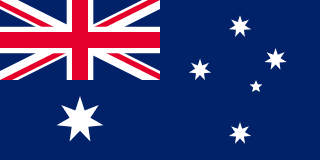
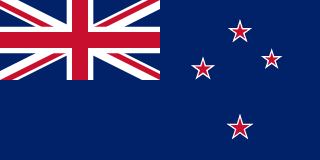
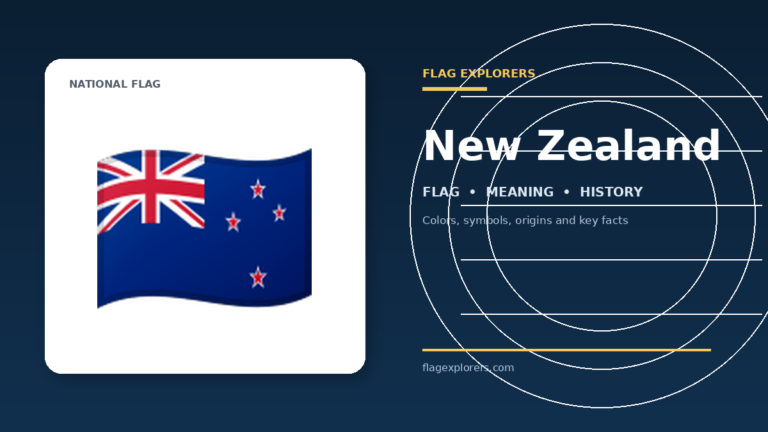
Australia has six white stars on its blue national flag: a large seven-pointed Commonwealth Star beneath the Union Jack and five stars representing the Southern Cross. New Zealand has four red five-pointed stars outlined in white, with no Commonwealth Star. Both use a blue field and the Union Jack in the upper hoist. Look beneath the Union Jack first, then count and inspect the stars on the fly.
Comparison at a glance
| Feature | Australia | New Zealand |
|---|---|---|
| Field and canton | Blue; Union Jack | Blue; Union Jack |
| Total stars | Six | Four |
| Commonwealth Star | Large white seven-pointed star | Absent |
| Southern Cross | Five white stars | Four red stars outlined white |
| Star points | Four seven-point and one five-point in the cross | Four five-point stars |
| Common proportions | 1:2 | 1:2 |
The fastest way to identify either flag
Locate the Union Jack in the upper-left quarter of the usual front-facing flag illustration. Then look immediately beneath it. A large white star in this lower-left region identifies the Australian National Flag. In New Zealand’s national design this part of the blue field does not contain a star.
The second clue is the right-hand half of the flag, known as the fly. Australia has five stars there, all white. New Zealand has four, each with a red center and a white border. Even if the small Australian star is difficult to see, the combination of the large lower-left star and white constellation normally resolves the identification.
The Union Jack is not the distinguishing feature. Both flags contain the same recognizable British flag device in the canton. The dark blue background is not decisive either. If a flag is folded so that only the canton can be seen, there is insufficient evidence to choose between these two national flags or several other blue ensigns.
A small screen can make the white outlines around New Zealand’s red stars appear brighter than their centers. Zooming in may reveal the red, but the absence of a large Commonwealth Star is often more useful than trying to resolve the colors of a tiny star.
When a flag is flying in the opposite direction, the hoist appears on the right. The Commonwealth Star is still below the canton; it has not moved to another part of the design. Describe positions relative to the hoist and fly instead of relying exclusively on the left and right sides of a photograph.
A practical mnemonic is to remember the extra star beneath Australia’s canton and the red interiors of New Zealand’s four stars. These are stable graphic features rather than subtle color differences that depend on a monitor.
Australia’s Commonwealth Star explained
The large Australian star beneath the Union Jack represents the federal system of the Commonwealth of Australia. Its seven points must not be confused with the number of separate stars on the flag. It is one large star with seven points, not seven small stars in a group.
The six points of its earlier form represented the six states that federated in 1901. A seventh point was introduced in 1908 to represent the territories. In the current national flag, the star therefore connects the design with Australia’s federal political structure.
Its placement creates a useful asymmetry. The upper hoist quarter is occupied by the Union Jack, while the lower hoist quarter contains a single large white star. On the New Zealand flag the lower hoist quarter is blue, with no comparable emblem.
On a simplified flag icon, do not turn the Commonwealth Star into an ordinary five-pointed star. That changes one of the details that distinguishes the flag. The larger Australian Southern Cross stars also have seven points, but they belong to a separate group and have a different geographical symbolism.
A good classroom exercise is to count the star shapes and then count the points on each. The total number of stars in the Australian flag is six, including the Commonwealth Star. The number of points on the large star is seven. These two counts answer different questions.
The New Zealand flag lacks this emblem because its history and constitutional identity developed independently. Its design is not an incomplete Australian flag. It is an established national flag with its own documented use of the Southern Cross.
Five white stars versus four red stars
The Southern Cross constellation is the other major element shared by the two flags. Both flags use a group of stars on the fly to refer to this prominent southern sky pattern. However, the number, size, color and angular structure of the stars differ.
Australia’s flag includes four larger seven-pointed stars and one smaller five-pointed star. The small star corresponds to Epsilon Crucis, which explains why the group contains five visible stars rather than merely the four principal stars forming the familiar cross shape. The official Australian flag history records how the star-point arrangements were standardized.
New Zealand’s design includes four red stars, each edged with white, representing the four principal stars of the cross. All have five points. The stars have different sizes as prescribed by the official representation; they should not be replaced with four identical decorative icons lined up in an evenly spaced row.
The star group is an arrangement rather than a literal astronomical chart. Its proportions and positions are defined by the respective flag designs. If you are drawing an accurate flag, use its official construction or reference artwork rather than attempting to recreate the constellation from an arbitrary photograph of the night sky.
To tell the flags apart in a small image, count the prominent star shapes on the right first. Australia may appear to have only four at first glance because the fifth is small. Look carefully near the interior of the cross. Then check whether the group is white or red with a white outline.
A black-and-white print may remove the red interiors that make New Zealand’s design distinctive. In that case the Commonwealth Star remains the strongest additional clue. If only the fly is visible and star details are lost, a confident identification may require a better image.
An astronomy lesson can pair the two flags with a labeled diagram of the Southern Cross. Discuss why countries can select different subsets or artistic treatments of the same constellation. Sharing a symbol does not require sharing identical flag artwork.
How the two designs developed
New Zealand’s use of a distinctive blue ensign with Southern Cross stars developed during the nineteenth century. Its current national flag was formally established in 1902. The star group is therefore rooted in a period before the present statutory framework was consolidated in the 1981 Flags, Emblems, and Names Protection Act.
Australia federated in 1901, and a competition was held to select flag designs. The Australian government’s account records that five entrants shared the prize. The selected blue flag was displayed in Melbourne in September 1901, an event commemorated by Australian National Flag Day.
The early Australian design was not identical in every detail to the current version. Its Southern Cross stars originally used varying numbers of points to reflect their relative brightness. The design was simplified in the following years, with four larger seven-pointed stars and one smaller five-pointed star.
The Commonwealth Star also changed from six to seven points in 1908. The distinction between the original competition design and the current design is useful when examining photographs, early prints or reproductions associated with Federation.
Australia’s Flags Act 1953 provides the statutory basis for the national flag. New Zealand’s 1981 legislation similarly defines its national flag within a broader legal framework for flags and emblems. Neither country acquired its flag simply by copying the other’s current legal design.
In a timeline, place New Zealand’s nineteenth-century ensign tradition and Australia’s Federation-era competition on separate lines. Add the 1902 formal establishment for New Zealand, the 1908 Australian star change and later legislation. That arrangement shows both the shared historical background and the independent design milestones.
The chronology also demonstrates why statements about which flag came first need precision. A first informal or maritime use, formal adoption, modification and legislative codification are distinct events. A date for one of these events does not automatically date every feature of a modern flag.
National flags, ensigns and alternative designs
The Australian National Flag is not the only official flag used in Australia. The Australian Red Ensign has a red field and related star arrangement, while the Australian White Ensign is used in a naval context. Other flags have their own distinct roles and should not be described as incorrect colors of the national flag.
New Zealand also has different ensigns for particular uses. Its legal framework identifies the national flag and regulates several other flags. A red or white ensign in a historical maritime photograph should be identified by its own context and design rather than forced into a choice between the two blue national flags.
Both countries have Indigenous flags with particular histories and cultural meanings. Those symbols are not alternative drawings of the blue national flags and should be handled with respect for their specific status, artwork and applicable usage requirements.
New Zealand held referendums concerning its national flag in 2015 and 2016. The existing flag was retained. Some proposed designs featured a silver fern and different color combinations, and they remain useful evidence of a public discussion about national identity. They are not the current national flag.
For a quiz or current flag directory, use the existing statutory national design for each country. For a historical lesson, label an ensign or proposed design according to the period and purpose for which it was used. A proposed flag displayed in a news story should not silently replace the current flag in a country database.
A comparison page can therefore serve two purposes: distinguish the current national flags and help readers recognize when an image may belong to a related but separate design category. The latter requires more than a simple star count.
Draw both flags at the same scale
Use two rectangles forty centimeters long and twenty centimeters high, corresponding to the familiar one-to-two height-to-length proportions. Mark the upper hoist quarter of each as a rectangle twenty centimeters wide and ten centimeters high. This is the region occupied by the Union Jack.
A Union Jack is more complicated than a symmetrical red cross. Its diagonal components have specific arrangements. Use a verified reference for the canton rather than improvising a fully symmetrical set of diagonals. Keep the same canton size in both practice drawings.
Fill the surrounding areas blue. In the Australian drawing, reserve a large star in the lower hoist quarter and five smaller star positions on the fly. In the New Zealand drawing, leave the lower hoist quarter empty and reserve only the four Southern Cross positions on the fly.
For the Australian stars, work with a seven-pointed template for the Commonwealth Star and the four larger Southern Cross stars. Use a five-pointed template for the smaller star. The shapes should be positioned and sized according to the official drawing rather than uniformly distributed over a grid.
For New Zealand, prepare five-pointed red stars with white edging. A useful digital technique is to use a larger white star shape beneath a smaller aligned red shape, checking the official outline proportions. The red centers should remain clearly visible.
This is a comparison exercise, not a replacement for the full statutory construction schedules. Measure the star positions from official artwork if you need a formal reproduction. Do not invent exact distances simply because an educational drawing needs a ruler.
Once both flags are complete, cover the captions and compare them at a reduced size. Ask which stable feature gives the quickest identification and which detail becomes difficult to see. The exercise demonstrates why the lower hoist region matters even more than the small fly stars in many situations.
Avoiding flag mix-ups in sports, maps and educational materials
A common setting for the confusion is a sports scoreboard where country flags are rendered as very small icons. The Union Jack and blue field remain visible, while the smaller constellation stars may merge into a few light pixels. The additional Commonwealth Star on Australia’s flag offers a more robust distinction.
If producing a scoreboard or map legend, display the country name or country code beside each icon. This improves accessibility and prevents confusion when a user cannot distinguish red and white details or when the icon is reduced to a very small size.
For a geography worksheet, ask students to identify the flags from structural descriptions rather than only from colors. One description should mention six white stars and the Commonwealth Star; the other should mention four red stars outlined in white. This method reinforces the defining features of each design.
In a flag collection, store Australia and New Zealand as independent records. The image assets, country names and source references should remain linked to the appropriate country identifier even though the shared background may make the designs look similar.
For ceremonial use, consult the applicable government’s current flag guidance. Educational comparisons explain appearance, not all rules governing public display or commercial use. Do not substitute an alternative ensign for a national flag unless that is the intended purpose.
The most reliable recognition rule remains straightforward: Australia has the extra large white Commonwealth Star below the Union Jack; New Zealand has four red stars outlined white on the fly. When these details are not visible, use a reliable label or a clearer view before identifying the flag.
Frequently asked questions
Which flag has more stars?
Australia has six; New Zealand has four.
Which has red stars?
New Zealand’s four stars have red interiors and white borders.
Do both use the Southern Cross?
Yes, with different star counts and treatments.
Did New Zealand replace its flag after its referendum?
No. The existing national flag was retained.
Sources and artwork
Australian Government: Australian National Flag
Australian Government: construction and history
New Zealand Ministry for Culture and Heritage: New Zealand flag
New Zealand Flags, Emblems, and Names Protection Act
Flag artwork: Flagpedia / FlagCDN, published as public-domain reference artwork. Colors on screen are illustrative. Independent educational comparison; no official endorsement implied. Reviewed November 2026.