United States vs Liberia Flag: Stars, Stripes and Their Historical Connection
Side-by-side identification, documented history and practical measured comparison.

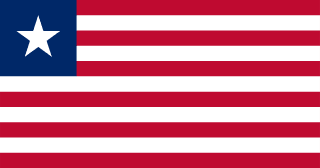
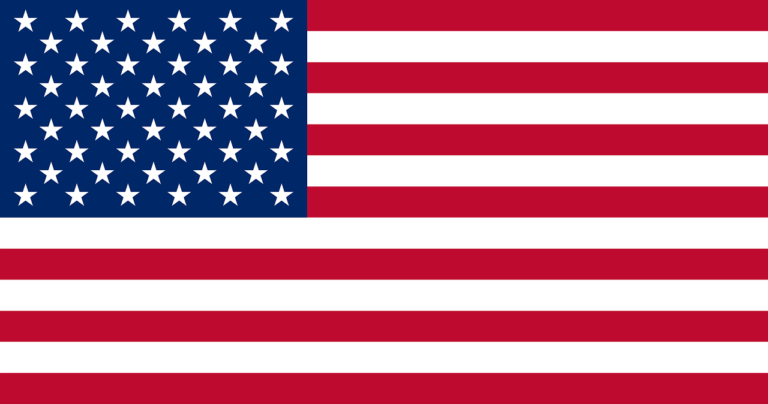
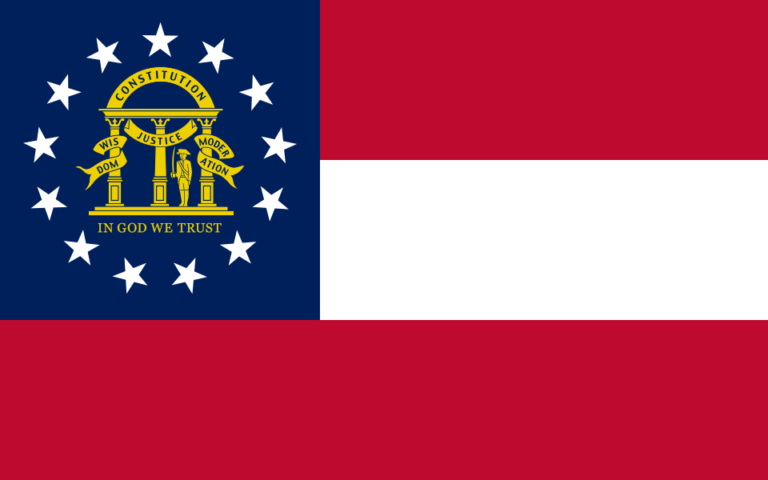
The United States flag has thirteen alternating red and white stripes and fifty white stars in a blue canton. Liberia’s national flag has eleven alternating red and white stripes and one white star in a blue square canton. The designs reflect a documented historical connection between the founding of Liberia and the United States, but their stars and stripes represent different national histories. Count the stars first, and then compare the stripes and canton shape.
Comparison at a glance
| Feature | United States | Liberia |
|---|---|---|
| Total stripes | 13 | 11 |
| Red stripes | 7 | 6 |
| White stripes | 6 | 5 |
| White stars | 50 | 1 |
| Canton | Blue rectangle | Blue square |
| Reference height:length | 10:19 federal specification | 10:19 common reference |
| Stripe meaning | Original thirteen colonies | Eleven signers of Liberia’s Declaration of Independence |
The single star is the fastest identifying feature
Both flags belong to the visual family of striped flags with a canton. Their red and white horizontal bands continue toward the fly, while the blue region at the upper hoist contains white star imagery. At a distance, the overall pattern can initially suggest the same country.
Look closely at the blue canton. The current United States national flag contains fifty small white stars arranged in alternating rows. Liberia has one much larger white five-pointed star centered in its blue square. This difference is normally visible before the observer has counted every stripe.
If the canton is folded away, count the stripes near the free edge. The United States has thirteen; Liberia has eleven. Both start and end with red, so the color of the outermost stripe is not sufficient by itself.
The shape of the blue region is another useful feature. The US federal reference design has a canton wider than it is tall. Liberia’s canton is square in the construction described by the specialist reference. A badly stretched thumbnail may obscure that difference, but it should be retained in a properly scaled illustration.
A photograph showing one white star from a small portion of the US canton should not be automatically identified as Liberia. Check whether the entire canton is visible. The single star on Liberia’s flag occupies the center of its blue square rather than being part of a larger grid of identical stars.
The most dependable identification therefore combines the total number of stars with the number of stripes. Fifty and thirteen identify the current United States flag; one and eleven identify Liberia’s national flag within this comparison.
The United States flag: why thirteen stripes and fifty stars differ
USAGov identifies the thirteen stripes with the thirteen original colonies and the fifty stars with the fifty states. These two numbers express different historical ideas. The stripe count preserves the original founding association, while the star count represents the current number of states.
The historical wording of Title 4 of the United States Code must be read together with its provisions for adding stars and the executive-order specifications. An isolated passage may describe an older number of stars. That does not establish that the current flag has that older number.
The current fifty-star arrangement has nine staggered horizontal rows, with six stars in the first, third, fifth, seventh and ninth rows and five in the intervening four rows. The total is five groups of six plus four groups of five, or fifty. The stars are five-pointed and white.
The thirteen horizontal stripes alternate red and white, with seven red and six white. Each stripe has the same height. The blue canton covers the upper seven stripes at the hoist; the six remaining stripes below it run uninterrupted across the complete length.
In the standard federal proportions, the complete flag is 1.9 times as long as it is high. The union is seven-thirteenths of the height and its width is 0.76 times the flag height. Commercial flags and small graphics can be made in other rectangular proportions, so exact outer dimensions alone do not determine identity.
A correct contemporary flag must not have an extra star simply because a user is illustrating a hypothetical future state admission. Any proposed design with a different star count should be labeled as a proposal or historical version rather than displayed as the current flag.
For more precise construction instructions, consult our dedicated United States flag drawing guide. In this comparison the main concern is understanding the geometry and counting features that distinguish it from Liberia.
Liberia’s flag: one star and eleven stripes
Liberia’s Ministry of Foreign Affairs describes six red stripes alternating with five white stripes. Its National Flag Day proclamations explain that the eleven stripes commemorate the eleven signers of the country’s Declaration of Independence.
The blue square at the upper hoist contains one large white five-pointed star. The official proclamation links that star to Liberia’s historic independence in Africa. That symbolic explanation is not a claim that Africa had no other historic states or independent political societies. It should be understood in the context of the Liberian national narrative and the nineteenth-century founding of the republic.
The striped arrangement visually resembles the United States flag, but the national meanings are distinct. Liberia’s eleven stripes do not stand for eleven American colonies. Its lone star is not an American state star separated from the other forty-nine.
In the usual construction reference, the square canton occupies the height of five stripes. Since the first, third and fifth stripes are red, its lower boundary aligns with the end of the third red stripe. Six uninterrupted stripes appear below it, just as six appear below the United States canton, despite the different total counts.
The specialist flag reference discusses historical production specifications and differences in reproduced proportions. The commonly used 10:19 ratio and square canton are useful for this measured comparison, but an official textile reproduction should use the applicable current Liberian standard.
The white star is centered in the square. Exact reproductions should use the documented artwork or construction rule rather than assuming that the star occupies the same fraction of the canton as an individual star on the US flag.
National Flag Day in Liberia is associated with August 24, and the official proclamations link the observance to legislation dating to 1915. The date belongs to Liberia’s own flag history; it is distinct from US Flag Day on June 14.
Draw both flags at the same height and compare the stripe measurements
Choose a common reference height of one hundred ten centimeters for a large classroom diagram, or treat the measurements as abstract grid units. Using the 10:19 reference ratio, both rectangles are two hundred nine units long.
For the United States flag, divide the height by thirteen. Each stripe measures approximately 8.462 units. The blue union extends down seven stripes, giving a height of about 59.231 units. Under the federal construction reference its width is 0.76 times the full height, or 83.6 units.
For Liberia, divide the one-hundred-ten-unit height by eleven. Each stripe measures exactly ten units. Its square canton occupies five stripes and therefore measures fifty by fifty units. The center of the star lies twenty-five units from the hoist and twenty-five units below the top of that square.
This comparison makes the Liberian stripes visibly thicker at a common height. Each is one-eleventh of the height rather than one-thirteenth. Their ratio is thirteen to eleven, so a Liberian stripe is approximately eighteen percent thicker than a US stripe in these same-height drawings.
The US canton occupies more horizontal space and is relatively wider. On the reference grid, its width is forty percent of the flag’s complete length. The Liberian square canton occupies fifty divided by two hundred nine of the complete length, approximately 23.9 percent.
These figures are useful for visual recognition because the two flags otherwise share the same palette and general arrangement. Even without stars, the larger US rectangular canton differs from Liberia’s smaller square.
For a digital illustration, build the stripes as individual equal rectangles, then overlay the blue canton and its correct star arrangement. The stripe boundaries should be measured from the full height, not produced by manually spacing a sequence until it looks roughly right.
The figures are calculated from the stated construction references. They are not an assertion that every commercially available flag or historical version has identical outer dimensions. Keep the reference ratio and source named whenever presenting an exact drawing.
Why the flags look alike: the founding of Liberia
The US Department of State’s Office of the Historian traces the origins of the settlement that became Liberia to the American Colonization Society. Founded in 1816, the society promoted the resettlement of free Black Americans in Africa. A settlement was established in West Africa in the early 1820s.
The movement had varied and contested motivations. Some participants supported emigration as an opportunity for self-government, while others in the United States promoted colonization for reasons rooted in racial exclusion. Many free Black Americans opposed removal from the country where they had been born or lived.
This complicated background is important when discussing the flag’s American resemblance. The history should not be reduced to a simple story that the United States founded a colony in the same manner as a European colonial power and later granted it independence. The American Colonization Society was a private organization, and Liberia’s path to statehood had its own particular circumstances.
Liberia declared independence in 1847, establishing a sovereign republic. Its national symbols, including the striped flag with a single star, reflected connections to American political forms while establishing a distinct national identity.
The local African communities in the territory had their own societies and histories before the arrival of the settlers. The country’s subsequent development included complex relations between the settler population and Indigenous communities. A flag comparison should acknowledge that broader history rather than describing Liberia as an empty land awaiting the creation of a nation.
The United States did not recognize Liberia diplomatically immediately after its 1847 independence. The Department of State’s historical record distinguishes independence, recognition and the subsequent establishment of formal diplomatic relations. Those milestones are separate from the adoption and symbolism of Liberia’s flag.
The visual resemblance therefore reflects a documented historical connection, but it does not imply that Liberia is a US state, territory or modern dependency. Liberia is an independent country in West Africa, and its national flag represents that sovereignty.
What the star and stripe counts actually symbolize
The two national flags offer a useful example of the same visual elements expressing different historical meanings. In the United States, the thirteen stripes recall the original colonies and the stars correspond to the states. In Liberia, the eleven stripes commemorate the signers of its own Declaration of Independence.
A learner who memorizes only the word independence may miss the distinction. Ask what the number eleven refers to in Liberia, and what thirteen refers to in the United States. The answers concern different events and political histories.
The Liberian lone star expresses its own national independence and identity. It should not be interpreted as representing a single constituent state simply because the United States uses its stars to represent states. Nor should it be drawn as a small star in an otherwise empty oversized US canton.
The official Liberian flag-day account assigns meanings to the colors as well. These include historical sacrifice and ideals associated with the founding of the republic. Such descriptions should be attributed to Liberian sources rather than imported from unrelated interpretations of American flag colors.
The US flag’s star count changed as the number of states grew, while its modern stripe count remained thirteen. Historical US flags may show forty-eight stars, forty-nine stars or earlier arrangements. They should be labeled by their period instead of being dismissed as inaccurate current illustrations.
A historic United States flag with thirteen stars remains distinct from Liberia’s eleven-stripe, one-star flag. The resemblance cannot be resolved solely by assuming that every historic American flag has fifty stars.
For a classroom worksheet, prepare columns for the design feature, the number and the documented meaning. Students can match the numbers one, eleven, thirteen and fifty to the correct flag and explain why the same geometric vocabulary does not establish identical symbolism.
Distinguish Malaysia and other striped or lone-star flags
Malaysia also uses red and white horizontal stripes and a blue canton, but it has fourteen stripes and a golden crescent with one fourteen-pointed star. The crescent and star color distinguish it from the two flags compared here. The number of points on Malaysia’s star should not be confused with a count of separate stars.
Uruguay uses nine blue and white stripes and a white canton containing a golden sun. Greece uses nine blue and white stripes with a white cross on a blue canton. Both belong to the broader striped-and-canton family but have different color schemes and corner devices.
Texas uses one white star in a full-height blue hoist panel, with two broad horizontal fly areas. It has neither the eleven alternating stripes of Liberia nor the blue square canton that occupies only part of the height.
Puerto Rico and Cuba also use a lone star on a red-white-blue flag. Their star appears in a triangular hoist device, not a blue rectangular canton, and each has five horizontal stripes.
In a flag-identification interface, a search for red and white stripes with a blue corner should first return the likely candidates from this family. The next filters should be stripe count, star count, star color, presence of a crescent and canton shape.
A user looking at only a small blue region with a white star may need a wider view before the exact country can be identified. A reliable country label is especially important in small icons or low-resolution sports graphics.
The broad color palette is not enough on its own. Liberia is distinguished by its eleven stripes and large single star within a square blue canton. The current United States flag has thirteen stripes and fifty stars in a wider rectangular union.
A practical counting and history exercise
Create two unlabeled drawings of the correct flag bases. Begin with a striped rectangle divided into thirteen bands and another divided into eleven. Make sure red occupies the first and last band on each.
Give learners two canton outlines, one rectangular and one square. Ask them to match these to the appropriate striped fields. Then add fifty small stars to the US canton using the staggered rows, and a single centered star to the Liberian canton.
Cover the cantons and identify each flag from the stripe count. Next cover the fly and identify each from the star count. This demonstrates how independent recognition features can support identification when part of a real flag is obscured.
For the history portion, use the documented 1847 independence of Liberia and the evolution of the American flag through changes in its state count. Ask students to explain the meaning of the two stripe totals without confusing the signers of the Liberian declaration with the original American colonies.
The exercise should also distinguish an independent West African republic from a US state or territory. Similar-looking flags can reflect historical links while representing separate countries.
The simplest recognition rule remains fifty stars and thirteen stripes for the current United States flag, and one star and eleven stripes for Liberia. Understanding the history behind those numbers makes the difference easier to remember.
Frequently asked questions
Which flag has one large white star?
Liberia.
How many stripes does Liberia have?
Eleven: six red and five white.
Why are they similar?
Liberia’s nineteenth-century founding had historical connections with the United States.
Is Liberia part of the United States?
No. It is an independent republic in West Africa.
Sources and artwork
USAGov: American flag and national symbols
United States Code, Title 4, Chapter 1 and executive-order specifications
Liberian Ministry of Foreign Affairs: 2025 National Flag Day proclamation
US Department of State Office of the Historian: founding of Liberia
Flags of the World: Liberian flag construction and historical specifications
Reference artwork: Flagpedia/FlagCDN, public-domain flag images. Educational comparison, not official endorsement. Reviewed November 2026.