Greece vs Uruguay Flag: Nine Stripes, Cross and Sun of May Compared
Side-by-side identification, documented history and practical measured comparison.
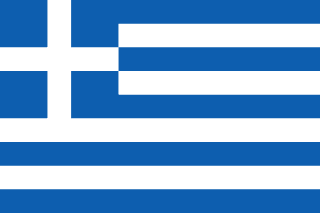
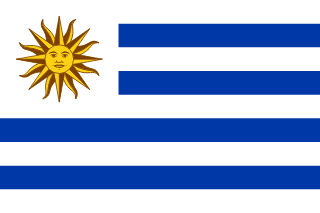
Greece and Uruguay both use nine alternating blue and white horizontal stripes, but their color order is opposite. Greece begins and ends with blue and has a white cross on a blue canton. Uruguay begins and ends with white and has a golden Sun of May on a white canton. Both cantons occupy the first five stripe heights. The two flags come from different independence-era traditions, and their upper-hoist symbols are the fastest way to tell them apart.
Comparison at a glance
| Feature | Greece | Uruguay |
|---|---|---|
| Total stripes | 9 | 9 |
| Blue stripes | 5 | 4 |
| White stripes | 4 | 5 |
| Top and bottom stripes | Blue | White |
| Canton | Blue with white cross | White with golden sun |
| Common height:length | 2:3 | 2:3 |
| Symbol | Cross | Sun with 16 alternating rays |
Look at the canton and the outermost stripes
The upper hoist corner is the most useful starting point. Greece has a blue square containing a white cross that reaches the square’s edges. Uruguay has a white square containing a gold sun with a face and sixteen alternating straight and wavy rays.
The canton is a square area in the upper part of the flag near the pole. In both designs it interrupts the first five stripes at their hoist ends. That common structure helps explain the resemblance at a distance.
Move to the fly, where all nine horizontal stripes are visible. Greece begins with blue at the top, followed by white, and alternates until the ninth blue stripe at the bottom. Uruguay begins with white, followed by blue, and alternates until the ninth white stripe.
Consequently, the two underlying stripe arrangements are opposites. Greece has five blue and four white bands. Uruguay has five white and four blue. The number nine by itself is not enough to identify the flag.
The yellow or golden sun is an additional color on the Uruguayan design. Greece’s ordinary national flag uses only blue and white. A small yellow mark in a white canton is therefore a useful clue even when the detailed face and rays are not visible.
In a photograph where the canton is folded away, the top and bottom stripe colors may still identify the flag. If only a middle fragment is visible and the outer edges are hidden, the alternating blue-and-white stripes alone may not resolve the comparison.
A dependable recognition sequence is to inspect the canton, then count the stripes and check the top and bottom colors. It is more reliable than deciding which country has the darker blue, because a variety of lighting and printing conditions can change the perceived shade.
Construct the Greek flag using the official stripe grid
The Greek flag law specifies a height-to-length ratio of two to three and a stripe height equal to one-ninth of the overall flag height. The Presidency of Greece describes the blue canton as occupying the height of the first five stripes.
For a convenient drawing, choose a height of eighteen centimeters and a length of twenty-seven centimeters. Each stripe will be two centimeters tall. Mark eight horizontal boundaries at two-centimeter intervals from the top.
Color the underlying stripes blue and white alternately, beginning and ending with blue. The first five stripes will later be partly covered by the canton, but their fly portions must remain visible. All four stripes beneath the canton extend across the complete length.
The canton measures ten centimeters by ten centimeters, corresponding to five stripe heights. Place it at the upper hoist. Its blue field covers the ends of the first five background stripes. The white cross inside it is one stripe height thick.
Draw the white vertical and horizontal arms across the canton. On the ten-centimeter square, each arm is two centimeters thick and centered on the five-centimeter midpoint. The vertical arm occupies x coordinates four to six centimeters, and the horizontal arm y coordinates four to six.
The cross ends reach the canton edges, not the outer edges of the full flag except where those edges coincide with the canton. Do not extend its vertical arm into the lower four stripes or its horizontal arm across the entire striped fly.
For a digital drawing, use a 1080-by-720-pixel artboard. Each stripe is eighty pixels high; the canton is four hundred pixels square; its white arms are eighty pixels thick. The central crossing point lies at x equals 200 and y equals 200.
The resulting design contains no gold sun, star or additional text. For historical or official production, check the current Greek specification and official reference artwork. The geometry above translates the prescribed proportions into a practical drawing.
Construct Uruguay’s nine stripes and white canton
Uruguay’s national flag also uses nine equal horizontal stripes. The Uruguayan embassy’s national-symbols page confirms that the first and last are white, with four blue stripes between the five white ones.
Use a rectangle twenty-seven centimeters long and eighteen centimeters high, corresponding to the common two-to-three reference ratio. Divide the height into nine bands of two centimeters each. Color the first white, the second blue, and continue alternately until the bottom white band.
The upper hoist canton is white and occupies the height of the first five stripes in the standard reference construction. Draw a ten-by-ten centimeter square in that corner. The lower four stripes remain uninterrupted beneath it.
The entire white canton is part of the flag, even where it joins the white stripe at the top or bottom of its height. Do not add a separate blue or black rectangular border merely to make its outline more visible.
Locate the center of the white square five centimeters from the hoist and five centimeters from the upper edge. The gold sun belongs there. The specialist construction reference gives the outer sun diameter as eleven-fifteenths of the square’s side. For this example, the resulting diameter is about 7.33 centimeters.
The sun’s diameter includes its rays, not only the central facial disk. Use the official-style reference to establish the shape and size of the inner circle, the face and the alternating rays. Do not fill the entire construction circle gold; the white spaces between the rays are important.
For a 1080-by-720-pixel drawing, the canton is four hundred pixels square. Its center is at x equals 200, y equals 200. The sun’s outer diameter according to the specialist reference is approximately 293.33 pixels.
The common dimensions make the two flag bases particularly suitable for comparison. However, each canton has a different background color and symbol. A recolored Greek cross is not a substitute for the Uruguayan Sun of May.
The Sun of May is more than a generic sun icon
Uruguay’s central canton symbol has a human face surrounded by sixteen rays. Eight rays are straight and eight are wavy in an alternating sequence. The Uruguayan embassy and national education materials both identify this as the Sun of May.
For a drawing exercise, mark sixteen directions around a circle at intervals of twenty-two and a half degrees. Alternate the positions reserved for straight and curved rays. This supplies a useful layout scaffold but does not define every contour in the official artwork.
The straight rays taper outward, while the wavy rays have a distinctive curved form. The facial features occupy the central disk. Use a reliable reference to transfer the outline and details rather than drawing an ordinary cartoon sun with a smile and an arbitrary number of rays.
The sun’s historical meaning is associated with independence and liberty in the Río de la Plata region. It is related to the Sun of May appearing on Argentina’s flag, but the Argentine design has a different number and arrangement of rays in its own official representation.
In an educational comparison, identify the symbol as a faced Sun of May rather than an unadorned gold disk. The visible rays and facial detail distinguish it from many national flags that contain circular sun imagery.
At thumbnail size, the face may not be readable. That is not a reason to omit it from the full-resolution source artwork. Preserve the actual design and provide a country caption for users who cannot see the smallest details.
Greece’s white cross has a much simpler rectangular geometry. This makes the canton symbols fundamentally different even though both flags have square cantons and nine horizontal stripes. The symbol inside the canton is the best clue in most full flag images.
What the stripes reveal even when the canton is hidden
A shared stripe count does not imply the same distribution of colors. Imagine both flags before the cantons are applied, each with a height of eighteen centimeters and a length of twenty-seven centimeters.
The Greek background has five blue stripes, each measuring two by twenty-seven centimeters. Their combined area is 270 square centimeters. The four white stripes occupy 216 square centimeters.
The Uruguayan background reverses those counts. Its five white stripes occupy 270 square centimeters, and its four blue stripes occupy 216. This is the underlying stripe pattern before the upper hoist symbols are added.
The canton interrupts part of those regions, so those numbers are not the visible final color areas. On Greece’s ten-centimeter square, the underlying first five stripes have three blue and two white rows. The cross-and-canton overlay replaces that portion of the stripe base.
Uruguay’s white canton covers the first five stripe rows, of which three are white and two blue. The sun then introduces a third color within the square. This is why a calculation of final visible color percentages must account for the canton and emblem rather than simply count the stripes.
In a photograph of a folded flag, examine the free edge of the textile. If the first and last stripes are visible, they offer a direct clue: blue on both ends for Greece, white on both for Uruguay. Do not estimate color percentages from an incomplete photograph.
For a classroom diagram, students can temporarily remove the canton layer and compare the two base patterns. They can then restore each country’s own symbol and explain why both the alternating order and the canton matter to the finished design.
Greece’s striped flag and independence history
The Greek national flag developed in the context of the Greek struggle for independence during the nineteenth century. The Presidency of Greece distinguishes an early land flag with a white cross on blue from maritime flags that more closely resembled the current striped design.
Those land and sea designs had different roles. Their histories help explain why a white cross on a plain blue field can appear in Greek historical material without being the current nine-stripe national flag.
The official Greek account records changes during the monarchy, including the addition of royal arms to certain flags. Historical representations must therefore be labeled according to their period and purpose rather than silently replaced with the current national design.
The present national flag’s cross and stripe arrangement is defined by the modern legal framework. The Greek Foreign Ministry associates the nine stripes with the nine syllables of the Greek phrase meaning Freedom or Death, an explanation linked with the independence movement.
This symbolism should not be generalized to every flag with nine stripes. Uruguay’s nine bands have an unrelated documented national meaning. The visual count is the same, but the historical interpretation is different.
The blue and white Greek design is particularly recognizable because of its canton cross. It should not be confused with Finland’s plain white field and blue Nordic cross, or with a blue-and-white historical Greek flag that has a large cross rather than nine stripes.
A timeline for Greek flag history should identify the independence-era land and maritime designs and later legal standardization separately. A modern flag comparison focuses on the current national flag but can help readers recognize earlier variants in historical images.
Uruguay’s flag and the original nine departments
Uruguay’s modern flag belongs to its own nineteenth-century independence history. The Uruguayan embassy identifies an early 1828 design containing seventeen stripes and the nine-stripe version adopted in 1830.
The change from seventeen to nine stripes is important when interpreting historical flag illustrations. A greater number of bands in an early reference is not necessarily an error. It may correspond to the design before the 1830 revision.
The embassy’s account links the nine current stripes to the original territorial divisions of Uruguay. These represent a different historical idea from the explanation of the nine Greek stripes.
The Sun of May connects the design with the wider independence tradition of the Río de la Plata. The embassy also identifies Argentina’s colors and the striped flag of the United States as influences on Uruguay’s design. That documented account is a stronger basis for explaining its appearance than an unsupported claim that it was copied from Greece.
Uruguay and Greece achieved statehood through separate historical processes in different regions. Their blue-and-white stripes and upper-hoist symbols developed independently. Shared geometry alone does not prove a direct historical design relationship.
Uruguay recognizes other national symbols, including the flags associated with Artigas and the Thirty-Three Orientals. Their distinct colors and arrangements should not be merged with the national Pabellón Nacional simply because they belong to the same country.
For a historical learning activity, place the earlier seventeen-stripe Uruguayan design alongside the modern nine-stripe flag. Then compare the latter with Greece. This shows both the evolution of one design and the independent resemblance between two countries’ modern flags.
Other similar striped flags and a practical identification test
Argentina uses three broad horizontal bands in light blue and white with a Sun of May in the middle. Uruguay places its sun in the upper hoist and uses nine narrow stripes. These features distinguish the related South American designs.
The United States flag uses thirteen red and white stripes and a blue canton containing fifty white stars. Its underlying structure is comparable as a striped rectangle with a canton, but its palette, stripe count and emblem differ from Greece and Uruguay.
Liberia similarly uses red and white stripes with a blue canton and one white star. Its eleven bands provide another distinctive count. Counting the bands is useful for this wider family of flags, but it is insufficient when comparing Greece directly with Uruguay because both have nine.
For a classroom recognition activity, draw the two nine-stripe flags at the same height. Cover the cantons and identify each by its outer stripe color. Then cover the striped fly and identify each by its canton. This tests two independent features.
For a digital map or sports display, include the country name beside the graphic. Users may not be able to distinguish the sun’s tiny face or the white cross at a small size. Accessible text labels improve identification without requiring changes to the source artwork.
The concise rule is Greece: blue first and last stripes, white cross on blue. Uruguay: white first and last stripes, golden sun on white. Their separate histories explain the national meaning of each design, while their geometry provides a practical method for recognition.
Frequently asked questions
Which flag has the white cross?
Greece.
Which flag starts and ends with white?
Uruguay.
Do both flags have nine stripes?
Yes, but the alternating order is reversed.
How many rays are on Uruguay’s Sun of May?
Sixteen, alternating straight and wavy rays.
Sources and artwork
Presidency of Greece: National Flag
Greek Ministry of Foreign Affairs: State Symbols
Uruguayan embassy: national symbols, history and design
Uruguay national education portal: Pabellón Nacional
Flags of the World: Uruguay construction and sun geometry
Reference artwork: Flagpedia/FlagCDN, public-domain flag images. Educational comparison, not official endorsement. Reviewed November 2026.