Slovenia vs Slovakia Flag: Coats of Arms, Colors and Proportions
Side-by-side national flag identification, visual differences, historical context and practical examples.
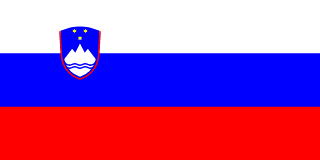
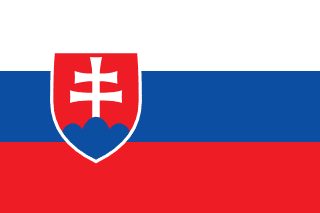
Slovenia and Slovakia both use equal horizontal white, blue and red bands. Slovenia’s blue shield shows Mount Triglav, two wavy lines and three golden stars, and sits across the white-blue boundary near the hoist. Slovakia’s red shield shows a silver double cross above three blue peaks and extends symmetrically across the flag’s middle height. Slovenia’s flag is longer relative to its height. The coat of arms is the fastest reliable distinction.
Comparison at a glance
| Feature | Slovenia | Slovakia |
|---|---|---|
| Stripe order | White, blue, red | White, blue, red |
| Height:length | 1:2 | 2:3 |
| Shield | Blue with red edging | Red with white edging where required |
| Main symbol | White Mount Triglav | Silver double cross |
| Additional details | Three golden stars; two waves | Three blue peaks |
| Shield vertical position | White-blue boundary | Vertically centered |
How to tell Slovenia and Slovakia apart
Begin by looking at the small shield near the hoist. The white, blue and red stripes are arranged identically in both flags, so a color list or stripe count will not distinguish them. The shield is the important visual feature.
Slovenia’s shield is blue and contains a white mountain shape. Three small golden stars are arranged above the mountain and two wavy lines appear beneath it. The mountain is Mount Triglav. The coat of arms sits high on the flag, partly in the white stripe and partly in the blue stripe.
Slovakia’s shield is red and contains a white or silver cross with two horizontal crossbars. Beneath the cross is a blue three-peaked hill. This shield is vertically centered within the flag, rather than being located mainly around the upper stripe boundary.
At a small size, the dominant shield color often remains visible even when the individual stars, waves or crossbars are difficult to recognize. A blue shield in the upper area points toward Slovenia; a red shield with a white double-cross shape at mid-height points toward Slovakia.
The position of the coat of arms can provide an additional clue where a photograph does not preserve color well. Slovenia’s shield overlaps the top and middle bands. Slovakia’s shield extends across parts of all three bands, with its midpoint aligned with the horizontal center of the flag.
Use the emblem and position together. If the coat of arms is entirely hidden by a fold, do not rely on the identical stripe colors to choose between the countries. Obtain a clearer view or confirm the identity through the country name and context.
Slovenia’s coat of arms: mountain, waves and stars
The Government of Slovenia describes the national coat of arms as a shield with Mount Triglav in white against blue. Triglav is Slovenia’s highest mountain and an important national symbol. Its recognizable three-peaked form distinguishes it from the blue hills supporting Slovakia’s double cross.
The two wavy lines beneath the mountain symbolize the sea and rivers. They are not additional horizontal bands extending across the national flag. They belong within the shield and provide a useful small-scale detail for recognizing the Slovenian emblem.
Above the mountain are three golden six-pointed stars in an arrangement with two higher stars and one below. They are associated with the historical Counts of Celje. Their position and color distinguish the emblem from the plain white double cross found on the Slovak flag.
The shield has a red edging along two sides. The official government page provides geometric and color guidance for the coat of arms. The detailed mountain outline, curved shield and star arrangement should therefore be reproduced from the official artwork, not reconstructed by substituting a generic mountain icon.
The flag places half of the coat of arms in the white band and half in the blue band. This relatively high position means the lower red stripe is not crossed by the shield in the usual design. An image with a Slovenian-looking mountain emblem vertically centered across all three stripes would not match the standard placement.
For a classroom drawing, first create the three horizontal bands. Add a correctly scaled and rights-cleared Slovenian shield from the official reference near the upper hoist. A simplified student sketch can identify the mountain and stars, but it should be labeled as an educational interpretation rather than formal government artwork.
Slovakia’s coat of arms: double cross and three hills
The Office of the President of the Slovak Republic describes the coat of arms as a silver double cross above a three-peaked mountain on a red shield. The central peak is higher than its neighbors. The cross has two horizontal bars rather than the single bar familiar from many Christian cross designs.
The three blue peaks are traditionally associated with the Tatra, Fatra and Mátra mountains. This interpretation belongs to the historical heraldic tradition; the design is not a literal topographical map showing the precise outlines or current locations of all three mountain ranges.
The red field of the shield is a major recognition feature. It provides a different background from the blue shield of Slovenia. The white cross stands out against red, while the blue hills occupy the lower part of the shield.
The Slovak flag’s official description places the coat of arms in the hoist half and specifies that it is half the flag height. It is equally distant from the top, bottom and hoist edge. This makes its vertical position straightforward to understand in comparison with Slovenia’s upper placement.
A narrow white edging separates the shield from adjoining colored bands where necessary, as specified by Slovak guidance. This edging helps the red shield remain visible when it overlaps the red background stripe. Do not add an unrelated dark outline around the entire emblem.
The Slovak double cross has historical associations extending beyond the modern republic. Similar heraldic motifs can occur in other flags or coats of arms. The distinctive combination of a red shield, white double cross and blue peaks within a white-blue-red tricolor is the relevant identification cue here.
To draw a classroom version, use a verified emblem reference and keep the cross and hills within the shield. Avoid placing three separate white mountain peaks above the cross, which would combine elements of both national coats of arms incorrectly.
Compare shield positions with a measurement exercise
The flags have the same vertical order of stripes: white occupies the top third, blue the middle third and red the lower third. The location of their coats of arms relative to these boundaries provides a useful geometric comparison.
Imagine two flags of thirty centimeters in height. Each stripe is ten centimeters high, regardless of which national flag is being drawn. The white-blue boundary is at ten centimeters from the top, and the blue-red boundary at twenty centimeters.
Slovenia’s official description places one half of the coat of arms in the white band and the other half in the blue band. The shield is consequently centered around the first boundary at ten centimeters from the top, not the middle of the entire flag at fifteen centimeters.
Slovakia’s shield has a height of half the flag’s height, which is fifteen centimeters in this example. The equal gaps above and below it are seven and a half centimeters. Its upper edge lies within the white stripe, and its lower edge lies within the red stripe.
The equal distance from the hoist in the Slovak specification gives another seven-and-a-half-centimeter gap at the left edge of the reference drawing. This describes the placement of the shield, not the location of an imaginary center point across the entire rectangle.
For Slovenia, use the official reference artwork to reproduce its horizontal position and exact shield geometry. The government description gives the important vertical placement relative to the white-blue boundary. Do not invent additional numerical specifications merely to make the drawing exercise symmetrical.
If you are examining an unknown flag at a distance, the position of the emblem may remain recognizable even when its tiny internal details are blurred. A shield centered high in the upper two bands differs visibly from one extending into the bottom red stripe.
Compare the overall flag proportions
The Slovenian flag has a height-to-length ratio of one to two. This means a flag twenty centimeters high is forty centimeters long. The Slovak flag has a ratio of two to three, so a flag twenty centimeters high is thirty centimeters long.
At the same height, Slovenia’s reference flag is ten centimeters longer in this example. Its long rectangular shape is a secondary identification clue when the full edges of both flags are visible and have not been distorted by a graphic layout.
Both flags still use three equal-height horizontal bands. At twenty centimeters in height, each band is six and two-thirds centimeters tall. The difference in length changes the area occupied by each colored band, not the relative fraction of the height assigned to that color.
In a digital drawing, use a forty-hundred-by-two-thousand-pixel artboard for Slovenia if you need a high-resolution example, and a three-thousand-by-two-thousand-pixel artboard for Slovakia. The height remains the same, allowing the proportions and emblem placement to be compared directly.
Many flag websites use a standard thumbnail frame for every country. If those frames crop or stretch the artwork, the length difference may disappear. A reliable identification should therefore give priority to the coat of arms over the apparent dimensions of a small icon.
A photograph of a flag hanging on a pole can also conceal the outer fly edge. Even a precisely measured crop may not represent the full length of the textile. Do not assume that a shorter-looking Slovenian flag has become a Slovak flag.
For educational charts, display the two images at the same height with their aspect ratios preserved. This makes the proportion difference apparent without modifying either emblem. Include the country names below the artwork so the visual comparison remains accessible.
Why the white-blue-red tricolors are similar
White, blue and red are widely associated with Pan-Slavic flag traditions. In the nineteenth century, national movements among Slavic peoples used these colors in various arrangements. The similar palette provides historical context for the modern flags of Slovenia and Slovakia.
The modern Slovenian flag was established in June 1991 as the country declared independence from Yugoslavia. The coat of arms with Mount Triglav, waves and stars differentiates the modern design from earlier Slovenian tricolors and flags used within the Yugoslav federation.
Slovakia’s modern national symbols developed as Czechoslovakia moved toward dissolution. The present flag was adopted in 1992, before Slovakia became a separate independent republic in January 1993. Its double-cross shield belongs to a longer Slovak heraldic tradition.
The modern flags therefore arose in separate political contexts. Slovenia’s transition involved the breakup of Yugoslavia, whereas Slovakia’s independence followed the peaceful dissolution of Czechoslovakia. The similarity of their country names in English does not mean that one was a province or earlier name of the other.
Older tricolors may lack the coats of arms used today. A historical image should be captioned with its date and political context where possible. The current flags’ emblems help distinguish them from one another and from other countries that use similar stripes.
The common palette is not a complete explanation of every color’s individual symbolism. Official national descriptions provide the design; historical accounts explain how the national colors and emblems acquired significance. Avoid inventing a shared color code or a single meaning that applies identically to all white-blue-red flags.
For a history lesson, create two separate timelines. Mark Slovenia’s 1991 independence-era flag and Slovakia’s 1992 design and 1993 statehood. Add their earlier heraldic traditions as separate strands. This makes the related design family visible without confusing the political histories.
Other white-blue-red flags that can be confused
Russia uses the same order of white, blue and red in horizontal bands, without a coat of arms in the ordinary national flag. If an image shows only these stripes, Russia is another candidate alongside partially obscured Slovenian and Slovak flags.
Serbia uses the same broad color family in a different order: red, blue and white. Its common arms-bearing flag has a distinct heraldic device. The top stripe and emblem provide straightforward distinguishing features.
Croatia also uses red, white and blue, arranged with red at the top, white in the middle and blue at the bottom. The red-and-white checkerboard shield is especially recognizable. Its central emblem should not be confused with the mountain shield or double cross in the Slovenian and Slovak designs.
The Czech national flag uses white and red horizontal bands with a blue triangle extending from the hoist. Although it shares the colors and historical connections with Slovakia through former Czechoslovakia, it has a different underlying geometry.
A flag finder can narrow these possibilities by asking for stripe order, whether there is a triangle, whether a shield is present and what the shield depicts. The pattern of the colors is a starting point rather than a final answer.
A partial image of the fly end may show only plain white, blue and red. The shield on both Slovenia’s and Slovakia’s flags sits nearer the hoist, so such a crop can remove the decisive feature. In a photograph with that limitation, the proper result is uncertain until a country label or additional view is available.
Practical ways to remember and reproduce the two flags
For a first learning activity, show the coats of arms separately from the stripes. Ask students to match Mount Triglav, three golden stars and waves to Slovenia. Match the double cross and blue hills to Slovakia. This teaches the unique symbols before adding the common flag base.
Next draw two sets of three horizontal bands at a common height. Give Slovenia the longer rectangle and place its shield near the upper white-blue division. Give Slovakia the shorter rectangle and center its red shield vertically. Use the official image guides for the emblems.
For a second activity, show the finished flags at a thumbnail size, then at full size. Ask which details remain visible. The coat of arms color and position may be easier to recognize in a small icon than the precise shapes of individual stars or hill peaks.
On a sports scoreboard, include the country name or code beside each flag. Slovenia and Slovakia have similar English names as well as similar flag colors, so a clear text label prevents an avoidable double source of confusion.
For historical or official reproduction, consult the relevant national law and artwork guidance. Both flags contain official arms, which should not be extracted for use as an endorsement or unrelated logo. Educational comparison is not a claim of permission for all commercial uses.
The shortest dependable rule is that Slovenia has the mountain and stars in a blue shield placed high; Slovakia has the white double cross in a red shield centered vertically. The length difference is useful corroboration when a full, correctly scaled image is available.
Frequently asked questions
Which flag has Mount Triglav?
Slovenia.
Which flag has a double cross?
Slovakia.
Which flag is longer at equal height?
Slovenia, with a 1:2 ratio rather than Slovakia’s 2:3.
Do the flags have the same stripes?
Yes, both have equal white, blue and red horizontal bands.
Sources and artwork
Government of Slovenia: national symbols and flag geometry
President of the Slovak Republic: symbols and currency
Constitution of Slovenia: national flag
Flag artwork: Flagpedia / FlagCDN, public-domain reference artwork. Colors on screen are illustrative. Independent educational comparison; no official endorsement implied. Reviewed November 2026.