Sweden vs Finland Flag: Nordic Cross Colors and Proportions Compared
Side-by-side national flag identification, visual differences, historical context and practical examples.
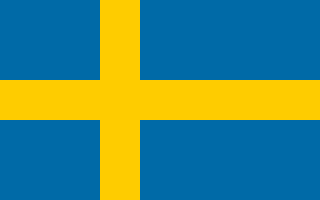
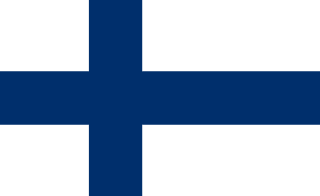
Sweden’s flag has a yellow Nordic cross on a blue field. Finland’s national flag has a blue Nordic cross on a white field. Both crosses extend to the flag edges and are offset toward the hoist. Sweden’s flag uses a 10:16 construction grid, while Finland’s uses an 11:18 grid. The field color and cross color provide the quickest identification, with exact measurements offering a second level of comparison.
Comparison at a glance
| Feature | Sweden | Finland |
|---|---|---|
| Field | Blue | White |
| Cross | Yellow | Blue |
| Height:length | 10:16 | 11:18 |
| Horizontal parts | 5:2:9 | 5:3:10 |
| Vertical parts | 4:2:4 | 4:3:4 |
| Plain flag coat of arms | None | None |
Recognize the two Nordic flags from their largest shapes
A Nordic cross divides the background into four rectangular regions, with the regions at the fly side longer than those at the hoist. The horizontal arm extends from one vertical edge to the other, and the vertical arm extends from the top to the bottom. Sweden and Finland use this same basic construction.
The Swedish flag’s four background areas are blue. Its cross is yellow, without a separate white or red edging. Finland has four white background areas and a blue cross. It is the blue cross, rather than a blue background, that connects its design visually to the other flag.
This difference is simple enough to recognize even from a fairly small icon. A tiny portion of a flag might not show its entire cross, but a clear view of a blue-and-yellow crossing point is consistent with Sweden, while blue arms on white point toward Finland.
Look beyond the words blue cross when searching for an image. Several regional and national flags use that feature, sometimes with additional edging or symbols. The complete Finnish national flag combines a blue cross with an otherwise plain white rectangle.
The flags are also easy to distinguish in a black-and-white rendering if their relative light and dark areas are preserved. Sweden usually has dark background regions with a much lighter cross. Finland has light background regions with a darker cross. However, a grayscale image of uncertain origin should still be identified through reliable context when possible.
For a visual memory exercise, focus on which of the two colors occupies most of the flag. Sweden is dominated by blue, Finland by white. The cross color then confirms the identification without requiring a learner to remember exact technical color values.
Sweden’s construction: a 16-by-10 grid
The Swedish national flag is constructed using sixteen horizontal parts and ten vertical parts. From the hoist, the horizontal regions measure five parts, two parts and nine parts. Vertically, the corresponding regions are four parts, two parts and four parts.
Choose one centimeter for each construction part. Draw a sixteen-centimeter-long rectangle ten centimeters high. Mark a vertical guide five centimeters from the hoist and a second guide seven centimeters from the hoist. The area between those guides will become the yellow vertical cross arm.
Now mark horizontal guides four and six centimeters down from the top. The region between these two guides forms the yellow horizontal cross arm. Both arms extend across the entire corresponding dimension of the rectangle.
Fill the base blue, then overlay the two yellow arms. Because they have the same color, their overlap should appear as a continuous cross rather than a separate square. There is no border of a third color surrounding the arms.
The center of the cross lies six centimeters from the hoist and five centimeters from the top. The geometric center of the entire rectangle is eight centimeters from the hoist. The offset is therefore two centimeters toward the pole at this scale.
The four blue regions have different widths: five centimeters at the hoist and nine centimeters toward the fly. Each has a height of four centimeters. These measurements make the outer side of the flag visibly longer while preserving equal upper and lower background heights.
For a digital drawing, a sixteen-hundred-by-one-thousand-pixel artboard makes the dimensions particularly straightforward. One part equals one hundred pixels, the vertical cross begins at x equals five hundred, and the horizontal cross begins at y equals four hundred. Both arms are two hundred pixels thick. Scaling the entire construction preserves the official proportions.
Finland’s construction: an 18-by-11 grid
The Finnish national flag has eighteen horizontal parts and eleven vertical parts. From the hoist, the arrangement is five white parts, three blue parts and ten white parts. Vertically, it is four white parts, three blue parts and four white parts.
Draw a rectangle eighteen centimeters long and eleven centimeters high for a one-centimeter construction unit. Mark the vertical arm between five and eight centimeters from the hoist. Mark the horizontal arm between four and seven centimeters from the top. Both arms are three centimeters thick.
The white field is the base of the design. The blue cross can be made from two rectangular shapes that overlap at their center. It extends completely to all four edges, without leaving a white gap at the end of an arm.
The center of the cross lies six and a half centimeters from the hoist and five and a half centimeters from the top. The rectangle’s horizontal center is nine centimeters from the hoist. The cross is therefore offset by two and a half centimeters from the midpoint.
The four white background regions measure five or ten centimeters horizontally and four centimeters vertically. The fly regions are exactly twice the width of the hoist regions. This relationship is useful for checking a hand-drawn flag.
Finland’s official information portal specifies a blue color reference and the geometry of the national flag. Use that guidance for formal color matching. An educational sketch can use a clearly contrasting blue while retaining the white background and correct construction proportions.
On an eighteen-hundred-by-eleven-hundred-pixel vector artboard, one part equals one hundred pixels. The vertical cross occupies x coordinates five hundred to eight hundred, and the horizontal arm occupies y coordinates four hundred to seven hundred. The two arms have the same three-hundred-pixel thickness.
Compare cross thickness at an identical flag height
At first glance, the flags appear to differ only in color. Their construction grids show a second difference: Finland’s cross occupies three-elevenths of the height, while Sweden’s cross occupies two-tenths. The Finnish cross is therefore proportionally thicker.
For a controlled comparison, choose a height of twenty-two centimeters for both drawings. The Finnish flag uses an eleven-part vertical grid, making each part two centimeters. Its length is thirty-six centimeters and its cross thickness is six centimeters.
Sweden uses ten vertical parts, so the same height of twenty-two centimeters gives a construction unit of 2.2 centimeters. Its horizontal length becomes 35.2 centimeters, and the cross thickness is 4.4 centimeters.
The two flag lengths are close but not identical at the same height. More noticeably, Finland’s cross is 1.6 centimeters wider in this example. These differences remain valid even if the artwork is printed in monochrome.
The amount of area occupied by the cross can also be calculated. In Sweden’s 160-square-unit rectangle, the horizontal arm covers 32 square units, the vertical arm covers 20, and their shared four-square-unit intersection must be counted only once. The cross occupies 48 square units, or thirty percent of the flag.
In Finland’s 198-square-unit rectangle, the horizontal arm covers 54 square units and the vertical arm 33. Their nine-square-unit intersection is counted once. The cross area is 78 square units, about 39.4 percent of the flag.
These calculations are not additional legal flag rules; they follow mathematically from the construction dimensions. They help explain why Finland’s cross appears relatively broad, and they create a useful classroom exercise in overlapping shapes and proportional area.
Color remains the fastest recognition method, but the measurements show why substituting a recolored Swedish image for a Finnish one produces an inaccurate drawing. Both the field palette and the geometry must be changed.
The shared Nordic tradition and separate flag histories
The Nordic cross family is strongly associated with the flags of northern Europe. Denmark’s historic cross flag is an important influence on this broader visual tradition. Sweden and Finland use the cross form to express their own national identities within that recognizable regional family.
Sweden’s blue and yellow colors have a long association with Swedish heraldry. The cross flag developed historically before the modern flag legislation. The Swedish Parliament’s flag act of 1982 supplies the present legal description and construction framework; that date should not be mistaken for the first appearance of blue and yellow on a Swedish banner.
Finland has a different modern flag history. It became independent in December 1917, and its blue-cross flag was established by law in May 1918. The flag’s development therefore belongs to the formation of the modern Finnish state.
Finnish official cultural information associates blue with the country’s lakes and white with its snowy winters, recalling the imagery of the nineteenth-century writer Zacharias Topelius. This is a historical and cultural interpretation, not a reason to replace the cross with a picture of water or snow.
The two countries share a long history of political and cultural contact. Finland was part of the Swedish realm for centuries before becoming a grand duchy under Russia in 1809. The present flags reflect separate modern national identities, not a single flag belonging to both countries.
A comparative timeline can mark Sweden’s historical flag tradition, Finland’s 1917 independence, Finland’s 1918 flag law and Sweden’s later statutory standard. This avoids presenting a later legal codification as the original creation date.
When discussing the symbolism of either design, distinguish documented national guidance from legends about the first appearance of a cross. A familiar story may be meaningful in a national tradition without establishing the precise date or circumstances in which the flag was invented.
National flags versus state and naval flags
The plain Finnish blue-cross flag is the national or civil flag. Finland also has a state flag that places the national coat of arms at the crossing point. Its official state flag can be rectangular or have a three-pointed outline depending on its role.
The presence of the coat of arms does not create a new national flag for a different country. It identifies a Finnish official-use variant. In an ordinary school country-flag collection, the plain blue cross on white is the appropriate reference unless the exercise explicitly covers state flags.
Sweden likewise uses a three-tongued version of its flag in particular official or military contexts. The ordinary rectangular national flag is the design compared here. A swallowtailed or three-pointed outline should be described according to its specific function rather than treated as a malformed rectangle.
When a source shows the cross and a coat of arms, check its caption. A flag may be associated with a governmental office, military service or special official user. These roles have their own rules that a general national flag chart does not necessarily capture.
Regional designs also employ Nordic crosses. Åland, for example, uses a blue field and a yellow cross with an additional red cross inside it. That layered cross is a distinct design from Sweden’s simple yellow cross. A regional flag should not be assigned to Sweden merely because blue and yellow are prominent.
The same applies to other Nordic flags that use white and blue alongside additional colors. A flag finder should record whether the cross is plain or edged, whether the background is blue or white, and whether an emblem is present.
The basic comparison remains focused on the rectangular national designs. State and naval variants are useful context for readers encountering unfamiliar images, but they should not obscure the direct recognition rule for Sweden and Finland.
A side-by-side classroom drawing activity
Begin with two sheets of graph paper. On the first, draw a rectangle sixteen squares across and ten squares high. On the second, draw an eighteen-by-eleven rectangle. Label the left side of each as the hoist.
Mark the Swedish vertical cross using the fifth and seventh vertical grid lines. Its horizontal arm lies between the fourth and sixth horizontal lines. On the Finnish drawing, mark the vertical arm from the fifth to the eighth line and the horizontal arm from the fourth to the seventh.
Before coloring, compare the two outlines. They share a similar offset construction, but the Finnish cross is thicker in grid units. Ask learners to identify the longer background areas at the fly and calculate how much wider they are than the hoist areas.
Color Sweden’s background blue and its cross yellow. Leave Finland’s background white and color its cross blue. The blue has changed roles between the designs: it forms the field in one and the cross in the other.
For a cut-paper activity, make each cross from two strips of colored paper. Glue them onto the appropriate background with their overlap aligned exactly. This lets learners adjust the position before committing to a final design.
As a geometry extension, ask students to calculate the cross area and explain why the intersection cannot be counted twice. For a digital extension, create the same rectangles on separate layers and export the drawings at half their original size. The proportions should remain unchanged.
Finish by removing the labels and asking students to identify the flags from their design. Then ask them to name at least one other Nordic flag with the same cross arrangement but different colors. The exercise connects construction, recognition and regional geography.
Recognition in photographs, maps and sports displays
In a photograph, determine whether the cross is visible in full. If only a field corner appears, the flag may be difficult to identify because many flags use blue, white or yellow. Look for the junction of the two arms and the color of the surrounding area.
In a flag chart, preserve the proportions of each graphic. Cropping both designs into equal square icons can conceal the offset cross and distort the widths of the background regions. Add padding around the image rather than stretching the flag.
A sports or geography interface should also retain readable country names. Users with reduced color discrimination may still distinguish the flags through light-dark contrast and cross thickness, but a text label provides a more dependable accessible identifier.
In formal materials, consult the national guidance for the relevant flag variant. The construction examples on this page are mathematical explanations of the rectangular flags; they do not establish permission to use a coat of arms or specialized official flag in another context.
Remember Sweden as blue with a yellow cross, and Finland as white with a blue cross. The underlying Nordic cross is their common feature, while color placement and the different construction grids are the defining differences. This recognition rule remains reliable at a range of viewing sizes.
Frequently asked questions
Which has a yellow cross?
Sweden.
Which has a white field?
Finland.
Which cross is thicker proportionally?
Finland’s cross is 3/11 of the height; Sweden’s is 2/10.
Are both Nordic cross flags?
Yes. Both have the vertical cross arm offset toward the hoist.
Sources and artwork
Swedish Parliament: Act (1982:269) on the Swedish flag
Sweden construction proportions, Flags of the World
ThisisFINLAND: Finnish flag and its dimensions
Flag artwork: Flagpedia / FlagCDN, public-domain reference artwork. Colors on screen are illustrative. Independent educational comparison; no official endorsement implied. Reviewed November 2026.