Australian Capital Territory Flag: Canberra Arms & Southern Cross
Australia’s capital territory flies a blue-and-gold flag with Southern Cross stars and Canberra’s detailed civic coat of arms. Here is how to recognize it.
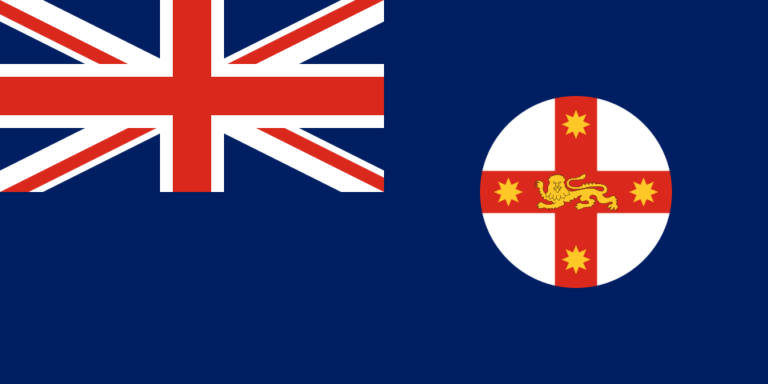
The Australian Capital Territory (ACT) includes Canberra, Australia’s federal capital. Its flag is different from the Australian national flag and from the flags of the six states, which use Blue Ensign designs.
The ACT Government and Australian Government symbols guide describe the design’s modern adoption, colours and heraldic imagery.
Australian Capital Territory flag at a glance
| Feature | What to know |
|---|---|
| Status | Australian self-governing territory |
| Capital | Canberra |
| Adopted | March 25, 1993 |
| Designer | Ivo Ostyn |
| Colour panels | Blue and gold |
| Hoist design | Five-star Southern Cross |
| Fly design | Canberra city coat of arms |
| Earlier identity | Canberra city flag used de facto |
The details above describe the recognized flag, not a proposed alternative design. Use the linked official references and artwork source if you need exact proportions, colour or emblem geometry.
What does the Australian Capital Territory flag look like?
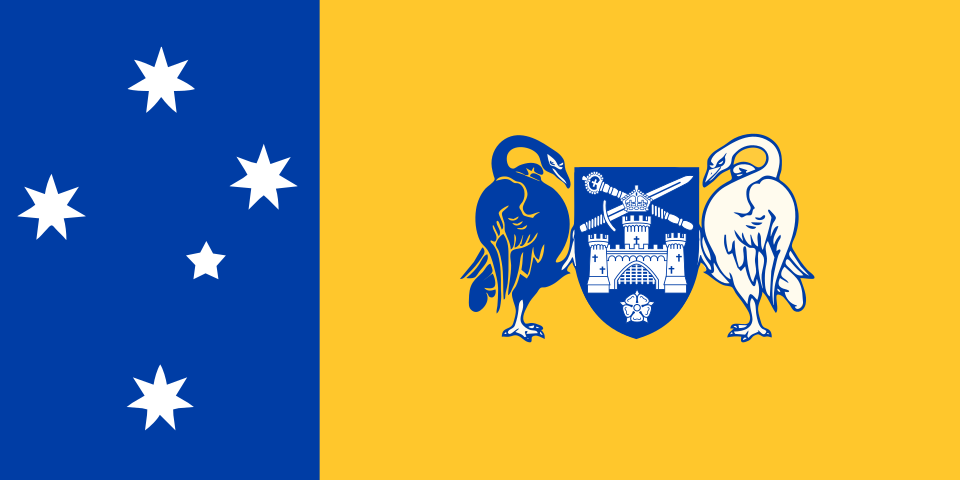
The flag has a relatively narrow blue hoist panel containing five white stars in the Southern Cross formation. The remaining, larger portion of the flag is golden yellow and displays Canberra’s coat of arms, adapted for use on the flag.
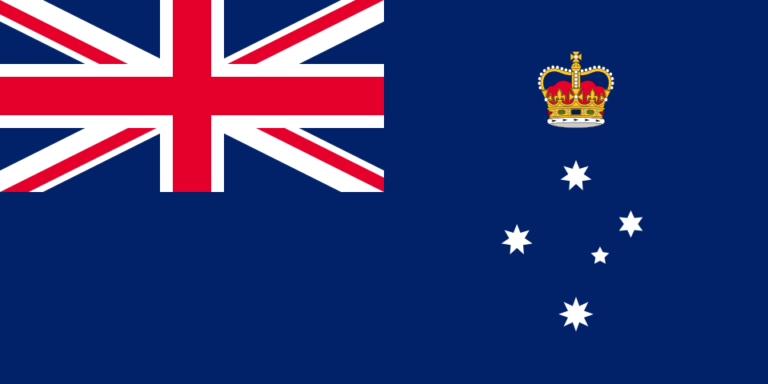
This is an unusual combination: a constellation on one side and a substantial heraldic illustration on the other. It should not be confused with the Australian national blue flag, which has a Union Jack and Commonwealth Star, or with the Northern Territory flag, whose right-hand field is red ochre with a white flower.
What do the ACT flag’s blue and gold colours mean?
The ACT Government identifies blue and gold as symbols of the capital territory. Its description associates blue with the Canberra sky and gold with the land. These are the local colours used as the setting for the Southern Cross and civic arms.
Some publications also discuss blue and gold as Canberra’s heraldic or city colours. The flag’s colours are not a reference to a royal dynastic house, nor is the gold field a second national Australian flag. Its central civic message is the identity of Australia’s seat of government.
Why does the ACT flag have the Southern Cross?
Five white stars on the blue panel represent the Southern Cross, a familiar southern-sky constellation. It is an Australian national symbol, and its presence on the ACT flag connects the territory to the wider country.
Unlike the five stars arranged on a black panel on the Northern Territory flag, these stars appear on deep blue. Unlike Australia’s national flag, the ACT version does not include the Union Jack or a separate Commonwealth Star near it. These details help distinguish similar-looking flags in a geography lesson.
What is the coat of arms on the gold panel?
The emblem is a modified form of the City of Canberra coat of arms, granted in 1928. Among its distinctive devices are a central shield, supporting swans and the civic heraldic elements associated with Canberra’s governmental role. The ACT uses this older municipal emblem within a newer territorial flag.
The ACT Government explains the symbolism behind the arms, including the castle that refers to Canberra as Australia’s capital and the royal crown representing the Sovereign’s role. The flag image is detailed; at small sizes, it may simply look like a blue-and-white shield with birds on either side.
Why are there two swans beside the shield?
The supporters are a black swan and a white swan, a striking visual contrast on the yellow field. These are part of Canberra’s civic arms, not the territory’s floral emblem. The design is a useful clue when identifying ACT flags from illustrations.
Do not substitute the black swan from Western Australia’s flag, which has a single black bird inside a yellow disc on a blue ensign. In the ACT artwork the swans flank a coat of arms and form part of a larger heraldic composition.
When and why was the ACT flag adopted?
The ACT Legislative Assembly adopted the flag on March 25, 1993, after a public selection process. The winning design was by Ivo Ostyn. ArchivesACT preserves records of the debate and design process, including the formal Assembly motion.
The territory gained self-government in 1989, so the flag came several years afterwards. Before the new design was adopted, the City of Canberra flag had served unofficially for the territory. The ACT flag is therefore a modern territorial identity symbol with an older civic coat of arms.
How is the ACT flag different from the Northern Territory flag?
The ACT uses a blue star panel and a gold field with Canberra’s arms. The Northern Territory uses a black star panel and a red-ochre field with Sturt’s desert rose. Both use five Southern Cross stars but the different colours and centrepieces make recognition straightforward.
Neither current design is a Blue Ensign with the Union Jack in its upper-left corner. That sets both territories apart from the six Australian state flags and helps explain why modern Australian flags do not all share the same template.
How to recognize the ACT flag in a quiz or drawing
Look for the arrangement of five white stars on the blue left-hand panel, then identify the two swans and civic shield on the larger golden-yellow panel. Avoid replacing the arms with the Commonwealth Star or a kangaroo, neither of which is the flag’s central illustration.
For classroom work, compare three flags side by side: Australia’s national flag, the ACT, and the NT. Ask which one features Canberra’s coat of arms. The answer is the ACT flag, adopted in 1993.
Frequently asked questions
What does ACT stand for on the flag?
Australian Capital Territory, the territory that includes Canberra.
When was the ACT flag adopted?
March 25, 1993, following a public design selection.
Who designed the ACT flag?
Ivo Ostyn.
What do the blue and gold mean?
The ACT Government associates blue with Canberra’s sky and gold with the land.
What are the white stars?
The five stars of the Southern Cross constellation.
What is on the gold part?
A modified version of the City of Canberra coat of arms with a shield and swan supporters.
Is the ACT flag the same as the Northern Territory flag?
No. ACT is blue and gold with Canberra’s arms; NT is black and ochre with Sturt’s desert rose.
Official references and illustration credits
ACT Government — Flags and emblems
Australian Government — Symbols of the ACT
ACT Legislative Assembly — Symbols of the ACT
ArchivesACT — History of the ACT flag
The flag illustration is a PNG rendering of the Wikimedia Commons vector file for Australian Capital Territory. Consult the linked file page for the original author’s attribution and stated licence, and official guidance for rules on use of government insignia. Article facts checked November 2026.