Sicily Flag: Trinacria, Three Legs, Medusa & Colors
Why does Sicily’s flag have three running legs around a face, with wheat ears on a red-and-yellow diagonal background? Explore the official Trinacria, its ancient roots and the 2000 regional flag law.
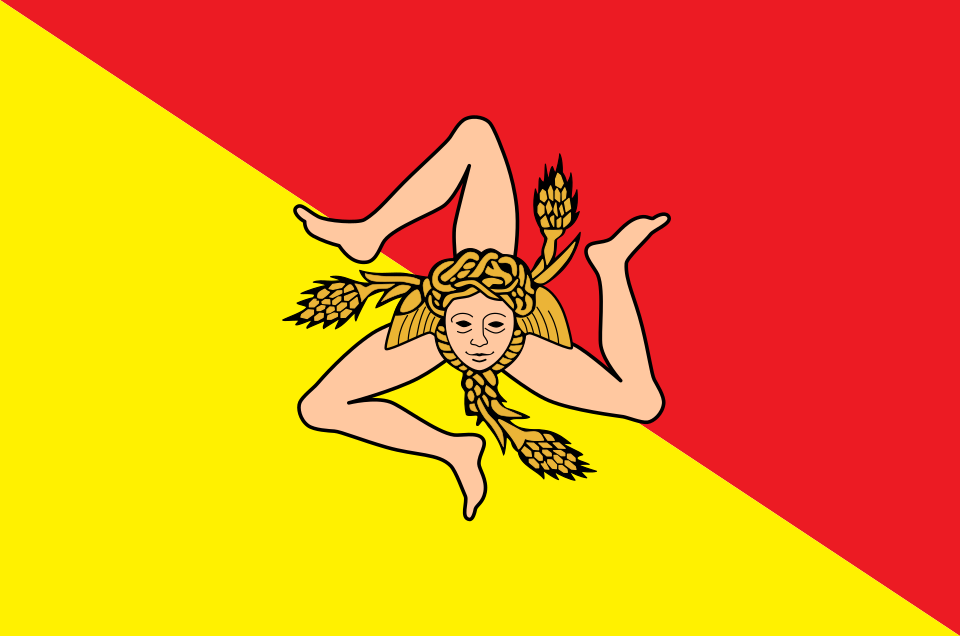
Sicily is an autonomous region of Italy, but its flag looks nothing like the national green, white and red tricolour. Instead, two vivid diagonal colors frame an ancient three-legged emblem. The combination is useful for identifying the island in photographs, ports, sporting events and regional celebrations.
The official Regione Siciliana explanation connects the red and yellow to two towns prominent in the Sicilian Vespers of 1282, and explains the Trinacria and Gorgoneion at the centre. Those are stronger sources than modern stories assigning a separate meaning to each leg without documentation.
This guide concentrates on the regional flag, rather than the national flag of Italy. It also distinguishes the current legal design from artistic reconstructions of medieval Sicily.
Sicily flag at a glance: design, legal date and meaning
The current regional flag has a 2:3 proportion under the 2000 law. It incorporates the Sicilian regional arms at the centre, with yellow and reddish-orange fields divided diagonally. Its emblem combines an ancient three-legged form with a Gorgon face and grain ears.
| Flag detail | What to know |
|---|---|
| Region | Sicily (Sicilia), autonomous region of Italy |
| Field | Diagonal yellow and reddish-orange/red |
| Centre | Trinacria: three bent legs, Gorgoneion and wheat ears |
| Official adoption | Regional Law No. 1, January 4, 2000 |
| Proportions | 2:3, under the regional law |
| Older association | Sicilian Vespers, 1282 |
Why does Sicily’s flag have three legs?
The three-legged figure is called the triscele or triskelion. In Sicilian usage it is often called the Trinacria, an old name for the island connected with its roughly triangular outline. The legs bend at the knee and radiate from one centre, making the figure appear to run or rotate.
Ancient Greek and other Mediterranean art used three-legged or three-armed motifs long before the creation of Italy’s present regions. Sicily became especially associated with the image because ancient writers described the island as three-pointed. The geographical reading is often linked with the capes of Peloro in the northeast, Passero in the southeast and Lilibeo/Boéo in the west.
The emblem is a symbol of the island as a whole; it is not a literal drawing of three people, a three-legged creature or three separate provinces. Illustrations differ in the drawing of the feet or knees. The official regional design must be read alongside the legal coat of arms rather than a souvenir version that changes the emblem’s appearance.
Does Trinacria mean three capes?
The connection is with Sicily’s three-cornered shape. Trinacria is an ancient geographical and cultural name rather than a modern governmental district. The three-pointed form is a helpful mnemonic, but the legs were also used as a broad rotating motif in ancient art. Their significance is not limited to a modern map-reading exercise.
Who is the face in the middle of the Sicily flag?
The central face is a Gorgoneion, an image derived from the Gorgon of Greek mythology, commonly identified with Medusa. In ancient Mediterranean imagery, Gorgon faces could serve as protective or apotropaic symbols intended to ward off harm.
The official Sicilian flag combines this head with the three rotating legs. The image is sometimes simplified as “Medusa with three legs,” but the precise historical term for the face is Gorgoneion and for the three-legged emblem is triscele. The parts have different symbolic origins that became joined in the regional icon.
Modern depictions vary: some faces look serene, while older renderings can be fierce. These are stylistic choices and do not establish a series of legally separate Sicilian flags. On an official-use graphic, the central design should follow the region’s specified coat of arms.
Why are there wheat ears?
Ears of wheat appear around the Gorgon’s head. They emphasize Sicily’s historic agricultural wealth and its long association with grain growing. In antiquity Sicily was an important supplier of grain in the Mediterranean. This explanation is more securely grounded than the popular claim that every grain stalk represents one named Sicilian city.
Why is the Sicily flag yellow and red?
The yellow and red have a specific local historical explanation in the Sicilian regional government’s account. Yellow is associated with Palermo and red with Corleone, the towns identified in the official account as important in the anti-Angevin uprising known as the Sicilian Vespers.
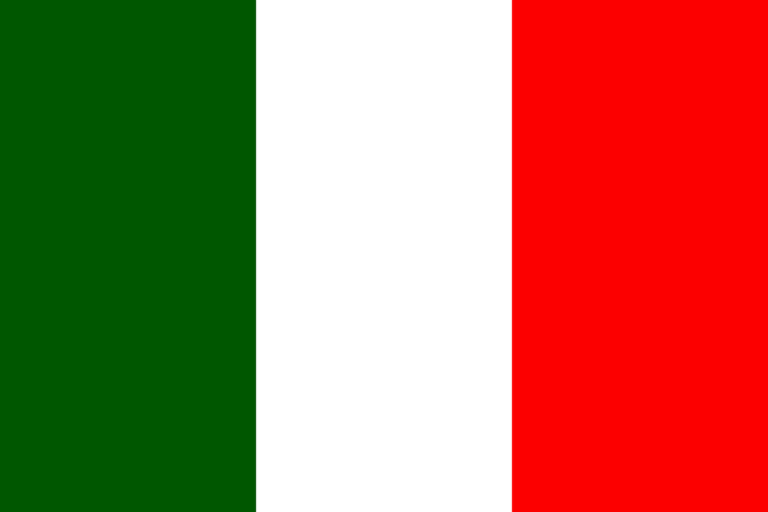
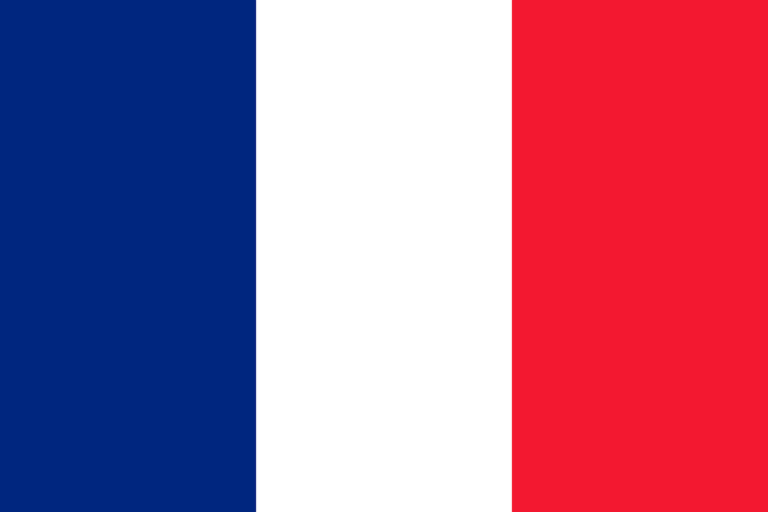
These are not the same stripes or colors used in the national flag of Italy. Sicily’s background is diagonal, while the Italian tricolour uses three equal vertical green, white and red bands. In a flag-identification quiz, the Trinacria is the easiest distinguishing clue.
The precise shade can shift between flags manufactured from cloth and digital diagrams. The text of the regional law refers to reddish orange and yellow and incorporates the regional arms. A faded red field in a weathered photograph is not proof the legal design changed.
The Sicilian Vespers and the flag’s medieval origins
The Sicilian Vespers began in Palermo on March 30, 1282, during a revolt against Angevin rule. Sicily’s official historical explanation associates the origin of the bicolour banner with that upheaval and identifies Corleone as the first community to follow Palermo in the uprising.
It is important to distinguish a historical symbolic tradition from the legal origin of the modern regional flag. The Trinacria motif is much older than 1282. The current administrative flag was adopted in 2000; it did not exist with today’s legal specifications as an uninterrupted state flag for seven centuries.
The region notes another important symbolic moment in August 1302, when the Peace of Caltabellotta concluded the War of the Sicilian Vespers and the island was associated with the Kingdom of Trinacria. Students can therefore build a chronology with three different layers: ancient emblem, medieval political tradition and modern regional law.
When did Sicily officially adopt its regional flag?
Regional Law No. 1 of January 4, 2000 formally adopted the flag. Earlier legislation had defined the coat of arms and gonfalon. The 2000 law set the rectangular cloth, the central emblem, its dimensions and display arrangements, making it the right reference for the modern administrative design.
Article 1 specifies that the emblem occupies three-fifths of the flag height and the flag’s height is two-thirds of its length. Article 3 provides for display on occasions connected with Sicilian autonomy, including May 15 and May 25. Article 4 addresses use alongside Italy’s and the European Union’s flags at public buildings.
Those details are not just trivia. If an educational worksheet shows a square flag with a tiny central Trinacria, it may be a useful rough sketch but should not claim to reproduce every legal construction rule.
Sicily flag vs. Sardinia flag vs. Italy flag
The flags of Sicily and Sardinia are among Italy’s most recognizable regional designs, yet they are visually very different. Sicily uses a diagonally divided red-and-yellow field with a three-legged ancient emblem. Sardinia uses a white field, red cross and four Moor heads. The national Italian flag instead uses vertical green, white and red stripes.
Neither Sicily nor Sardinia is an independent sovereign state solely because its autonomous regional flag is widely displayed. Both are regions within Italy. Their separate banners express regional identities and are used in contexts governed by local legislation.
For a closer look at Sardinia’s different historical and current designs, read our Four Moors flag guide. The two pages explain different ancient and medieval symbol traditions instead of treating the islands as one shared flag design.
How to recognize the flag of Sicily in a picture
First look for a diagonal line separating yellow and red. Then find the round central figure with three legs. If the picture is very small, the rotating triangular motif is more distinctive than the exact expression on the Gorgon’s face.
Do not confuse it with the flag of the Isle of Man, which also has a three-legged motif but normally appears as three armoured legs on a solid red field, without Sicily’s yellow diagonal half or wheat-framed face. The two flags make an effective classroom comparison because a similar ancient symbol has different local forms.
A final check: photographs of parades can show Sicilian flags with large writing or decorative borders. Those are adaptations for events. For legal design reference, use the official regional description rather than an embellished fan version.
Frequently asked questions
What do the three legs on the Sicily flag mean?
They form the Trinacria, associated with the island’s three-pointed shape and its ancient name. The legs are not a depiction of three different individuals.
Is the face in the Sicilian flag Medusa?
The face is called a Gorgoneion, derived from the Gorgon/Medusa tradition in Greek mythology. Wheat ears are added around it.
Why does the flag have wheat?
The wheat symbolizes Sicily’s agricultural history and its role as a grain-producing Mediterranean island.
What do yellow and red mean on Sicily’s flag?
The Sicilian regional government connects yellow with Palermo and red with Corleone in the history of the 1282 Sicilian Vespers.
When was the Sicily flag adopted?
Its present official regional legal design was adopted by Sicilian Regional Law No. 1 on January 4, 2000.
Are Sicily and Sardinia flags the same?
No. Sicily uses a diagonal yellow-red bicolour with Trinacria; Sardinia uses a red cross and four Moor heads on white.
Is the Sicily flag the national flag of Italy?
No. Sicily is an autonomous region of Italy. Italy’s national flag has vertical green, white and red stripes.
Why does the Isle of Man flag resemble Sicily’s flag?
Both use historical three-legged triskelion motifs, but they have distinct local designs and traditions; their resemblance does not make them the same flag.
What proportion is the official flag of Sicily?
Its height is two-thirds of its length, giving it a 2:3 ratio according to the 2000 regional law.
Sources and flag image credits
Regione Siciliana — La Bandiera
Regione Siciliana — Regional Law No. 1/2000 text
Wikimedia Commons — Flag of Sicily artwork
Public-domain flag drawing by Angelo.romano on Wikimedia Commons. PNG rendering imported for this article. The official legal design and usage rules are described by the Sicilian regional government.
Images are educational renderings of the linked Wikimedia Commons files; official emblems may have use rules independent of copyright. Flag details checked November 2026.