Honduras Flag Colors: Turquoise vs Turquí and the 2026 Color Debate
Why do Honduran flags appear in different shades of blue? The answer lies in the wording of the 1949 law, decades of practice and a new 2026 legislative proposal.
What does the 1949 law say?
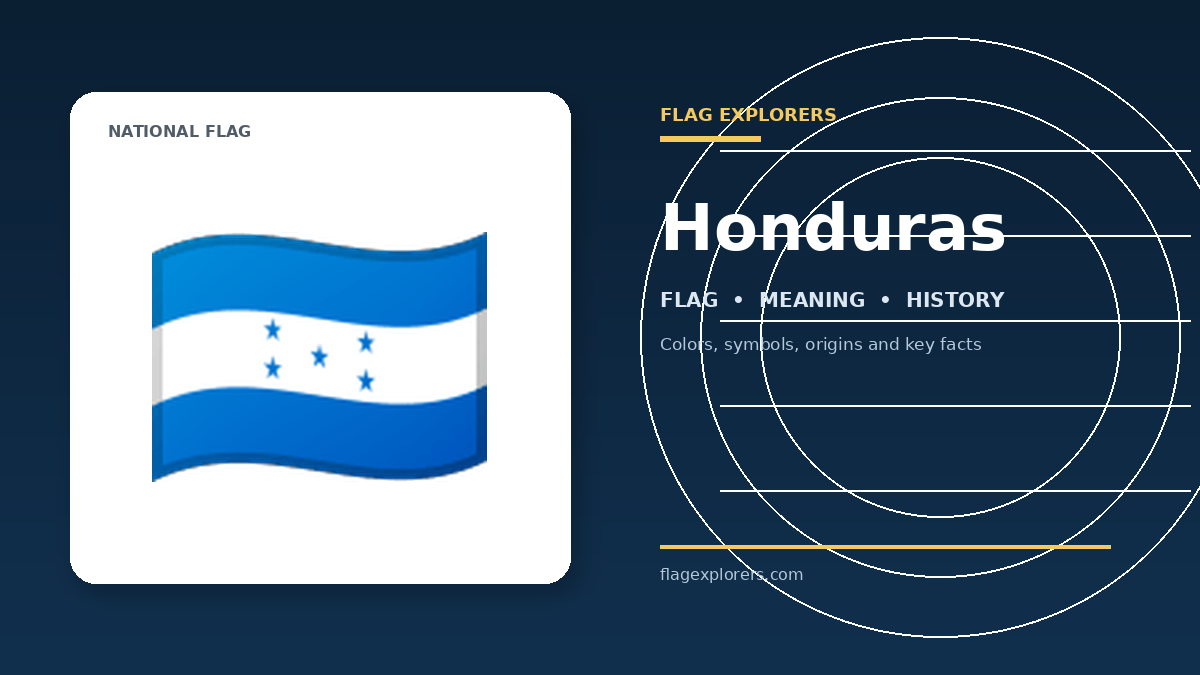
Decree No. 29 of January 18, 1949 states that the upper and lower bands are azul turquesa, with five stars of the same blue in the white center stripe.
Why have darker blue flags also been used?
Honduran institutions and researchers have documented a long-running inconsistency between the wording of the law and darker blue or azul turquí flags used in public life. This has produced repeated debate over how the legal terminology should be interpreted and reproduced.
What happened in September 2026?
On September 24, 2026, a proposal was introduced in the Honduran Congress to amend the law and explicitly establish azul turquí for the upper and lower bands. The proposal stated that it would not change the structure, proportions or star arrangement of the flag.
Because this was introduced as a legislative proposal, it should not be described as an enacted change unless and until the measure is approved and takes legal effect.
What do blue and white symbolize?
Official educational material associates the blue bands with the Honduran sky, the seas on either side of the country and civic values such as fraternity and loyalty. White is associated with peace, purity, integrity and faith.
Honduras flag colors FAQ
Is the flag turquoise or dark blue?
The 1949 legal text uses the term azul turquesa, while darker azul turquí has also appeared in practice. A 2026 bill proposed explicitly defining azul turquí.
Did the 2026 bill already change the flag?
No. It was introduced as a proposal; enactment requires the legislative process to be completed.
Are the stars the same blue as the stripes?
The 1949 reform describes the stars as the same blue color as the outer bands.