Mexico Coat of Arms: Eagle, Snake, Cactus & Meaning
Decode the eagle, serpent, nopal cactus, lake, oak and laurel at the center of the Mexican flag and trace the emblem to the foundation tradition of Tenochtitlan.
What is shown in Mexico’s coat of arms?
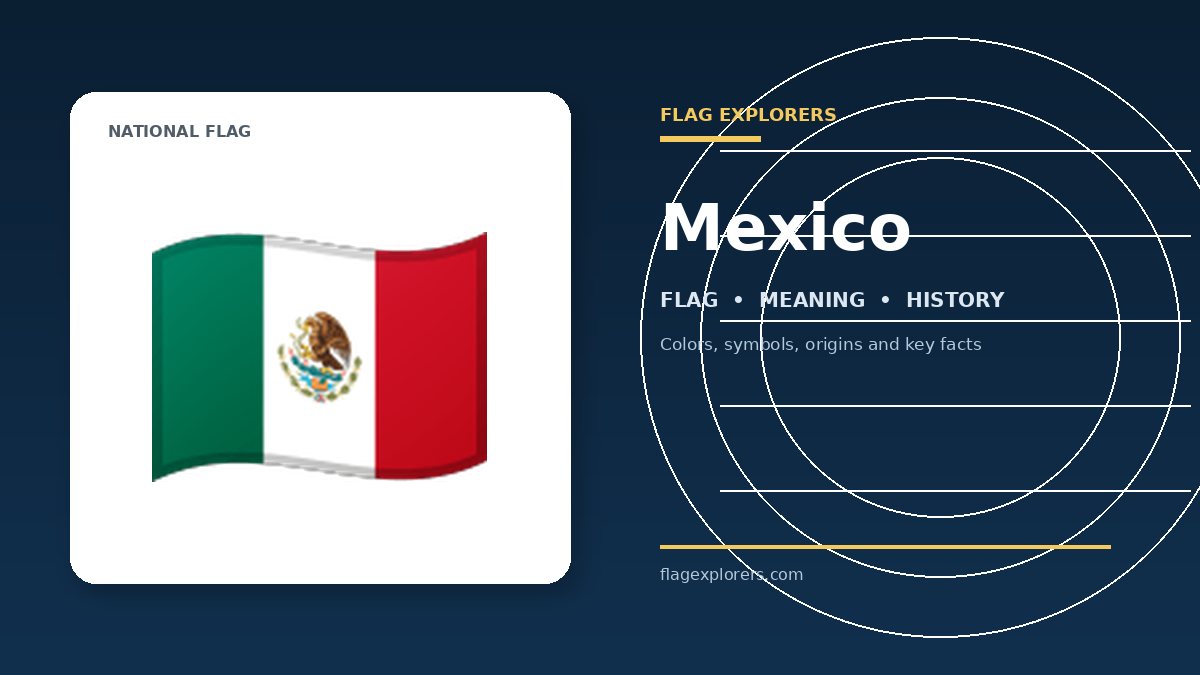
The national emblem shows a Mexican golden eagle in left profile, standing on a flowering nopal cactus growing from a rock emerging from water. The eagle holds a snake in its beak and talon. Oak and laurel branches curve beneath the scene and are tied with a ribbon in the national colors.
Why an eagle and snake on a cactus?
The composition is tied to the Mexica foundation tradition of Tenochtitlan. Government historical material explains that the eagle and nopal became enduring symbols of the city and later of independent Mexico. The serpent became part of the standardized national image, although historians note that early versions of the tradition were not always depicted identically.
What do the nopal, oak and laurel add?
How has the Mexican eagle changed?
The eagle appeared on insurgent imagery before independence and became central to national flags after 1821. Imperial versions used a crown; republican versions removed it. In 1916 Venustiano Carranza ordered a profile eagle, and later twentieth-century refinements produced the modern rendering.
Mexico coat of arms FAQ
Is the bird a golden eagle?
Yes. Mexican government material identifies the bird as the golden eagle.
Is the snake definitely a rattlesnake?
Government explanatory material frequently identifies it as a rattlesnake, while historical discussions note variation in older sources and depictions.
Why is the cactus important?
The nopal is central to the foundation tradition and has remained a recurring element of the emblem through successive historical versions.
SEMARNAT — National emblem and biodiversity
SEMARNAT — The golden eagle in the national emblem