How to Draw the Canadian Flag: 2:1 Ratio, Canadian Pale & 11-Point Maple Leaf
A practical construction guide to Canada’s exact 2:1 flag proportions, central white square and stylized red maple leaf.
Official proportions
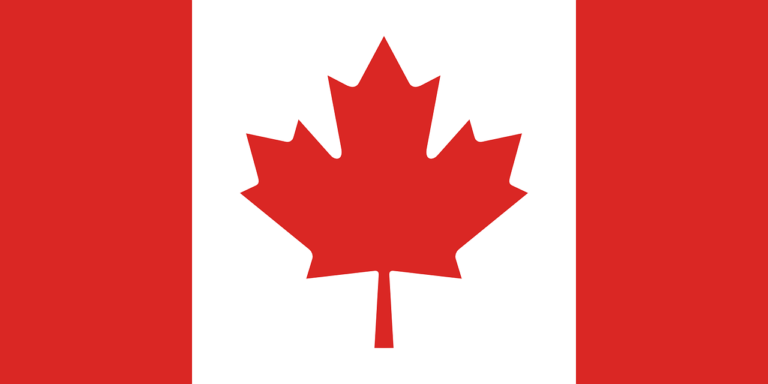
Canadian Heritage specifies a 2:1 length-to-height ratio. One official construction example uses 64 units in length and 32 units in height. The central white field is a 32-by-32 square, leaving red panels of 16 units at each end.
Step 1: draw the rectangle
Use any convenient 2:1 size, such as 1200 × 600 pixels or 20 × 10 centimetres.
Step 2: divide it 1:2:1
Divide the total width into four equal units. The left red panel uses one unit, the white centre uses two units, and the right red panel uses one unit. This creates the distinctive Canadian pale.
Step 3: add the maple leaf
Place the stylized 11-point maple leaf in the centre of the white square. For accurate reproduction, use the official government artwork rather than drawing a natural maple leaf freehand.
Colors
The flag uses red and white. Canadian Heritage directs manufacturers to the Canadian General Standards Board standards for exact production requirements. Government federal-identity applications commonly use Pantone 032 for the flag symbol, but production flags should follow the applicable CGSB flag standard.
Common mistakes
- Using a 3:2 ratio instead of 2:1.
- Making all three vertical sections the same width.
- Using a realistic or differently pointed maple leaf.
- Stretching the leaf or shifting it away from the centre.
FAQ
What is the Canada flag ratio?
2:1, meaning the flag is twice as long as it is high.
Are the red side panels the same width as the white centre?
No. Each red side panel is half the width of the central white square.
Where can I get the official leaf artwork?
Canadian Heritage provides downloadable official flag and maple-leaf files.