Cuba vs Puerto Rico Flag: Reversed Colors, Lone Star and Shared History
Side-by-side identification, documented history and practical measured comparison.
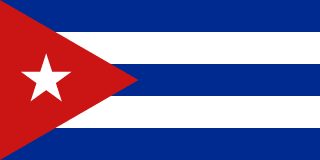
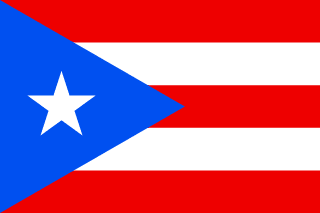
Cuba and Puerto Rico both have five horizontal stripes, a triangle at the hoist and a white five-pointed star. Cuba has three blue stripes and a red triangle; Puerto Rico has three red stripes and a blue triangle. The white stripes and star keep their positions. This is a documented historical relationship, not merely a chance resemblance: Puerto Rican independence supporters adopted a design with the Cuban colors exchanged in 1895.
Comparison at a glance
| Feature | Cuba | Puerto Rico |
|---|---|---|
| Colored stripes | Blue | Red |
| White stripes | Two | Two |
| Hoist triangle | Red | Blue |
| Star | One white, five-pointed | One white, five-pointed |
| Common reference proportion | 1:2 | 2:3 (common artwork) |
| Modern political status | Independent country | US territory |
Identify the flag without counting every stripe
Begin with the triangular region next to the flagpole. If it is red and contains a white star, the flag is Cuban. If it is blue and contains a white star, the design is Puerto Rican. This distinction is more dependable than the apparent shade of blue because both flags have been reproduced in different materials and at different brightness levels.
Next inspect the top or bottom stripe at the fly. Cuba begins and ends with blue; Puerto Rico begins and ends with red. Both contain two white bands in the second and fourth positions. In a tiny image the triangular field can sometimes merge visually with adjacent stripes, but the color of the outermost horizontal stripes remains a useful second clue.
A white five-pointed star alone cannot distinguish them. The stars are alike in color and general shape, and both appear within the triangle. The triangular point also extends from the hoist toward the fly in each flag. These are shared features, not identifiers for either member of the pair.
This means a cropped image showing only the white star against a colored background can still be informative if the background is clear. A crop showing a white stripe between two blue ones supports the Cuban identification; a white stripe between two red ones supports Puerto Rico. However, the latter fragments can also occur in other striped flags, so a full view or a reliable label is preferable.
When the flag flies with its pole on the right of a photograph, read the design relative to the pole. The triangle is still attached to the hoist. Do not interpret its position on the right of the picture as evidence of a third flag or a reversed political symbol.
Compare the common construction and different proportions
The shared structure consists of a rectangle divided into five equal horizontal bands. A triangle then covers their hoist ends. Its broad base lies along the vertical pole edge and its apex points inward. The star is contained in the triangular field rather than superimposed on the striped area.
Cuba’s 2019 law provides a detailed construction description, including an overall length twice the height. At a height of twenty centimeters, the resulting rectangle is forty centimeters long. Each stripe is four centimeters high. An equilateral triangle with a side equal to the flag height has a horizontal altitude of about 17.32 centimeters, shorter than half the flag length.
Puerto Rico’s 1952 law describes the flag as rectangular with three red and two white alternating stripes and a blue equilateral triangle containing a white five-pointed star. It does not set out the same comprehensive numerical construction schedule in the cited provision. The common reference artwork used in this comparison has a two-to-three height-to-length ratio.
At the same twenty-centimeter height, that Puerto Rican reference rectangle is thirty centimeters long. Its five bands are again four centimeters high. An equilateral triangle based on the full height has the same altitude of about 17.32 centimeters. Consequently, it extends farther across the shorter rectangle as a proportion of its total length.
The identical stripe heights in this exercise arise from using the same flag height and five equal stripes. They are not evidence that the overall proportions are the same. The difference in length also affects the amount of uninterrupted striped area visible beyond the point of the triangle.
The official Cuban star is defined with respect to an imaginary circle whose diameter is one-third of the flag height, with one point facing upward. For a twenty-centimeter height, this construction circle has a diameter of about 6.67 centimeters. Do not transfer that numerical rule automatically to Puerto Rico without checking its own artwork or applicable regulations.
Both flags should be reproduced with their own documented dimensions and triangle and star placements. A drawing intended for a history lesson can compare the visual relationship without claiming that every historical or commercially manufactured flag used the same proportions.
Cuba’s flag before the Puerto Rican design
The Cuban flag belongs to the mid-nineteenth-century movement against Spanish colonial rule. The design is associated with Narciso López and the revolutionary circle in which the flag developed. It was flown at Cárdenas in 1850 and later became the banner adopted by the constitutional assembly at Guáimaro in 1869.
Those dates refer to different events. The first concerns an early use of the design; the second concerns its adoption in the organized independence movement. They should not be merged into a single statement that the modern Cuban republic was established in 1850.
The familiar blue and white stripes, red triangle and lone white star became the recognizable components of that independence symbol. Cuba continued using the design through major political changes, and its current national-symbols law provides the contemporary definition and rules governing its use.
The Cuban legal interpretation connects the three blue stripes to the colonial administrative divisions existing when the flag was designed. It describes the other elements in terms of independence-era ideals and sacrifice. These meanings belong to the Cuban national tradition and should not be applied automatically to the corresponding shapes on the Puerto Rican flag.
The lone star is not a numerical representation of all the provinces of modern Cuba. It is one national emblem with its own symbolism. Similarly, a reader should not interpret the three blue stripes as a map of today’s administrative boundaries.
The timeline helps explain the direction of the documented visual influence. The Cuban revolutionary flag was already established before the Puerto Rican design associated with the independence movement of the 1890s. That chronology is more informative than a superficial statement that the two flags look alike.
Why Puerto Rico adopted the exchanged color arrangement
The history presented by the United States District Court for Puerto Rico describes the Puerto Rican flag adopted by independence supporters in New York in 1895 as using the Cuban design with red and blue exchanged. Both movements were concerned with the future of Caribbean territories then under Spanish rule.
The shared graphic structure provided a visible connection between the movements while allowing the two flags to represent distinct places. The white star and two white stripes remained unchanged. The three formerly blue stripes became red, and the formerly red triangle became blue.
This was not a modern sports-branding decision or an attempt to create a matching pair of flags for tourism. It emerged from a specific nineteenth-century political and historical context. Understanding that origin helps explain why the relationship is unusually close compared with two flags that simply happen to use the same palette.
Puerto Rico came under United States sovereignty in 1898 after the Spanish-American War. The Puerto Rican flag later received official recognition through the law of July 24, 1952, associated with the establishment of the Commonwealth of Puerto Rico.
It is important to distinguish the flag’s earlier revolutionary significance from its subsequent legal status. The 1952 legislation did not create the color-exchanged design for the first time. It formally recognized a flag with a history extending back to the nineteenth century.
The design remains a symbol of Puerto Rican identity, including among Puerto Ricans living outside the island. Its display does not establish an individual’s view about the island’s future political status. A flag can be used in many social, cultural and official contexts.
A comparison caption should therefore call the design the flag of Puerto Rico without confusing it with the national flag of the independent Republic of Cuba. Puerto Rico is a US territory with its own flag, not a second sovereign country represented by this pair.
The blue shade question: why the triangle matters more than its tone
Puerto Rican flags appear with a range of blue shades. Historical material can show a dark navy triangle; modern displays and reproductions sometimes use a lighter or brighter blue. The historical discussion published by the federal district court notes the navy blue used in Cuban flags associated with the earlier independence period and considers that context when discussing the 1895 color exchange.
That discussion should not be used as a universal rule that every lighter Puerto Rican flag is invalid or that a particular blue automatically identifies its political meaning. The color of an object can also be affected by its age, material, illumination or the way it has been photographed.
The legal description in the 1952 provision names a blue triangle. It does not, in the cited text, provide a numerical RGB specification. Where formal use requires a particular shade or official supplier standard, consult the current applicable guidance rather than choosing a value sampled from a social-media picture.
For identifying the two flags, the precise triangle shade is unnecessary. A blue triangle indicates the Puerto Rican design within the comparison, whether the blue looks navy or lighter. A red triangle is the decisive Cuban feature.
A printed photograph can make dark blue look nearly black or bright red look orange. If only a small area is visible, check the stripes as an independent clue. The three colored horizontal bands should be red for Puerto Rico and blue for Cuba.
A museum or archive may preserve a particular historic textile with distinctive shades. If reproducing that object, document the date and source rather than silently recoloring it to match a contemporary illustration. Historical accuracy and current flag identification are related but different tasks.
The two images in this guide are reference artwork. Their digital colors are not calibrated fabric samples. They are useful because the main geometric elements and contrasting color positions are visible side by side.
A side-by-side construction exercise
Draw two rectangles on graph paper with a common vertical height of ten units. Use twenty units for the Cuban rectangle’s length and fifteen for the common Puerto Rican reference rectangle. Mark horizontal stripe boundaries at heights of two, four, six and eight units from the top.
Label the five Cuban stripes B, W, B, W and B. Label the Puerto Rican stripes R, W, R, W and R. Make these notes outside the rectangles, where they can be removed later. The stripe sequences differ only in the three colored rows.
For each rectangle, construct a triangle with its base along the full hoist edge. With a base of ten units, the altitude of an equilateral triangle is five times the square root of three, approximately 8.66 units. Mark that distance along the horizontal centerline and connect the point to both hoist corners.
The Cuban triangle is red and the Puerto Rican triangle blue. Place a white star in each according to the relevant reference. The triangle covers the stripes nearest the pole; there must not be a stripe line crossing the triangular area.
If using digital shapes, build the background from the five stripe rectangles, then place the solid triangle above them. The star belongs on a higher layer. Keeping these objects separate makes the exchange of red and blue easy to demonstrate without changing the white elements.
For Cuba, use the documented star construction diameter if making an exact measured drawing. For Puerto Rico, use its own verified reference for the star scale and placement instead of importing the Cuban rule without evidence.
Ask students to calculate how far each triangle extends as a percentage of the entire length. It occupies roughly 43.3 percent of the Cuban rectangle’s length and 57.7 percent of the selected Puerto Rican reference rectangle. This explains why two similarly built designs can look somewhat different when aligned at the same height.
Finally compare the finished drawings against the source artwork and remove the temporary measurements. Write the flag names beneath the rectangles rather than incorporating labels into the flags themselves.
Avoid confusion with Texas, the Philippines and other lone-star flags
Texas also uses red, white and blue with a single white star. Its state flag, however, has a rectangular blue hoist panel, not a triangle. The fly is divided into two broad horizontal areas, white above red. Counting five stripes immediately rules out the Texas design.
The Czech flag contains a blue triangle at the hoist, but the fly consists of only two horizontal bands, white above red, and there is no star in the triangle. A small Puerto Rican flag with its star obscured might briefly resemble that geometry, but its five stripes remain distinctive.
The Philippines flag has a white triangular area, a gold sun and three gold stars. Its two broad horizontal fields are blue and red in the usual peacetime orientation. The white triangle and multiple gold elements separate it from both Caribbean designs.
Chile’s flag also has a lone white star in a blue region near the hoist. Its blue canton is rectangular, and the base design uses two horizontal bands. It does not contain the five alternating stripes or the full-height triangle found on Cuba and Puerto Rico.
These comparisons suggest a useful order for a flag finder. First determine whether the hoist device is triangular or rectangular. Then count the background stripes, inspect the star color and number, and finally check the color of the hoist field. The complete combination is more informative than a search for the phrase lone star flag.
A partial photograph may remove some of these features. If only the star is visible, retain the possible matches until the rest of the flag or its context is available. A correct flag database should preserve distinct records for each of these designs rather than merge them based on a shared red-white-blue palette.
Recognition in historical collections and modern displays
When examining a photograph of a parade, look for the triangular hoist field and the upper stripe before trying to interpret the event itself. A Cuban flag can appear in a Puerto Rican setting and vice versa, particularly in a cultural or historical context. The location of a photograph does not by itself determine the flag shown.
In a map legend, include Puerto Rico and Cuba under their appropriate geographic and political labels. Their related flags do not mean they have the same constitutional status. A simple country-code or territory-name caption prevents ambiguity when the graphic is rendered very small.
For a history exercise, create three timeline labels: Cuban early flag use in 1850, Puerto Rican adoption by independence supporters in 1895, and Puerto Rican statutory recognition in 1952. Students can match the flag images to the sequence while distinguishing first use from later legal adoption.
When examining an old flag, preserve the original colors and proportions where documented. An illustration made for a current comparison should use the contemporary reference designs; an archival reproduction should identify the original object and period.
The most useful memorization rule is short: Cuba has blue stripes and a red triangle; Puerto Rico has red stripes and a blue triangle. The white star is shared, and the historical relationship is documented. That simple rule is sufficient for most quizzes, while the broader evidence explains the exceptions and avoids confusing the two flags’ histories.
Frequently asked questions
Which has a red triangle?
Cuba.
Which has red horizontal stripes?
Puerto Rico.
Why are the flags so similar?
The Puerto Rican independence movement adopted a color-exchanged version of the Cuban design in 1895.
Is Puerto Rico a separate sovereign country like Cuba?
No. Puerto Rico is a US territory with its own flag.
Sources and artwork
Cuba national symbols law, Law 128/2019
US District Court for Puerto Rico: history and flag design
Puerto Rico Law No. 1 of July 24, 1952, text
Reference artwork: Flagpedia/FlagCDN, public-domain flag images. Educational comparison, not official endorsement. Reviewed November 2026.