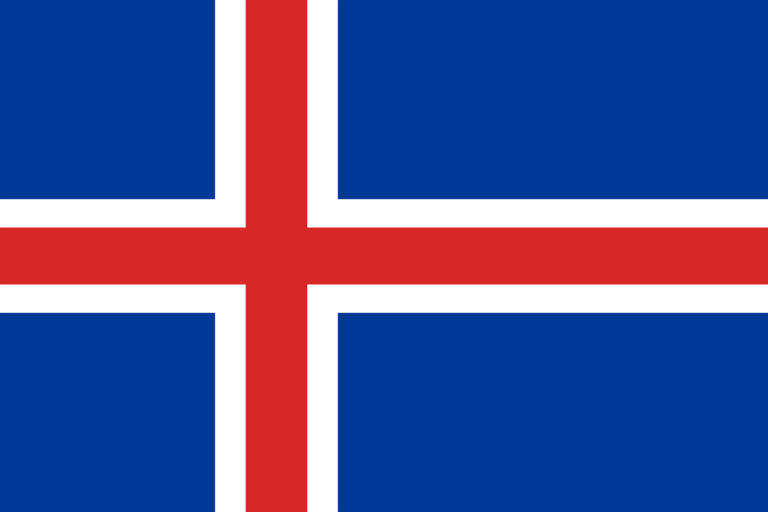
History of the Norway Flag: Fredrik Meltzer’s 1821 Design and the 1898 Flag Act
Norway’s current red-white-blue Nordic cross was chosen by the Storting in 1821 and became a powerful symbol in the country’s long constitutional struggle within the union with Sweden.
1814: Norway needs its own flag
After centuries in the Danish state, Norway adopted its own Constitution in 1814. The need for a separate Norwegian flag became increasingly important.
Early 1814 design
An early Norwegian flag adapted Denmark’s Dannebrog by placing the Norwegian lion in the upper hoist area.
1820–1821 flag campaign
Merchants and shipowners pushed for a distinctive Norwegian commercial flag, leading to multiple proposals being considered by the Storting.
Fredrik Meltzer’s proposal
Representative Fredrik Meltzer proposed a red field with a blue Nordic cross outlined in white. He argued for the cross tradition and red-white-blue “colors of liberty.”
May 1821: Storting chooses the design
Meltzer’s proposal received the most votes in May 1821 and became the basis of the flag Norway still uses today.
Union with Sweden
Norway remained in union with Sweden, and later union flags added a joint emblem in the upper hoist of both countries’ flags.
1898 Flag Act
The Storting passed the Flag Act of 1898, removing the union emblem from the Norwegian merchant flag.
1905 independence
When the union with Sweden ended in 1905, the clean red-white-blue flag was already established as a national symbol.
Norway’s flag history: the key dates
Norway’s modern red, white and dark-blue Nordic-cross flag did not appear for the first time in 1905. Parliament chose the essential design in May 1821, during Norway’s union with Sweden. The later struggle concerned who controlled national symbols and whether the flag should include a shared Swedish-Norwegian union emblem. Those disputes were largely resolved in the years before the union ended.
| Date | Flag history milestone |
|---|---|
| Before 1814 | Denmark’s Dannebrog used under the Danish-Norwegian monarchy |
| 1814 | Norway adopts a constitution and enters a union with Sweden after a brief independence period |
| Autumn 1820 | Merchant Gabriel Schanche Kielland petitions for a distinct Norwegian merchant flag |
| May 1821 | Storting favors Frederik Meltzer’s red-white-blue design |
| 1844 | Shared union emblem introduced in Norwegian and Swedish flags |
| 10 December 1898 | Flag Act promulgated without royal assent |
| 15 December 1899 | Flag Act enters into force: merchant flag without union emblem |
| 1905 | Norway–Sweden union dissolves; the clean design becomes a national emblem without the union device |
Why Norway wanted a separate flag after 1814
Norway had shared a monarchy with Denmark for centuries, so the Danish Dannebrog was familiar in the kingdom. After the Napoleonic wars, Norway adopted a constitution at Eidsvoll in 1814 but was soon compelled to enter a union with Sweden. Although Norway retained important internal institutions, it shared a monarch with Sweden and needed practical symbols for shipping and diplomacy.
Ships were particularly important. A merchant vessel’s flag identifies its state and could affect recognition in foreign ports. Norwegian shipowners and merchants therefore had reasons beyond artistic preference to ask for a flag that visibly distinguished their vessels from Swedish ones.
According to the Norwegian Parliament’s official flag history, merchant Gabriel Schanche Kielland of Stavanger led a petition in autumn 1820. In 1821 a parliamentary committee evaluated competing designs. This explains why Norway’s flag developed through debate about trade, institutions and sovereignty, rather than simply being selected at the moment of independence in 1905.
Who was Frederik Meltzer?
Frederik (Fredrik) Meltzer was a parliamentary representative from Bergen and one of the men associated with Norway’s constitutional period. He proposed the now-familiar flag: a red field with a blue Nordic cross surrounded by white. Its combination was a deliberate choice.
Meltzer described red, white and blue as the “colors of liberty”, inspired in part by the revolutionary symbolism of France and the United States. The Nordic-cross structure also connected the proposed flag with familiar Scandinavian traditions. The design was therefore both regionally recognizable and politically distinct.
The Storting recounts that numerous proposals were debated and publicly displayed. Meltzer’s design won most votes when parliament reconvened on 4 May 1821, and the proposal was submitted for royal assent later in May. King Carl Johan declined to sanction it as a law defining the flag but issued a decree permitting the proposed flag as a Norwegian commercial flag in specified settings.
That distinction matters: parliamentary selection in 1821 was an important beginning, but the flag’s rights and uses continued to evolve throughout the nineteenth century. The king’s refusal also exposed a wider constitutional disagreement about whether Parliament or the monarchy should determine the state’s symbols.
What was the Norwegian–Swedish union mark?
In 1844, Norway and Sweden introduced a combined union emblem in the upper hoist part of their flags. It incorporated the flag colors of both kingdoms. In everyday speech, people nicknamed the intricate emblem the “herring salad” (sildesalaten), because of its busy patchwork appearance.
The mark is easy to misunderstand in old photographs. A nineteenth-century Norwegian flag containing it was not necessarily a foreign flag or a mistake: it was a legally used union-era design. Different civil, merchant and military versions had different rules over time.
During the later nineteenth century, the union emblem increasingly became a political issue. Removing it allowed Norway to express a more distinct national identity. The flag debate thus reflected the larger movement for stronger Norwegian self-government before the union ended.
Why the Flag Act of 1898 was a turning point
The 1898 Flag Act removed the union emblem from Norway’s merchant flag. The legal history is unusually important here: the measure was adopted after prolonged disagreement and came into force without the monarch’s formal sanction, using constitutional mechanisms after repeated parliamentary votes.
The Storting’s detailed chronology records that the act was promulgated on 15 December 1898 and entered into force one year later, on 15 December 1899. This is why an account saying that the “clean flag returned in 1898” needs qualification: 1898 was the landmark legislative year, while actual enforcement and widespread commercial use followed in 1899.
The removal applied to the Norwegian merchant flag. The military flag retained the union emblem until 1905. Treating all ship and government flags as if they changed on one day in 1898 would obscure the historical distinctions. For primary-source detail, see the Storting’s parliamentary chronology for 1893–1899.
Did Norway change its flag in 1905?
On 7 June 1905, Norway’s Storting declared that the union with Sweden had ceased to function. After subsequent political and diplomatic steps, the two kingdoms formally separated. The clean red-white-blue cross was already established in civilian use by then; Norway did not create a wholly new three-color design from scratch.
The official Norwegian parliamentary account notes that the union emblem was removed from the Norwegian military flag in June 1905. That completed a symbolic transition that had been unfolding for decades. The modern Norwegian flag therefore carries both the early-1820s design history and the political significance of the end of the union.
What did the 1898 law establish about the flag’s shape?
Norway’s government publishes a flag proportion of 16 units high to 22 units long for the ordinary merchant flag. Its red field is interrupted by a dark-blue cross bordered with white; the blue portion of the cross is 2 units wide, with a white border of 1 unit on each side.
That allows an accurate educational construction grid: use 6 + 1 + 2 + 1 + 12 = 22 units across the width and 6 + 1 + 2 + 1 + 6 = 16 units from top to bottom. For a 1,100 × 800-pixel drawing, one unit is 50 pixels. The complete white-bordered vertical cross occupies x=300–500 px, with the blue middle between x=350 and 450; the horizontal cross occupies y=300–500, with blue between y=350 and 450.
The blue cross runs from edge to edge, and its vertical bar is offset toward the pole. The red rectangles adjacent to the hoist are squares; those on the fly side are twice as long. For the exact technical description, consult the Norwegian Foreign Ministry’s flag regulation.
Frequently asked questions about the Norwegian flag’s history
Who designed Norway’s present flag?
Frederik Meltzer proposed the red-white-blue Nordic cross that Parliament favored in May 1821.
Was Norway’s flag designed in 1905?
No. The design was chosen in 1821; the 1905 dissolution of the Swedish-Norwegian union gave the existing flag a new national significance.
What was the “herring salad” on old Norwegian flags?
A joint union emblem used in the upper hoist area during the union with Sweden, especially from 1844 onward.
Why are 1898 and 1899 both mentioned?
The Flag Act was promulgated in December 1898 and took effect on 15 December 1899, allowing Norway’s merchant flag to be flown without the union mark.
What happened to the military flag in 1905?
The Norwegian military flag lost its union emblem after the union ended in June 1905.
Why did Meltzer choose red, white and blue?
He connected them with liberty and with the colors of the French and American revolutionary flags.