Flintshire Flag: Four Black Choughs, Red Beaks & Ornate Cross
Why does Flintshire’s flag feature four black chough birds around a complex cross on white? Explore Tegeingl, Edwin ap Gronwy and local Welsh heraldry.
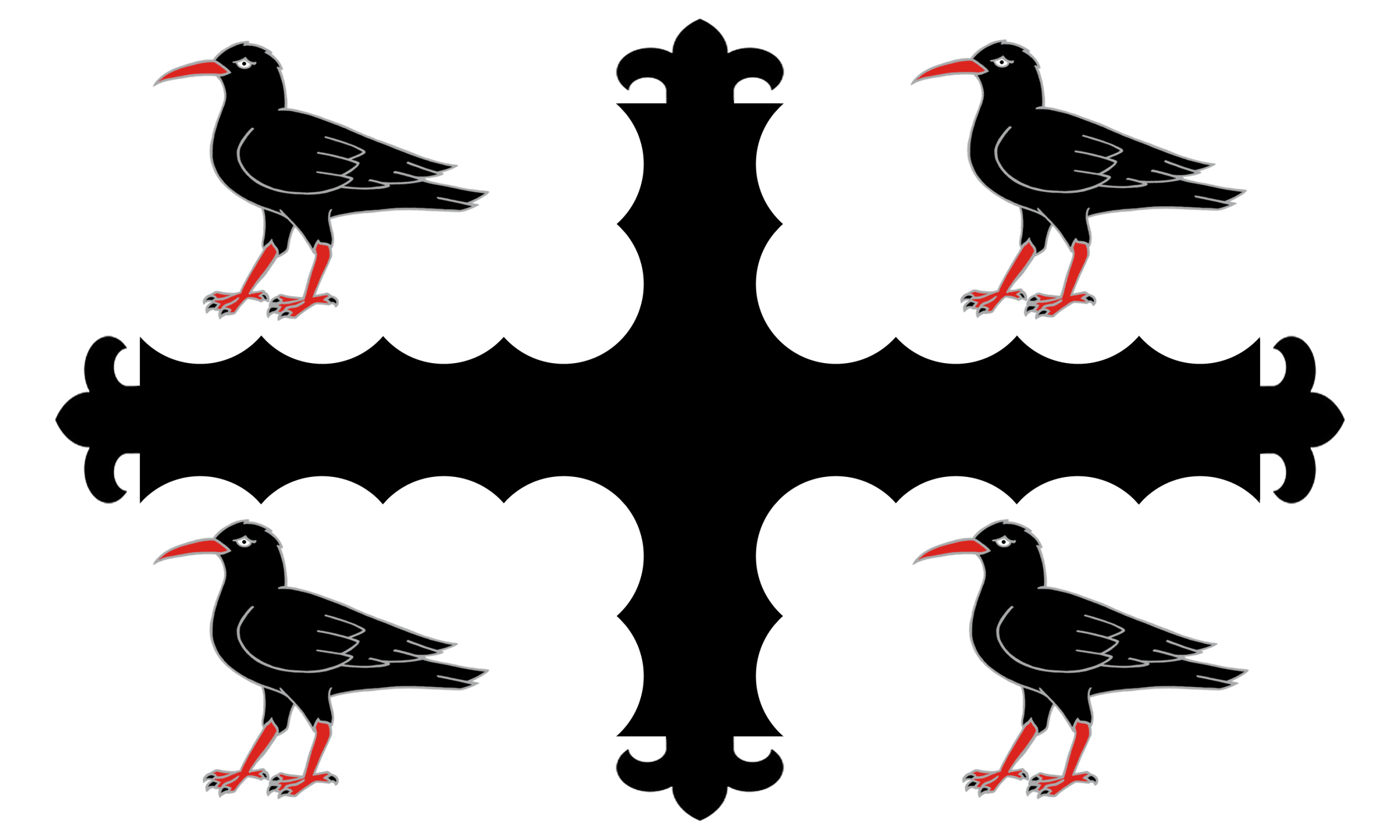
Why does Flintshire’s flag feature four black chough birds around a complex cross on white? Explore Tegeingl, Edwin ap Gronwy and local Welsh heraldry. The details below distinguish traditional attributions and later records from modern flag registration, and explain the visual elements using identifiable evidence.
The primary reference is the Flag Institute’s UK Flag Registry entry. Historic county flags may remain in use even where today’s local-government boundaries differ from earlier county boundaries.
Flintshire flag at a glance
| Feature | Details |
|---|---|
| Historic county | Flintshire, northeast Wales |
| Field | White |
| Central shape | Black engrailed cross with flory ends |
| Birds | Four black choughs with red bills and legs |
| Attributed ruler | Edwin ap Gronwy of Tegeingl |
| Historic landscape | Tegeingl in northeast Wales |
| Registry code | UNKG7450 |
| Ratio | 3:5 |
Scope: This guide concerns the registered historic county flag and its symbolism. In British vexillology, registration by the Flag Institute is a recognized reference for community designs; it is not by itself a separate governmental grant of national sovereignty.
look
What does Flintshire’s flag look like?
The background is white and bears a large black cross with scalloped or engrailed outlines and flower-shaped ends. Each of its four quadrants contains one black bird.
chough
Why does Flintshire have four choughs?
The chough is a corvid bird traditionally depicted with a red beak and legs. Four of them form part of the heraldic arms later attributed to a Welsh ruler associated with Tegeingl.
cross
What is the unusual black cross called?
The cross is described in heraldry as an engrailed or flory cross, combining curved edge detailing with shaped extremities.
edwin
Who was Edwin ap Gronwy?
Edwin ap Gronwy is remembered in the historical tradition as an eleventh-century lord or king of Tegeingl, the region that later became central to Flintshire.
land
Where was Tegeingl?
Tegeingl was an early Welsh cantref or territorial unit in the northeast of Wales, corresponding approximately to part of later Flintshire.
history
How did the arms become a county emblem?
Flintshire County Council used a version of the traditional arms on its seal before receiving an amended formal grant.
colour
Why are the beaks and legs red?
The red colouring is a familiar heraldic and natural identifying feature of the chough, contrasting with the black plumage and white field.
compare
Flintshire vs Caernarfonshire and Glamorgan
Caernarfonshire uses three gold eagles on green, while Glamorgan uses three broad white chevrons on red.
draw
How to draw Flintshire’s flag
Start with a white field and a large ornate black cross. Add one black chough to each quarter, with red beak and feet.
Frequently asked questions
What type of birds are on Flintshire’s flag?
Four black choughs with red bills and legs.
What is the black design at the centre?
An ornate engrailed/flory cross.
Who is the flag linked with?
Edwin ap Gronwy of Tegeingl in traditional heraldry.
When is the symbol dated?
The Flag Institute lists medieval traditional attribution, approximately the 14th century.
Is this the flag of the Welsh nation?
No, it is a historic Flintshire county flag.
Does the cross have straight plain edges?
No, it has decorative curved and flory forms.
Are the four birds ravens?
They are choughs, identifiable by red beaks and legs.
Where is Flintshire?
In northeast Wales.
Sources and illustration credits
Flag Institute — Flintshire flag (UK Flag Registry)
Image:Registered PNG flag illustration downloaded from the Flag Institute’s Flintshire entry. The Institute states its Registry’s flag artwork is free to download and reuse. Flag imagery is reproduced for independent educational identification, without an endorsement claim.
Source-checked November 2026. Historical arms attributed to ancient figures are distinguished from modern archival proof where appropriate.