Nova Scotia Flag: Blue Saltire, Scottish Lion & History
Why does Nova Scotia’s flag resemble Scotland’s with reversed colors? Learn its blue St Andrew’s cross, central Scottish lion, 1625 heraldic roots and 1929 royal authorization.
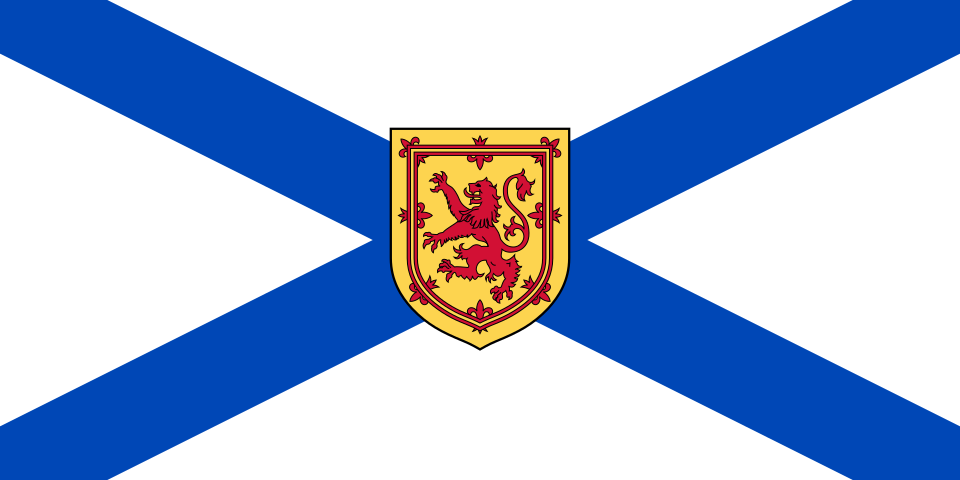
Nova Scotia’s provincial flag is among Canada’s oldest-looking heraldic banners. Rather than using a Union Jack, modern maple leaf or landscape illustration, it combines a blue diagonal cross with the red royal lion associated with Scotland. The Latin name Nova Scotia means “New Scotland,” a useful starting point for understanding the design.
Canadian Heritage describes the 1625 coat of arms and explains why the blue cross is reversed from the Scottish national flag. It also records a significant 1929 royal warrant that restored the original heraldry after a different post-Confederation coat of arms had been used.
This article distinguishes the flag’s centuries-old symbolic roots from its later formal authorization, and compares the lion-and-saltire design with the flags of Quebec, Alberta and Canada.
Nova Scotia flag at a glance: inverted saltire and lion shield
The provincial flag is a rectangle with a white field crossed diagonally from corner to corner by blue bands, forming a saltire or X. At the middle is a small golden shield bearing a red lion standing upright on its hind legs inside a distinctive red double border decorated with floral shapes.
| Feature | Description |
|---|---|
| Province | Nova Scotia, Canada (capital Halifax) |
| Name meaning | New Scotland |
| Main field | White |
| Cross | Blue saltire / St Andrew’s cross |
| Centre | Golden shield bearing red Scottish lion rampant |
| Shield detail | Red double tressure flory-counter-flory |
| Original arms | Granted 1625 |
| Modern authorization | 1929 Royal Warrant |
| Proportions | 2:1, width twice the height |
Why does Nova Scotia’s flag use a blue diagonal cross?
The broad diagonal X is called a saltire, and in Scottish heraldry it is associated with St Andrew. Scotland’s national flag places a white saltire on a blue field. Nova Scotia reverses those colors, using a blue saltire on a white field.
Canadian Heritage explicitly identifies this reversal as a way of differentiating the provincial shield and flag from Scotland while preserving their close heraldic relationship. The saltire’s four arms extend diagonally from corner to corner rather than forming a vertical and horizontal cross.
That makes Nova Scotia quite different from Quebec’s white upright cross on blue. The two provinces have distinctive historical French and Scottish heritage connections, but their flags use different kinds of crosses and central devices.
Which color is the background?
White. The blue portion is the diagonal cross, not the background. This is the opposite color arrangement from the familiar Scottish Saltire, making the flag easy to distinguish if a student first identifies which color occupies the corners of the rectangle.
What does the central red lion represent?
The gold central shield bears a red lion rampant, a lion standing on its hind legs with its forepaws raised. The emblem is derived from the Royal Arms of Scotland, emphasizing the Scottish heraldic origins of Nova Scotia’s flag.
Surrounding the lion is a red double border decorated with stylized floral forms known in heraldry as a double tressure flory-counter-flory. Its design comes from the same Scottish royal tradition. The intricate border is easy to miss when the flag is flying at a distance, but it is a defining feature of the shield.
The lion does not represent a species native to Nova Scotia. It is a royal heraldic animal. It is also different from the small English lion walking across the red cross on the New South Wales flag, which illustrates how the same animal can appear in very different positions and traditions.
Why does Nova Scotia mean New Scotland?
The name Nova Scotia is Latin for New Scotland. Early seventeenth-century Scottish colonial ventures, including those associated with Sir William Alexander, were a major part of the province’s European heraldic development. The arms granted in 1625 reflected this Scottish connection.
The flag therefore makes historical sense as a blue-on-white adaptation of Scotland’s saltire with an inset Scottish royal lion shield. It is not a claim that modern Nova Scotia is constitutionally part of Scotland or that everyone living in the province has Scottish ancestry.
Nova Scotia has a much longer and broader history than the original colonial heraldry, including Mi’kmaq communities and later Acadian, African Nova Scotian and other populations. The flag is a historic civic emblem of the province, not an exhaustive visual account of every community that has shaped it.
What happened in 1625?
King Charles I granted arms connected with Nova Scotia in 1625. Those arms combined the blue saltire on white with the royal Scottish lion at the centre. Canadian Heritage calls the original provincial arms the oldest among Canada’s provinces and territories.
These historic arms were used within a colonial framework long before Canadian Confederation. They should not be confused with the date on which Nova Scotia entered Canada in 1867 or with the twentieth-century royal warrant that restored the original arms.
The shield extended to a rectangular banner forms the modern flag. Because the underlying heraldic imagery predates the existence of today’s Canada, the Nova Scotia flag has an unusually old source even though its present constitutional use belongs to a modern Canadian province.
Why is 1929 important to the Nova Scotia flag?
After Nova Scotia joined Canadian Confederation in 1867, a new coat of arms was assigned to the province. That created a period in which the original 1625 Scottish-style arms were not the officially used provincial heraldry.
A campaign to restore the historic arms culminated in a royal warrant from King George V dated 19 January 1929. Canadian Heritage describes the Nova Scotia flag authorized after that restoration as the first in the overseas Commonwealth to be authorized by royal charter.
The distinction matters in search results: 1625 is the original heraldic grant; 1929 is the modern royal restoration and flag authorization. Saying that the exact contemporary provincial flag has flown officially and uninterrupted since 1625 would omit the later coat-of-arms replacement and restoration.
Canadian government educational references and Nova Scotia’s legislative symbols booklet both document these dates, allowing them to be presented confidently without relying on an unsupported “first flag in North America” claim.
Nova Scotia vs Scotland, Quebec and Alberta flags
The clearest comparison is with Scotland’s national Saltire: Scotland has a white X on blue, whereas Nova Scotia has a blue X on white plus a central gold lion shield. The two designs are intentionally related but are not interchangeable.
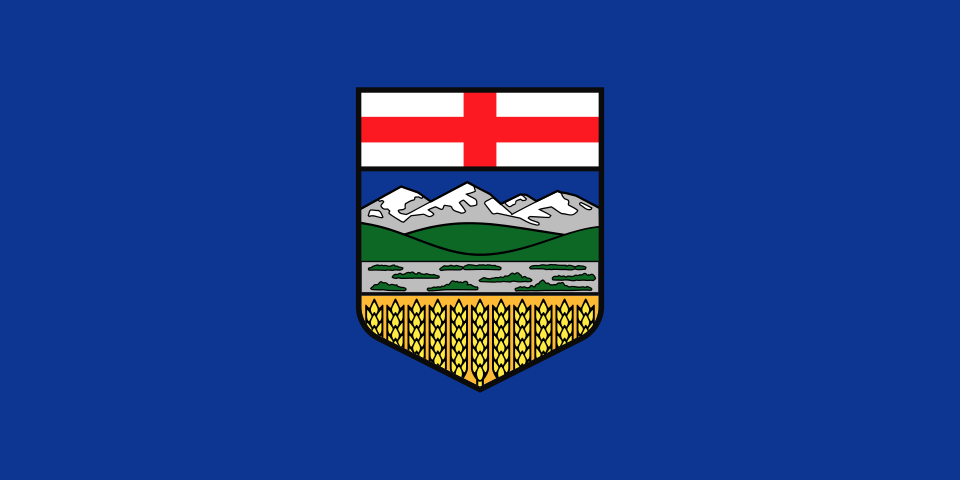
Quebec’s Fleurdelisé uses a white upright cross and four white fleurs-de-lis on a blue field. It has no blue saltire and no central lion. Alberta’s landscape shield flag has a solid blue background and mountains, wheat and a red upright St George cross in its shield, but no diagonal arms.
Canada’s national flag is red and white with a central maple leaf, rather than a Scottish lion or diagonal cross. A good comparison lesson explains how provincial flags preserve distinct historical symbols while still belonging to one country.
How is Nova Scotia’s flag used today?
The provincial flag appears on government buildings, at the Nova Scotia Legislature, on civic institutions and during provincial commemorations. It is often displayed with Canada’s national flag and other provincial or municipal banners according to relevant protocol.
Its heraldic layout is important for precise official imagery. The flag should display the blue diagonal cross on white, with the lion-bearing gold shield centred. A flag with the Scottish white-on-blue saltire but no central lion would be Scotland’s flag, not Nova Scotia’s.
Public use of the banner should respect official Canadian and provincial display requirements where applicable. Cultural display and educational flag identification are different from legally regulated governmental uses of provincial arms.
How to draw the Nova Scotia flag correctly
Begin with a white rectangular flag twice as long as it is high. Draw a broad blue diagonal cross connecting all four corners, leaving white triangular spaces between the blue diagonal arms.
In the center add a gold shield containing a red Scottish lion standing on its hind legs. Surround it with a narrow red double border decorated with small heraldic floral shapes. For a beginner’s worksheet, the X and shield are the essential identification features; for an accurate reproduction, use an official heraldic graphic.
To distinguish it from Quebec, ask learners whether the white or blue color forms the cross. Quebec has white vertical/horizontal arms on blue, while Nova Scotia has blue diagonal arms on white. The lion adds a second clear distinguishing mark.
Frequently asked questions
What does the Nova Scotia flag look like?
A blue diagonal St Andrew’s cross on a white field, with a central gold shield bearing the red Scottish royal lion.
Why is its saltire blue on white?
The colors are reversed from Scotland’s white saltire on blue to create a distinctive Nova Scotia heraldic design.
What does Nova Scotia mean?
New Scotland, a Latin name linked to the province’s Scottish colonial and heraldic origins.
What does the red lion represent?
The Royal Arms of Scotland, including a lion rampant on gold inside a red double border.
When was the Nova Scotia flag adopted?
Its design derives from arms granted in 1625; the historic arms and flag authority were restored by royal warrant in 1929.
What happened in 1929?
King George V authorized the return of Nova Scotia’s 1625 arms, leading to formal recognition of the modern flag.
Is Nova Scotia’s flag the same as Scotland’s?
No. The colors of the saltire are reversed and Nova Scotia adds a central Scottish royal lion shield.
What is the Nova Scotia flag ratio?
The flag is twice as wide as it is high, a 2:1 ratio.
Does the flag have the Union Jack?
No. Its key heraldic symbol is the blue Scottish-style saltire and central royal lion shield.
Is the lion an animal native to Nova Scotia?
No. It is a heraldic royal lion from Scottish arms, not a depiction of local wildlife.
Official sources and illustration credits
Canadian Heritage — Nova Scotia provincial symbols
Nova Scotia Legislature — Symbols booklet
Canadian Immigration — Nova Scotia symbols fact sheet
Wikimedia Commons — Flag of Nova Scotia
Canadian Heritage — Provincial and territorial symbols guide
Nova Scotia public-domain flag artwork from Wikimedia Commons, rasterized to PNG. Alberta comparison from Commons. Canadian Heritage and Nova Scotia Legislature provide the heraldic history and 1929 restoration context.
Flag diagrams are rasterized versions of credited Wikimedia Commons artwork uploaded to the FlagExplorers library. Graphic licenses and official emblem-use restrictions can differ. Historical details checked November 2026.