Quebec Flag: Fleur-de-Lis, White Cross & History
Why does Québec’s blue Fleurdelisé flag have a white cross and four lilies? Learn the meaning of its French symbols, its January 1948 adoption and how it differs from Canada’s maple leaf.
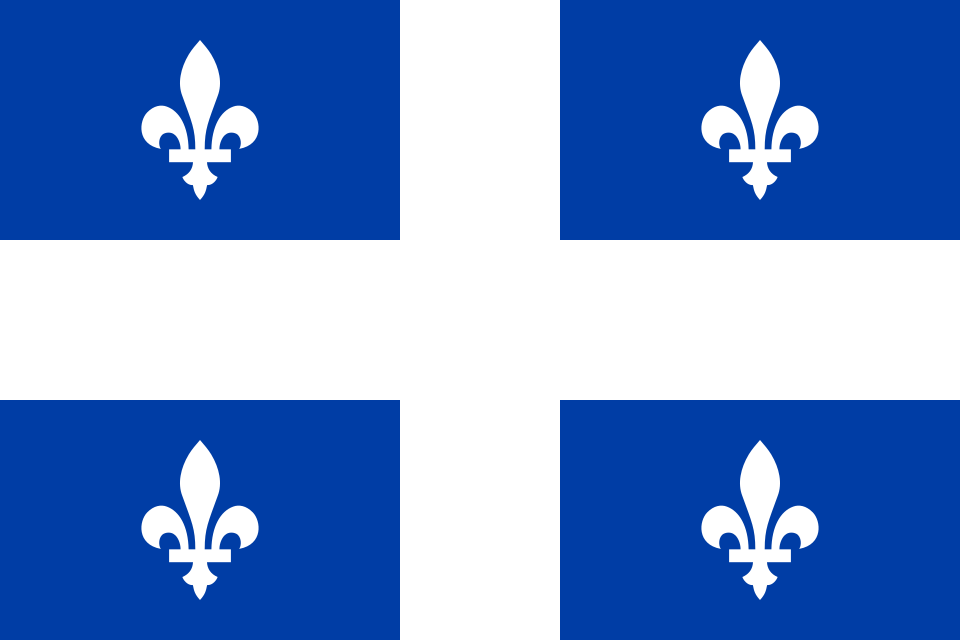
Québec’s provincial flag is among the most distinctive in Canada. Its bright blue background, white cross and four stylized lilies make it easy to distinguish from the national red-and-white maple leaf flag. In Quebec City, Montréal and many other places, both flags can be seen at public events.
The Government of Québec documents the exact date of its adoption and the historical use of the fleur-de-lis. The federal Canadian Heritage page confirms the official symbolism and proportions. These are stronger references than charts that call the flag simply “four flowers on blue.”
Québec is a province of Canada and the Fleurdelisé is its provincial flag. It does not replace the Canadian national maple leaf flag.
Québec flag at a glance: design and adoption
The Fleurdelisé is a blue rectangle with a white upright cross dividing four blue quarters, each containing an upright white fleur-de-lis. It uses 2:3 proportions and has been Quebec’s official provincial flag since 1948, with legislative confirmation in 1950.
| Flag detail | What to know |
|---|---|
| Place | Québec, province of Canada |
| French name | Le Fleurdelisé / drapeau du Québec |
| Field | Blue with white upright cross |
| Emblems | Four white fleurs-de-lis, one in each quadrant |
| Adopted | January 21, 1948 |
| Legislative confirmation | 1950 |
| Official proportions | 2:3 |
Why are there four fleurs-de-lis on the Quebec flag?
The fleur-de-lis is a stylized lily or iris-shaped heraldic emblem strongly associated with the French monarchy and France’s historical visual culture. It appeared in flags, coats of arms and other symbols carried to North America during the period of French settlement and colonial rule.
Québec uses four white fleurs-de-lis, one in each of the blue quarters created by the white cross. Canada’s federal heritage guide explicitly connects these flowers with France. Their symbolism is historical and cultural, not a claim that the modern province is governed by a French king.
The number four is a visible part of the flag’s composition, but it should not automatically be assigned a separate province, language group or historic settlement for each individual flower. The official description treats them as four repetitions of a heraldic element.
Are the fleurs-de-lis actual lilies or irises?
The fleur-de-lis is a stylized heraldic motif rather than a botanical illustration. Its origin is interpreted in different ways, including connections with lilies and irises. Quebec separately has a provincial floral emblem—the blue flag iris, Iris versicolor—which is not the same thing as the white fleur-de-lis figures on its provincial flag.
What does the white cross on Quebec’s flag represent?
The large white cross divides the blue field into four equal quarters. Canada’s federal heritage account links it to an ancient French military banner. Quebec’s own cultural heritage sources also discuss early French explorers and the tradition of crosses within historical symbols.
The cross is not a red cross like England’s St George flag, and it is not a Nordic off-centre cross. On the Fleurdelisé it is a centred white upright cross dividing a blue background into four distinct blue areas. The lilies sit within those blue quadrants.
The symbolism has historical religious and French connections, but describing the flag only as a religious statement would ignore its modern provincial and civic function. It serves residents of different backgrounds as the official flag of Quebec.
What do the blue and white colors mean?
The flag uses a blue field and white devices. This palette recalls traditional French banners and regional symbols used in New France, the French colonial period in North America. White supplies strong contrast for the cross and four lilies, making the design easily recognizable.
The exact hue of blue may look different under daylight or in digital photographs. Educational diagrams should use a consistent blue while focusing first on the flag’s legally established composition. The arrangement of the cross and four fleurs-de-lis is more important than attempting to infer an unverified story about why a particular shade was selected.
Unlike the Canadian national flag, which is red and white, Quebec’s design does not incorporate a red maple leaf. Quebec has a maple-leaf component in its coat of arms, but that is a different official emblem from the Fleurdelisé.
Why did Quebec adopt the Fleurdelisé in 1948?
Before 1948, the Union Jack was flown atop the Quebec Parliament Building. Quebec’s political and cultural institutions debated the desire for a provincial flag reflecting Quebec’s own history and French-speaking identity.
On January 21, 1948, during Premier Maurice Duplessis’s government, an order in council selected the Fleurdelisé as the province’s official flag. The new banner replaced the Union Jack on the central tower of the Parliament Building. Quebec’s heritage authorities record the exact date, and the federal government notes legislative confirmation in 1950.
There had been earlier designs, including the Carillon flag, that influenced the modern composition. The final 1948 arrangement placed the four white fleur-de-lis upright within each quarter rather than pointing inward. The modern pattern should not be treated as though it were identical to every predecessor.
Carillon and earlier French Canadian banners
Quebec’s modern flag did not arrive without precedent. The Carillon banner and variants combining blue, white and fleur-de-lis imagery appeared in French Canadian cultural and religious movements before the twentieth century. These earlier traditions helped establish a recognizable vocabulary of Quebec’s identity.
That history is different from a claim that today’s exact four-lily flag flew throughout New France. The official Fleurdelisé was selected in 1948, with defined proportions and arrangement. Older flags may look similar but use different orientation, devices or layouts.
Quebec’s cultural heritage register documents the Carillon connection and the adjustment to upright fleurs-de-lis in 1948. When using historical pictures, label a Carillon flag by its own name instead of calling it the post-1948 Fleurdelisé.
How is the Quebec flag different from Canada’s flag?
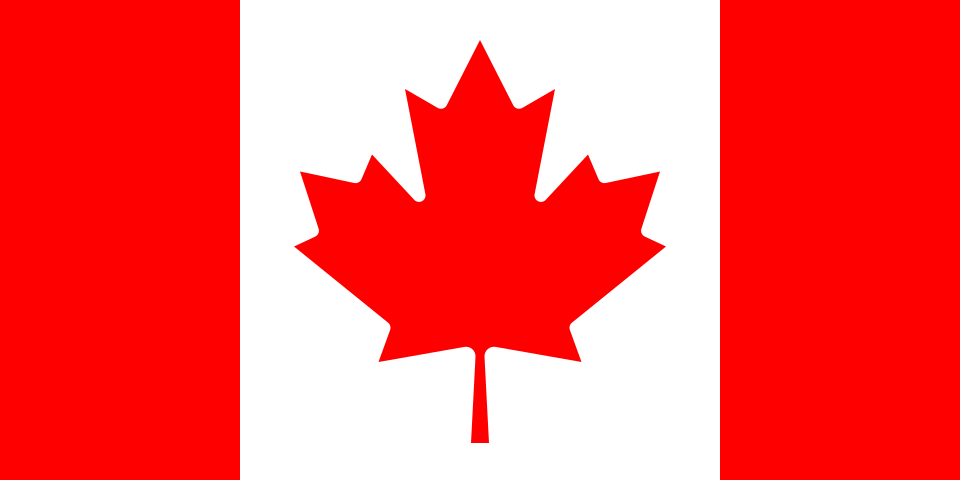
Canada’s national flag displays a red maple leaf with eleven points on a white central panel, between two red vertical side bars. The Canadian maple leaf design became official on February 15, 1965. Québec’s provincial flag is predominantly blue, crossed with white and decorated with four white fleurs-de-lis; it was adopted seventeen years earlier.
The flags can be flown together, and both are widely familiar within Quebec. Their different colors and historical origins illustrate how a federal country can have a national symbol alongside distinct provincial emblems. An observer should not describe the Fleurdelisé as the Canadian national flag or identify the maple leaf as Quebec’s provincial flag.
For the maple leaf’s eleven points, construction and national context, see our Canada flag guide. This page focuses on the province’s French heraldic symbols and the 1948 adoption.
How to identify or draw the Québec flag
Draw a blue rectangle with a 2:3 proportion and place a wide white upright cross through the centre so it creates four blue quarters. Put one upright white fleur-de-lis within each quarter. The four motifs should point up, not all toward the middle intersection of the cross.
For children or introductory lessons, simplify the fleur-de-lis shape while keeping the recognizable three-pointed flower outline. The four symbols should be similar in size and position. A flag with blue and white but without the four lilies is not a complete Fleurdelisé.
A classroom comparison can show Quebec’s flag beside those of Bavaria—another blue-and-white regional flag—and Canada. Quebec is identified by a centred cross and four lilies; Bavaria by lozenges or two bands; Canada by a red maple leaf.
Frequently asked questions
What is the Quebec flag called?
The Fleurdelisé, meaning a flag decorated with fleurs-de-lis.
What is on the Quebec flag?
A white upright cross and four white fleurs-de-lis on a blue background.
When was the Québec flag adopted?
January 21, 1948, by an order in council; its status was confirmed by the Quebec legislature in 1950.
What do the four fleur-de-lis mean?
They are traditional French heraldic symbols and recall Quebec’s French historical and cultural heritage.
What does the white cross mean?
It recalls old French military and heraldic banners, with additional historical associations documented by Quebec heritage authorities.
Why did Quebec replace the Union Jack?
The province adopted a distinctive flag reflecting Quebec’s own history and identity, replacing the Union Jack at the Parliament Building in 1948.
Is Quebec’s flag the same as Canada’s?
No. Quebec uses blue and white with four fleurs-de-lis; Canada uses a red maple leaf on white between red bars.
Is Quebec an independent country?
Quebec is a province within Canada. Its distinctive flag is a provincial symbol.
What is the Quebec flag ratio?
The Government of Canada gives its official proportions as 2:3.
Are the flowers real lilies?
They are stylized fleurs-de-lis, a heraldic device with multiple possible botanical interpretations, not detailed botanical drawings.
Is the fleur-de-lis the same as Quebec’s official floral emblem?
No. Quebec’s official floral emblem is the blue flag iris, Iris versicolor, while the fleur-de-lis is a heraldic symbol on the flag.
Sources and image credits
Gouvernement du Québec — Histoire du drapeau
Canadian Heritage — Québec’s provincial symbols
Québec cultural heritage register — Fleurdelisé adoption
Wikimedia Commons — Flag of Québec source
Wikimedia Commons — Flag of Canada source
Official Quebec design attributed to René Chaloult, digital vector by Krun; Commons source and public-domain notice. Canadian maple-leaf illustration from Commons national flag artwork. PNG renderings for educational comparison.
Flag artwork was imported as PNG renderings of linked Wikimedia Commons source files. Official emblem use may be restricted independently of image copyright. Checked November 2026.