Brazil Flag: 27 Stars, Ordem e Progresso, Meaning & History
Explore Brazil’s 27-star celestial globe, the meaning of Ordem e Progresso, the 1889 republican redesign, exact 7:10 construction and why Spica sits above the motto.
What does the Brazilian flag look like?
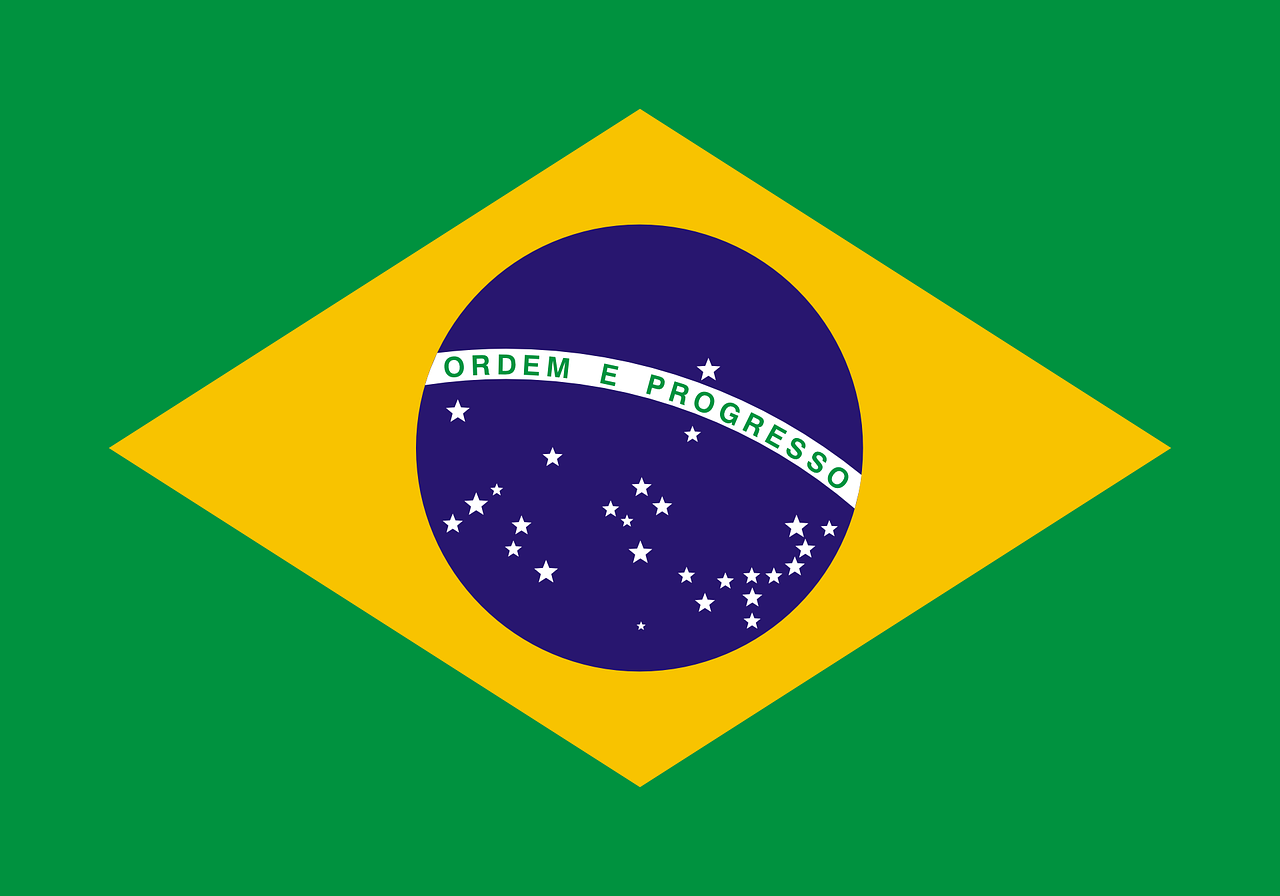
A yellow diamond sits on a green rectangular field. Inside the diamond is a blue celestial sphere filled with white stars and crossed by a curved white band carrying the green words ORDEM E PROGRESSO.
Brazilian law constructs the flag on a grid of 14 modules high by 20 modules long, giving an overall proportion of 7:10.
Why are there 27 stars on Brazil’s flag?
The flag currently contains 27 stars, representing Brazil’s 26 states and the Federal District. The stars are not simply decorative: each individual star is assigned to a specific federal unit.
The official celestial arrangement represents the sky over Rio de Janeiro at 8:30 a.m. on November 15, 1889, the date of the proclamation of the republic, viewed conceptually from outside the celestial sphere.
Why is one star above “Ordem e Progresso”?
The star above the motto band is Spica, in the constellation Virgo. Official Brazilian sources identify it with the state of Pará.
What does “Ordem e Progresso” mean?
Ordem e Progresso means “Order and Progress.” It was incorporated into the republican flag adopted shortly after the monarchy ended in 1889 and became one of the flag’s most recognizable elements.
Who designed the Brazilian flag?
The republican flag was designed by Raimundo Teixeira Mendes and Miguel Lemos, with artwork by Décio Vilares. It deliberately retained the green field and yellow diamond of the imperial flag while replacing the imperial arms with the blue celestial sphere and republican motto.
The flag was approved by Decree No. 4 of November 19, 1889. Later laws updated the star field as the federation changed; the current 27-star form dates from the 1992 update.
What do green and yellow mean?
Modern popular explanations often associate green with Brazil’s forests and yellow with mineral wealth. Historically, however, the republican flag deliberately retained the green and yellow colors already used by the Empire of Brazil. The historical origin and later popular symbolism should therefore be distinguished.
Brazil flag quick facts
| Republican flag adopted | November 19, 1889 |
|---|---|
| Stars | 27 |
| Star meaning | 26 states + Federal District |
| Ratio | 7:10 |
| Motto | Ordem e Progresso |
| Designers | Raimundo Teixeira Mendes and Miguel Lemos |
| Artwork | Décio Vilares |
Brazil flag FAQ
How many stars are on Brazil’s flag?
27.
What does each star represent?
Each star corresponds to one state or the Federal District.
What does Ordem e Progresso mean?
“Order and Progress.”
What is the Brazil flag ratio?
14 modules high by 20 long, or 7:10.
When was the current republican flag created?
November 19, 1889, with later updates to the star field.