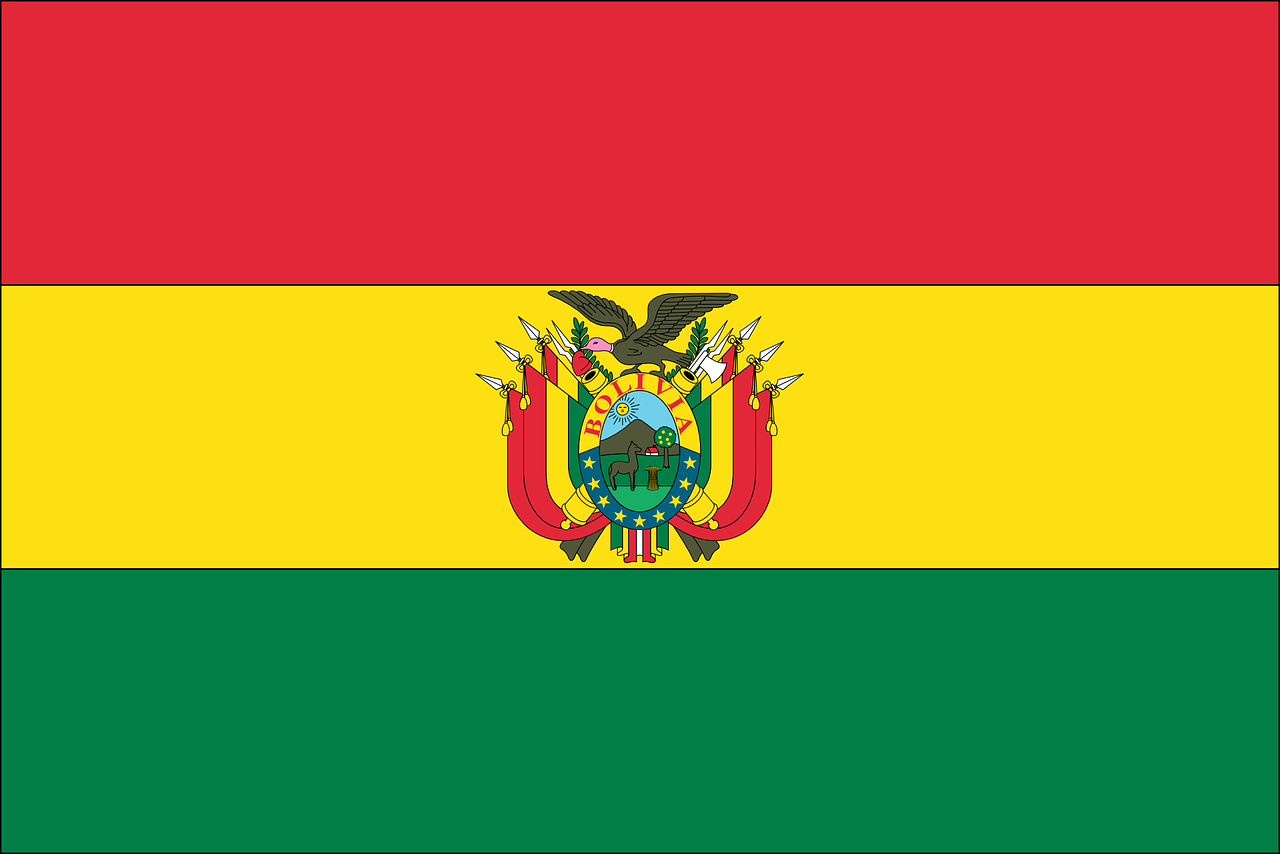
Bolivia’s national tricolour consists of three equal horizontal bands: red, yellow and green. The current arrangement was adopted in 1851. Bolivia’s Constitution also recognises the Wiphala as a separate state symbol alongside the tricolour.
What does the Bolivian flag look like?
The national flag has red at the top, yellow in the centre and green at the bottom. State versions may include Bolivia’s coat of arms in the yellow band, while the basic tricolour remains the national flag.
How did the flag develop?
Bolivia’s first flag was created on August 17, 1825, shortly after independence and used red and green. Yellow was introduced in a redesign the following year. President Manuel Isidoro Belzu established the current red-yellow-green order on October 31, 1851, and it was first raised in that form at the Conchupata lighthouse in Oruro on November 7, 1851.
Official meaning of the colors
Bolivian state guidance explains red as representing the blood shed by heroes in the creation and defence of the country. Yellow represents mineral and underground wealth. Green represents natural wealth and hope.
Bolivia flag facts
- Colors: red, yellow and green
- First national flag: August 17, 1825
- Current arrangement adopted: October 31, 1851
- First raised in current form: November 7, 1851
- Wiphala: separately recognised as a state symbol
Source
Reference: Bolivia’s state news agency coverage of the national flag’s official history and Decree 241 governing state symbols.