History of the Uruguay Flag: 1828 Design, Nine Stripes & Sun of May
Uruguay’s flag developed during the country’s independence era and was simplified into the nine-stripe design that remains in use today.
1828: the first national pavilion
Uruguay’s first national flag was created in 1828. Early versions used a larger number of alternating blue and white stripes.
Why the design was simplified
The original many-stripe layout was visually busy, so the flag was later simplified to nine stripes: five white and four blue. This became the familiar modern pattern.
What do the nine stripes represent?
The nine stripes are traditionally associated with Uruguay’s original departments at the time the design was established.
The Sun of May
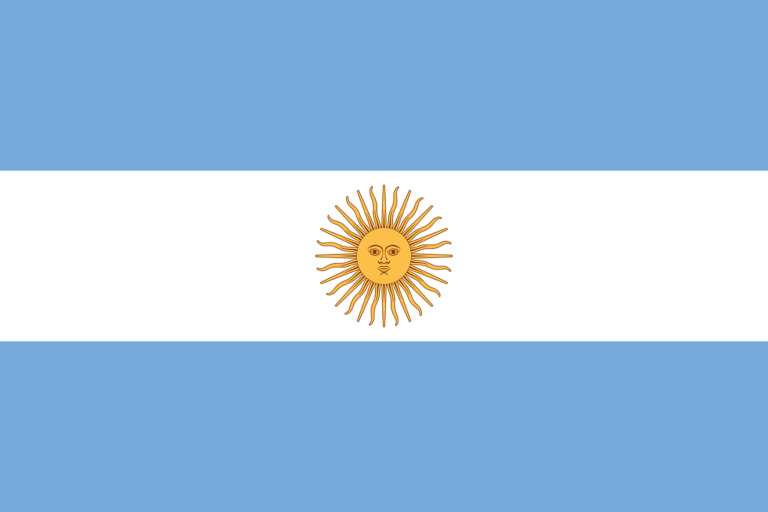
The upper hoist contains a golden Sun of May. This connects Uruguay’s flag with the wider Río de la Plata independence tradition also visible in Argentina’s national symbols.
Why Uruguay and Argentina look related
Both countries emerged from the political world of the former Río de la Plata and share blue-white colors and Sun of May imagery. Their modern layouts, however, are clearly different.
Modern flag structure
| Stripes | 9 total: 5 white, 4 blue |
|---|---|
| Canton | White |
| Symbol | Sun of May |