Virginia State Flag: Virtus & Sic Semper Tyrannis
The current Virginia state flag explained with a clear picture, historical context, design details and tips for identification.
Virginia state flag at a glance
| Detail | Answer |
|---|---|
| State | Virginia, United States |
| Adoption and updates | 1861 (seal imagery dates to 1776) |
| Key feature | Virtus, tyranny and the meaning of Sic Semper Tyrannis |
| Image source | Flagpedia / Wikimedia Commons |
What does the Virginia state flag look like?
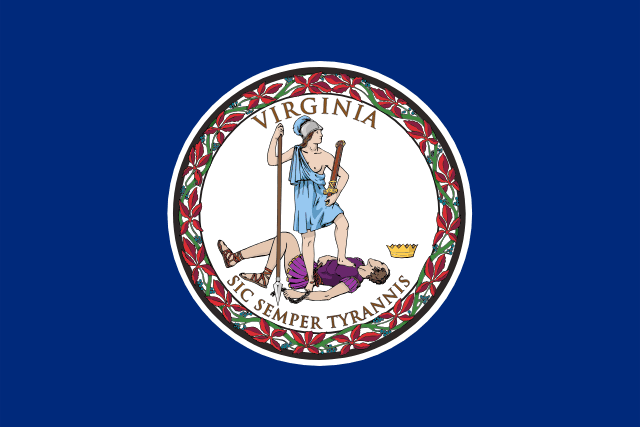
The Virginia state flag consists of a deep blue background with the commonwealth’s circular seal in the middle. The seal shows an armed female figure, Virtus, standing over the defeated figure of Tyranny. The word VIRGINIA arcs above, and SIC SEMPER TYRANNIS appears below.
What do the symbols on Virginia’s flag mean?
Virtus personifies virtue and courageous government. A fallen crown and broken chain beside Tyranny refer to rejected monarchy and oppression, a Revolutionary-era message. SIC SEMPER TYRANNIS translates as Thus always to tyrants. The scene does not portray a historical battlefield victory by an individual named Virginia.
The most important details to notice
The obverse of the state seal appears on the flag. Virginia’s reverse seal is different and should not be used as the flag centerpiece. The symbolism has also attracted inaccurate claims that the standing figure represents an actual governor or military commander; the source describes a classical personification.
When was the Virginia flag adopted?
The seal was adopted in July 1776 during Virginia’s transition from colony to independent commonwealth. The flag based on that seal was adopted at the opening of the American Civil War in 1861. Later laws refined the details and official reproduction of the seal, but the familiar Virtus-over-Tyranny scene remains.
Why this design matters to Virginia’s history
Virginia’s design was created while the commonwealth was asserting independence from Britain. Classical imagery supplied a visual argument: legitimate government should overcome arbitrary rule. A female figure symbolizing Virtue defeats a male representation of Tyranny. The crown and chain provide the political meaning even if the Latin ribbon is too small to read. The artwork is political allegory rather than a literal account of an execution.
Colors, proportions and how to draw the flag
To recognize the flag, first look for the plain blue field, then the pale circular emblem and two human figures. For an accurate drawing, consult the commonwealth’s seal artwork. The figure of Virtus stands with a spear and sheathed sword; the fallen figure is Tyranny, not a second defender.
For a classroom printout, keep the original aspect ratio of the official image instead of stretching it to fill a convenient box. Use a high-resolution or vector-derived source for detailed emblems. Commercial reproductions and governmental displays may require stricter specifications than educational illustrations, particularly where colors, lettering, dimensions or the seal artwork are defined by law.
How to identify Virginia in a state-flag quiz
The seal’s arrangement matters. Virtus stands upright with her spear, while a male figure lies beneath her foot; the name VIRGINIA arches at the top and the motto curves below. The blue field around the seal contains no separate stripes or stars. At low resolution, look for the pale circular center and the contrast between one standing and one fallen figure.
How is Virginia’s flag different from other U.S. state flags?
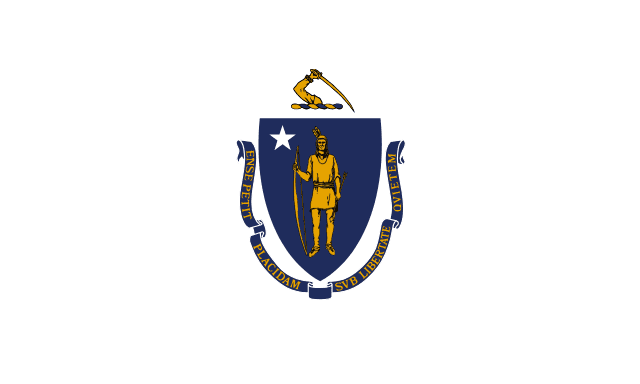
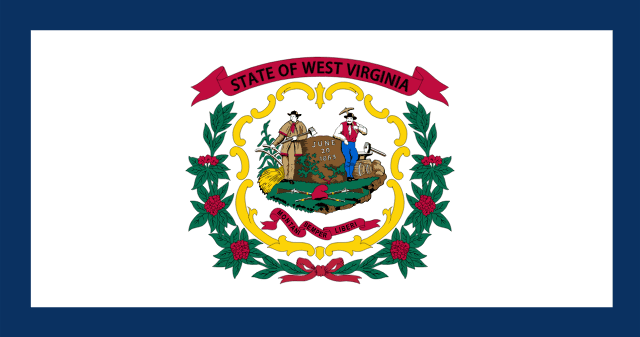
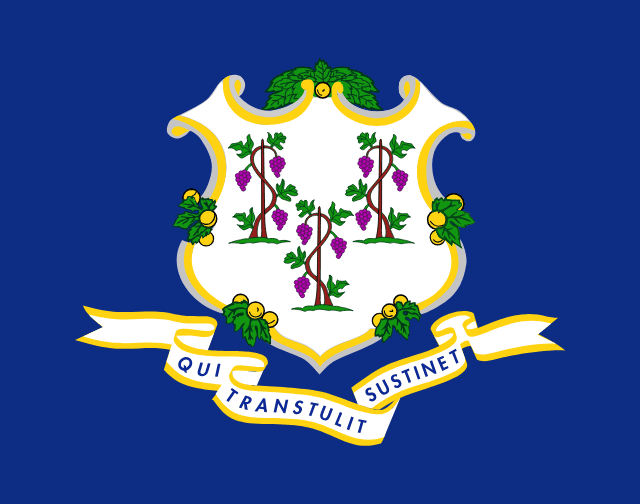
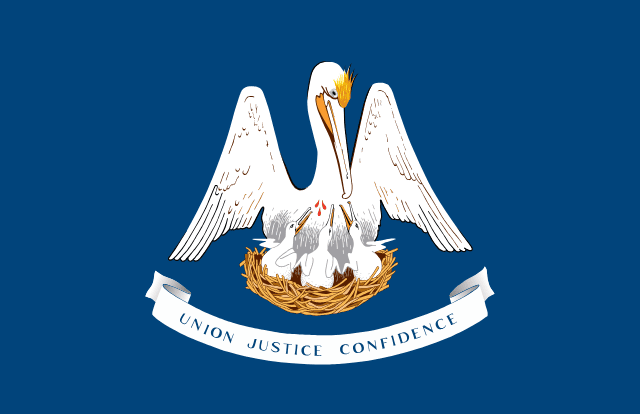
Several U.S. states put a seal on blue fabric, including Nebraska, Michigan and New York. Virginia’s emblem is unusual because a dramatic classical scene fills the circle rather than a landscape or supported shield. Comparing it with other state flags shows how sharply the subject differs from Pennsylvania’s agricultural coat of arms or Nevada’s small silver star.
Quick study notes and common mistakes
A common interpretation reads Sic Semper Tyrannis as a call for contemporary violence. In its original flag context it is part of a Revolutionary-era statement against tyranny; that historical context should accompany the translation. Also check that an illustration uses the obverse state seal, not Virginia’s different reverse seal. For classroom discussion, the objects on the ground help explain why the scene is an allegory.
Frequently asked questions
When was the Virginia state flag adopted?
1861 (seal imagery dates to 1776)
What is the most recognizable symbol on Virginia’s flag?
Virtus, tyranny and the meaning of Sic Semper Tyrannis.
What do the main emblems mean?
Virtus personifies virtue and courageous government. A fallen crown and broken chain beside Tyranny refer to rejected monarchy and oppression, a Revolutionary-era message. SIC SEMPER TYRANNIS translates as Thus always to tyrants. The scene does not portray a historical battlefield victory by an individual named Virginia.
Is the flag pictured here the current flag?
Yes. The image depicts the present official design as shown by the referenced flag illustration source. Historical or proposed alternatives are discussed separately when relevant.
Where can I find all 50 current state flags?
The FlagExplorers all 50 U.S. state flags gallery provides images, names and links to individual state guides.
Commonwealth of Virginia — Seals
Virginia Code — official flag
Flagpedia — U.S. state flag illustrations
Flag artwork sourced from FlagCDN/Flagpedia, based on Wikimedia Commons vector graphics and reproduced in the FlagExplorers library. Information reviewed November 2026.