Newfoundland and Labrador Flag: Blue Triangles, Red & Gold Arrow
What do Newfoundland and Labrador’s blue triangles, red shapes and gold arrow mean? Learn the 1980 Christopher Pratt design, its Union Jack influence and the separate Labrador flag.
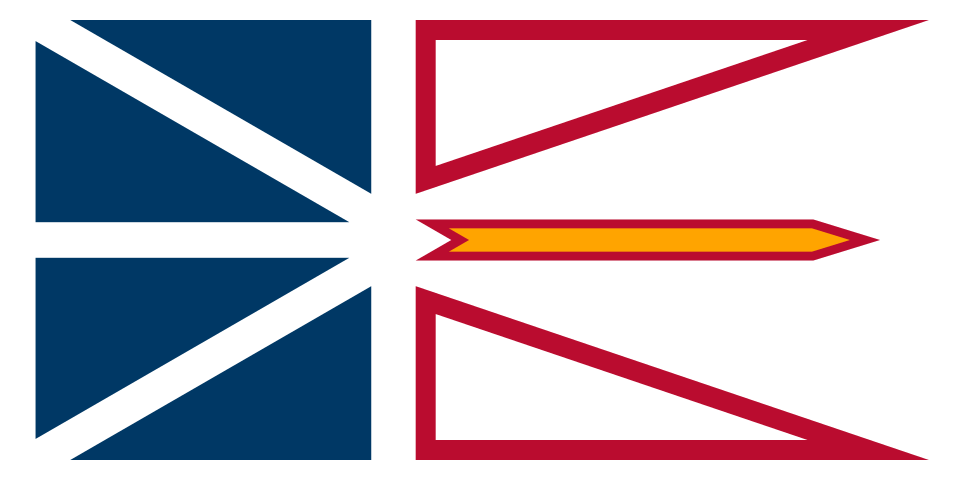
The Newfoundland and Labrador provincial flag is unusual among Canadian flags because it uses geometric shapes instead of a conventional shield, animal or maple leaf. The blue forms sit by the pole, while red and gold devices stretch across the white field. Its appearance was intentionally designed to recall both provincial history and a forward-looking future.
The Government of Newfoundland and Labrador explains the official colors and meanings. The Provincial Flag Act describes a white rectangular flag with four blue triangles at the hoist, two red-bordered forms on the fly and a gold arrow outlined in red. These are stronger sources than simplified graphics that mistake the golden arrow for a lightning bolt.
This guide also distinguishes the provincial flag from the separate Labrador cultural flag and from the pink-white-green Newfoundland tricolour, both of which can appear in regional photographs without being the province’s legal flag.
Newfoundland and Labrador flag at a glance
Its official proportions are 2:1. The symmetrical geometric forms incorporate four blue triangles next to the staff, two red-outlined triangles nearer the outer edge and a golden arrow pointing toward the fly. The design includes interpretations connected to Newfoundland, Labrador, the sea, historical British flags and future aspirations.
| Flag feature | What it means |
|---|---|
| Province | Newfoundland and Labrador, Canada |
| Designer | Christopher Pratt (artist) |
| Official adoption | June 6, 1980 |
| Flag ratio | Length 2 × height |
| Main colors | White, blue, red and gold |
| Blue shapes | Four triangles at hoist; maritime and Union Flag influence |
| Red devices | Island and mainland reaching together |
| Golden device | Forward-pointing arrow of confidence |
Why are there four blue triangles?
The blue triangles at the hoist are designed to recall the Royal Union Flag, which was used officially in Newfoundland and Labrador before the current provincial flag. The arrangement suggests the diagonal arms of that older flag without simply copying the Union Jack.
The provincial government’s official account also identifies blue with the sea. This is appropriate for a province with extensive Atlantic coastlines, fisheries and maritime communities. It is not necessary to assign one individual blue triangle to one coastal city; the blue group works as a historical and geographical device.
Four blue triangles appear in the official construction, not four separate blue stars. A common mistake in a worksheet is to redraw the design as a blue X on white; that loses the distinctive red and golden devices toward the fly.
Is the provincial flag a modified Union Jack?
It is inspired in part by the Union Flag’s geometry and history, but it is its own modern design. The province adopted a new official banner in 1980 after the Union Jack had served in that role. The 1980 flag also contains future-looking symbols and references beyond the British connection.
What do the two red triangles represent?
The official interpretation associates the two red-bordered triangular forms on the fly side with the island of Newfoundland and the mainland territory of Labrador. They appear as related shapes reaching together toward the future. This matters because the provincial name explicitly includes two geographically distinct parts.
Red also stands for human effort in the government’s published symbolism. The designer’s use of red is not simply a substitution for Canada’s maple-leaf red; the form and its position give it a provincial meaning.
The exact proportions and red borders are described by law. Some simplified illustrations print the forms as solid red or omit the outlines, which can change the character of the official design. For a precise flag reference, follow the legally prescribed geometric artwork.
Why is there a gold arrow pointing right?
The large gold arrow symbolizes the province’s belief in a bright future. Its direction toward the fly conveys a sense of moving forward, and the red outline sets the device apart from the white background.
The provincial government also explains that when the flag hangs vertically as a banner, the arrow can resemble a sword, associated with the sacrifice of war veterans. These additional readings were part of the original designer’s intended symbolism rather than a later social-media invention.
Gold is linked by the government with confidence in the people of the province. The design does not include a separate gold maple leaf or a small yellow star. The gold form is the arrow, and that outline is a key visual identification feature.
What do the white, blue, red and gold mean?
The Government of Newfoundland and Labrador publishes a four-color interpretation: white evokes snow and ice; blue the sea; red human effort; and gold confidence. The white ground makes the other devices easy to recognize.
Other symbolic readings appear in the designer’s description, including a trident emphasizing fisheries, a possible cross, an implied maple-leaf form and references to Indigenous art traditions. These should be presented as descriptions of the flag’s intended visual references, not claims that one stylized pattern reproduces a specific Beothuk or Innu cultural object exactly.
In a classroom, separating color meaning from geometric meaning creates two useful questions. Ask what the color blue represents, then ask how the blue triangles connect to the older Union Flag. The answers illustrate that a design can communicate several layers of meaning.
Who designed the flag, and when was it adopted?
Artist Christopher Pratt designed the provincial flag after a process of selecting a distinctive banner for the province. The new design was adopted by provincial legislation on June 6, 1980. The earlier Union Jack had been associated with the province for generations.
Newfoundland entered Canadian Confederation in 1949, later than the other Atlantic provinces. It had historic British and local flags, but the particular geometric flag used today dates only to 1980. The Newfoundland and Labrador name in full reflects the province’s island and mainland components.
The provincial flag law is important because it sets the design’s geometry and proportions. A tourist flag with different triangles or an extra slogan may echo the image but should not be labeled a perfect copy of the legislated form.
Provincial flag vs. Labrador flag vs. pink-white-green tricolour
At least three very different flags may appear in photographs from Newfoundland and Labrador. The official provincial flag is the geometric blue-red-gold design by Christopher Pratt. The Labrador flag uses horizontal white, green and blue with a spruce twig; it is an important regional cultural flag distinct from the province-wide flag.
Another well-known symbol is the Newfoundland pink, white and green tricolour. It is used by some Newfoundlanders to express local historical or cultural identity but is not the province’s officially adopted provincial flag.
The Government of Newfoundland and Labrador marked the Labrador flag’s fiftieth anniversary in 2024, confirming its 1974 creation and continued importance. These distinctions make a valuable separate-topic cluster: one article about the province-wide flag does not exhaust the histories of Newfoundland’s and Labrador’s individual regional banners.
How does the flag compare with other Canadian provinces?
Unlike New Brunswick’s lion-and-ship flag or Prince Edward Island’s oak-tree banner, the Newfoundland and Labrador flag has no heraldic animal or tree. Its forward arrow and triangular devices emphasize an intentionally modern geometric design.
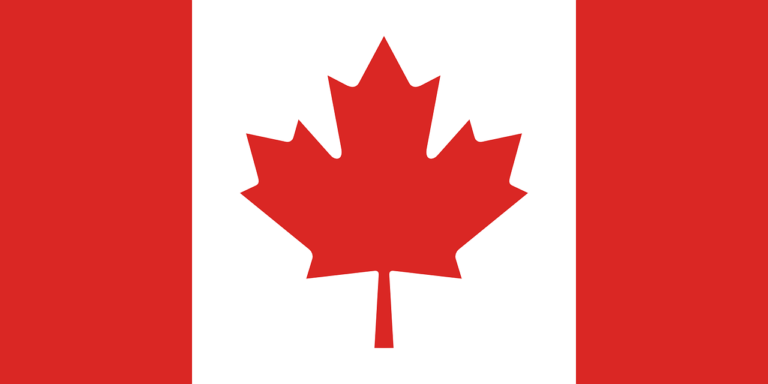
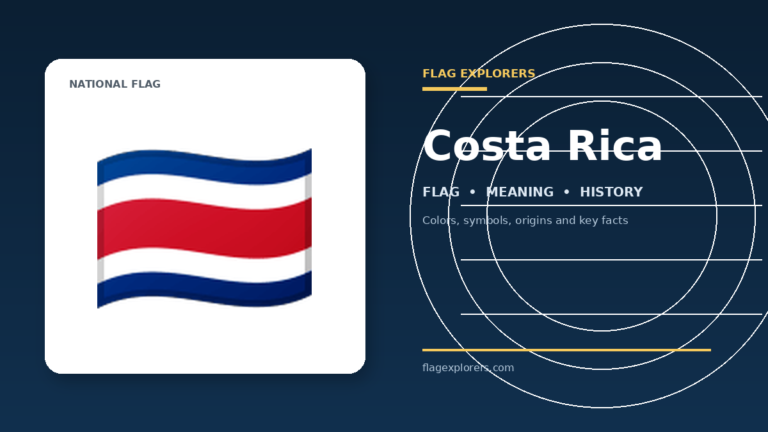
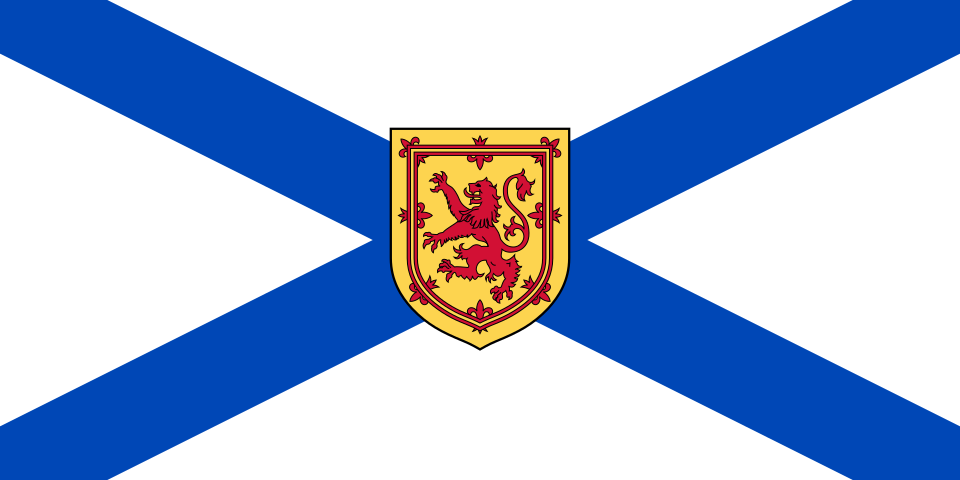
Nova Scotia retains a blue Scottish-style diagonal cross and a central lion shield, and the Canadian national flag shows a single red maple leaf. Newfoundland and Labrador is therefore one of the easiest provincial flags to distinguish by shape once the four blue triangles and gold arrow are recognized.
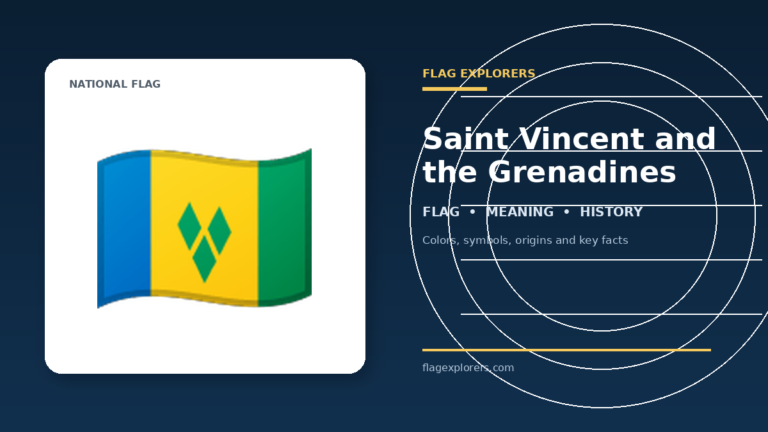
For a study guide, group these four Atlantic provinces together but avoid claiming they were all adopted on the same date or designed in the same century. Their flag histories are distinct.
How to draw the Newfoundland and Labrador flag
Start with a white rectangle twice as long as it is high. At the left near the flagpole, place four blue triangles arranged to suggest parts of a Union Flag. On the right add the two outlined red triangular forms and a gold arrow bordered in red pointing toward the fly.
Because this is a precise geometric design, hand-drawing a rough version is useful for recognition but should not be described as an exact legal construction. For official proportions use the Provincial Flag Act diagram and government artwork.
A helpful quiz asks which Canadian provincial flag contains a large gold arrow rather than a shield, flower or animal. Newfoundland and Labrador is the answer. For deeper study, compare its official flag with the separate Labrador regional tricolour.
Frequently asked questions
Who designed the Newfoundland and Labrador flag?
Canadian artist Christopher Pratt.
When was it adopted?
June 6, 1980.
What does the gold arrow symbolize?
A confident, bright future; as a vertical banner it can also suggest a sword recalling veterans’ sacrifices.
What do the blue triangles represent?
They recall the province’s Royal Union Flag heritage and are associated with the sea.
What are the two red triangles?
The island of Newfoundland and mainland Labrador advancing together, according to the provincial government’s interpretation.
Why is the flag white?
White symbolizes snow and ice and provides contrast for the colored devices.
Is this the Labrador flag?
No. Labrador has a separate white-green-blue cultural banner with a spruce twig.
Is the pink-white-green Newfoundland tricolour official?
It is a distinctive regional cultural flag but not the provincial banner adopted in 1980.
What ratio does the provincial flag use?
2:1, length to height.
Official references and illustration credits
Government of Newfoundland and Labrador — Official flag meanings
Newfoundland and Labrador Provincial Flag Act
Canadian Heritage — Newfoundland and Labrador symbols
Newfoundland and Labrador Heritage — Post-Confederation Flags
Government of Newfoundland and Labrador — Labrador Flag Anniversary
Flag graphic from Wikimedia Commons; converted from SVG to PNG for this guide. Please check that source file’s specific author, license and attribution before reuse. Comparison graphics are from the linked official flag guides or the FlagExplorers media library.
Official emblem use may have legal or protocol requirements independent of image copyright. Historical references consulted November 2026.