History of the Cuba Flag: 1850 Cárdenas to the 1869 Guáimaro Adoption
Trace the Lone Star flag from its nineteenth-century independence origins and first raising at Cárdenas to its adoption by the Assembly of Guáimaro.
Origins of the Lone Star flag
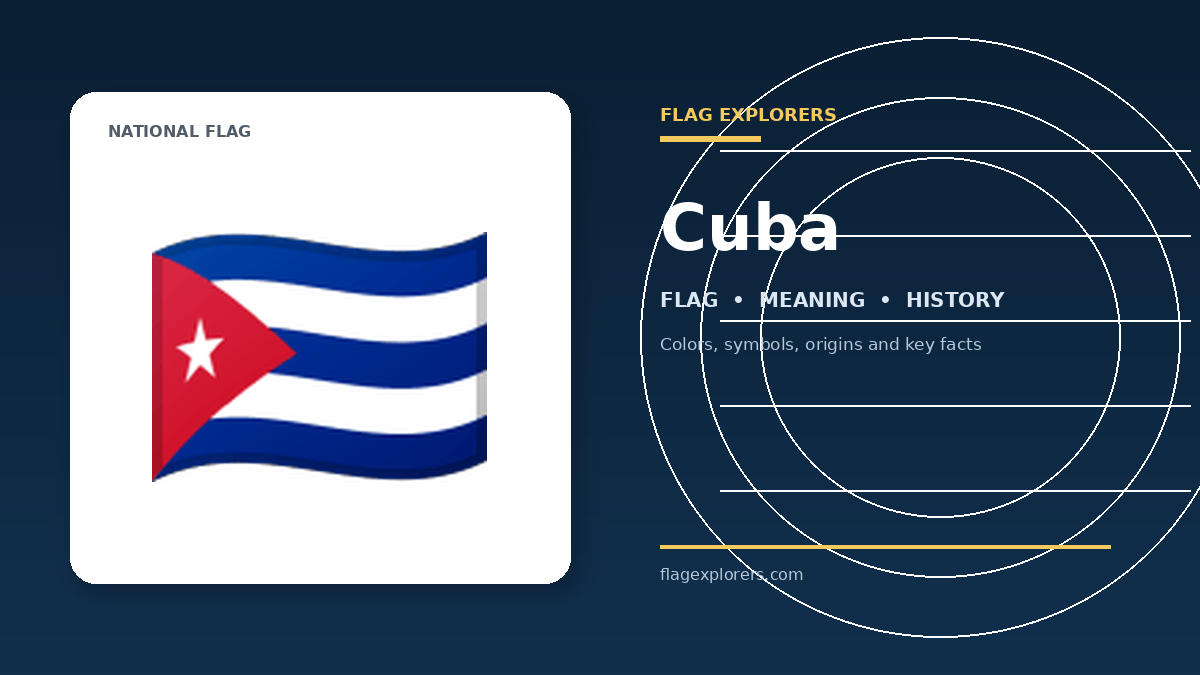
The design is traditionally associated with Narciso López and Miguel Teurbe Tolón. It combined five horizontal stripes, a red triangle and a single white star into the form still recognized today.
May 19, 1850: first raising at Cárdenas
The flag was first raised at Cárdenas on May 19, 1850 during an anti-colonial expedition associated with Narciso López. This event established the Lone Star design as an important independence symbol.
The independence wars
During Cuba’s nineteenth-century struggle against Spanish colonial rule, several revolutionary banners were used. The Lone Star flag became one of the most important symbols of the independence cause.
April 11, 1869: adoption at Guáimaro
Cuba’s national-symbols framework identifies April 11, 1869 as the date on which the Assembly of Guáimaro adopted the Lone Star flag. The Céspedes flag retained a special historical role and is today associated with the National Assembly.
Why the design endured
The flag linked the independence movement with a simple and memorable combination of a single star, a red triangle and alternating blue-white stripes. It later became the national flag of the Cuban republic.