India Flag: Meaning, Colors, History & Facts
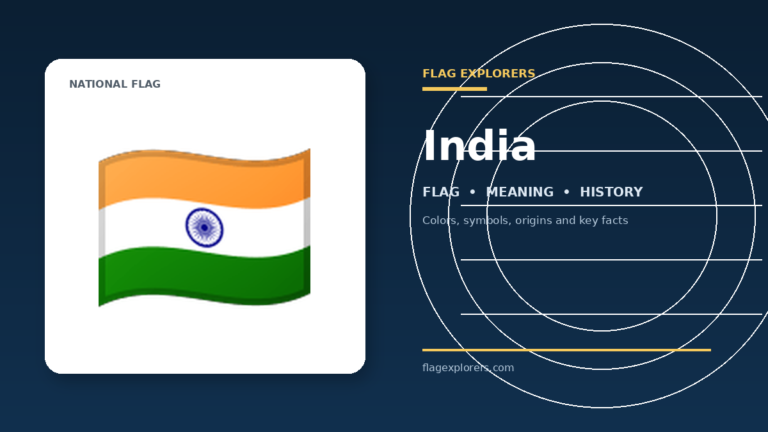
India’s national flag is a saffron-white-green horizontal tricolour with a navy-blue Ashoka Chakra in the centre. The present design was adopted on July 22, 1947.
What does the Indian flag look like?
The flag has three equal horizontal bands: deep saffron at the top, white in the centre and India green at the bottom. A navy-blue Ashoka Chakra with 24 spokes sits in the middle of the white band.
What do the India flag colors mean?
Official government explanations connect saffron with courage and renunciation, white with truth and peace, and green with the country’s relationship to the land, fertility and growth.
Explore the colors and Ashoka Chakra in detail →
What is the Ashoka Chakra?
The central wheel is based on the Dharma Chakra from the Lion Capital of Ashoka at Sarnath. Its 24 spokes and circular form symbolize law, movement and peaceful progress.
What is the flag ratio?
The Flag Code of India specifies a 3:2 length-to-height ratio. The three bands are equal in height and the chakra is centred in the white stripe.
How did India’s flag develop?
The modern design evolved from earlier nationalist flags. Pingali Venkayya presented an influential design in 1921; a saffron-white-green tricolour with a spinning wheel was adopted in 1931; and the Constituent Assembly replaced the charkha with the Ashoka Chakra in 1947.
Read the full India flag history →
India flag facts
| Colors | Saffron, white, green, navy blue |
|---|---|
| Central symbol | Ashoka Chakra |
| Spokes | 24 |
| Ratio | 3:2 |
| Adopted | July 22, 1947 |
India flag FAQ
What is in the middle of the Indian flag?
The navy-blue Ashoka Chakra.
How many spokes does it have?
Twenty-four.
What is India’s flag called?
It is commonly called the Tiranga, meaning tricolour.
How can you identify India’s flag?
Look for three equal horizontal bands in saffron, white and green with a navy-blue wheel in the centre. The Ashoka Chakra makes India easy to distinguish from other horizontal tricolours because it has 24 visible spokes rather than a star, coat of arms or plain central stripe.
When is the flag especially displayed?
India’s flag is prominently displayed for national occasions including Independence Day on August 15 and Republic Day on January 26. Modern Flag Code rules also allow citizens to display the national flag more broadly, provided they follow rules intended to preserve its dignity.
Why is the flag called Tiranga?
Tiranga means “tricolour,” referring to the three main horizontal bands. The Ashoka Chakra is an additional navy-blue emblem rather than a fourth band.