Romania vs Chad Flag: How to Tell the Similar Tricolors Apart
Side-by-side national flag identification, visual differences, historical context and practical examples.
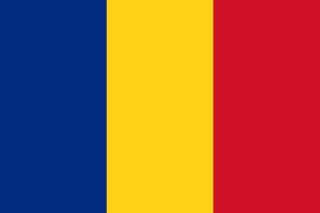
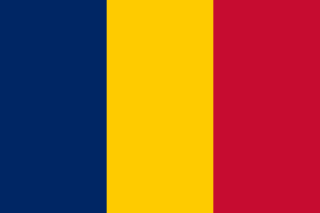
Romania and Chad use three equal vertical bands of blue, yellow or gold, and red, in that order from the flagpole. The blue in commonly used Chad illustrations is darker than the Romanian blue, but shade is not a dependable test in photographs. Neither current national flag contains a central emblem. When color and context cannot resolve the difference, the correct identification is uncertain rather than a confident guess.
Comparison at a glance
| Feature | Romania | Chad |
|---|---|---|
| Stripe direction | Vertical | Vertical |
| Order from hoist | Blue, yellow, red | Blue, gold, red |
| Emblem on national flag | None | None |
| Common reference proportions | 2:3 (height:length) | 2:3 (height:length) |
| Typical blue in illustrations | Brighter blue | Darker blue |
| Geographic region | Southeastern Europe | Central Africa |
Why do the flags look almost identical?
These two designs form an unusually difficult comparison because both use the same basic construction. If you outline the colored regions in a black-and-white diagram, you obtain a rectangle divided into three equal vertical areas. Neither outline contains a cross, star, seal, triangle or extra band. Many other flag comparisons can be settled by counting shapes; here the shapes alone cannot settle the question.
The order of colors is identical, too. Begin at the hoist, the edge that attaches to the flagpole. The first stripe is blue, the middle stripe is yellow or gold, and the stripe at the fly is red. Reversing the order would not convert one of these flags into the other. It would instead produce an incorrect front-facing representation of both.
Even their widely reproduced rectangular proportions are the same. A squarer image in a list of search results might be a crop, a waving icon or a resized thumbnail rather than evidence of a different country. If an image has been stretched into a uniform icon size, its dimensions tell you more about the website’s layout than about the country it represents.
A side-by-side comparison is useful when the illustrations come from the same collection and are displayed under identical conditions. The blue band on the Chadian reference is generally deeper. However, this should be treated as a conditional clue. The correct question is whether the two samples have comparable provenance, not whether one happens to look darker on a particular monitor.
The flags remain entirely distinct as national symbols despite their similar graphics. They represent two countries with different languages, political histories, territories and national institutions. The resemblance does not mean that one flag is a regional version of the other.
The blue shade: useful clue or unreliable shortcut?
Most popular flag collections draw the Romanian blue in a moderately brighter shade than the deep blue used for Chad. This is why a color-based comparison can work on a controlled quiz where the designer deliberately uses the same standard artwork throughout. It is far less reliable when a learner compares an image downloaded from one site with a photograph taken elsewhere.
A textile in shadow may appear almost navy, even when it is normally a vivid blue. A camera may brighten a dark sample automatically. Reflections, fading and the choice of lighting can alter the apparent color of a fabric without changing its identity. A screen’s display settings introduce another variable.
The red and yellow or gold portions can also look different between reproductions. A bright gold stripe may seem closer to yellow under daylight, whereas a compressed digital picture can give it a muted appearance. It is not safe to construct a second identification rule based solely on subtle yellow or red differences.
Romanian flag legislation includes a model and color intensity provisions. Chad’s constitutional description establishes three equal vertical bands with blue nearest the pole. These legal references provide a stronger starting point than a color sampled from an unlabeled internet photograph. They do not turn the observation of a dark pixel into proof of nationality.
For a designer who needs a formal reproduction, use the applicable national specification or approved artwork. For a learner, use the labeled comparison images on this page to understand why the two flags are often confused. The illustrations are educational references rather than calibrated textile swatches.
Suppose you have two pictures, one with deep blue and another with brighter blue. If both pictures are labeled by a trusted flag reference, the difference reinforces the identification. If neither is labeled and they have different lighting, the labels cannot be reconstructed from hue alone with confidence. This distinction between controlled comparison and unknown-image identification is essential.
How to identify an unlabeled flag in real life
Begin with the physical flag’s surroundings. A flag displayed outside a Romanian embassy, alongside Romanian-language official notices, or at a Romanian national ceremony has a much stronger contextual association than its apparent shade of blue. A flag at a Chadian diplomatic mission or on a clearly identified Chadian government building has a different association.
Look for the country name on signs or the event program, rather than relying on the language of a single person nearby. Romanian is used in more than one country, and French is used in many African and European countries. A national flag at an international event may represent a visiting delegation rather than the country where the event takes place.
Sports displays can provide another clue. A scoreboard, team name or recognized country code can disambiguate a flag that looks nearly identical in a small television graphic. Do not use the apparent nationality of a person standing near the flag as proof of which flag is displayed.
Check the date of a historical photograph. Romania’s state flag during the communist period commonly included an emblem in the central stripe. After the revolution of 1989, the plain tricolor returned. A photo of a flag with a visible central emblem may therefore belong to a different historical context from the current plain designs.
If the image is cropped, determine whether the middle stripe is fully visible. A missing portion could conceal an emblem that would identify another country. This is particularly important because several neighboring flag designs also use the same broad color family.
If all you have is an anonymous flat tricolor and the blue looks somewhere between the commonly reproduced shades, record it as Romania or Chad, unresolved. A geography quiz may require a single answer, but in real-world identification there is no obligation to make up a certainty that the evidence does not support.
Romania: an older European tricolor tradition
The Romanian tricolor has roots in the nineteenth-century movement toward a modern Romanian state. Blue, yellow and red appeared together in that period, including in the revolutionary era of 1848. The sequence and presentation of the colors developed as political institutions changed.
The union of Moldavia and Wallachia in 1859 was an important stage in the development of the modern Romanian state. The tricolor became associated with that history and later with the kingdom. The modern arrangement should be distinguished from earlier historical flags that used the colors in other configurations or carried different emblems.
Under communist government, the flag displayed a central state emblem. This feature made the Romanian flag visually distinguishable from the plain Chadian tricolor after Chad introduced its national flag. Historical material from that era must be dated rather than automatically treated as an illustration of the current design.
The events of December 1989 brought the removal of the communist emblem. Photographs of the Romanian revolution show flags with holes where the emblem had been cut out. Those objects have a particular historical meaning; a torn central area is not a feature of the modern national flag’s official geometry.
The present constitutional description identifies a vertical blue-yellow-red tricolor. Romania’s flag law supplies further details on the design and display. The national flag is not defined by its similarity to any other country’s flag, but by its own legal and historical tradition.
For the separate history of Romanian symbols, consult the main Romania flag guide linked below. The comparison here focuses on the sequence of design changes that helps explain why the resemblance to Chad became especially conspicuous in the modern era.
Chad: a different path to the same arrangement
Chad’s flag belongs to the period in which French colonial territories in Africa were moving toward self-government and independence. The tricolor was introduced in 1959, before the country became independent in August 1960. It therefore has a separate historical origin from Romania’s nineteenth-century tricolor.
The vertical division recalls a design form used by France, the former colonial power. In the Chadian flag, the combination of colors also reflects a different African context. Historical descriptions in the CIA World Factbook connected blue and red with France and the gold and red with the Pan-African color tradition. That is a published interpretive account, not a quotation of the constitution.
Many explanations associate the colors with features of the country, including its landscape. Such accounts should be presented as symbolic interpretations unless the relevant authority expressly establishes them. The actual constitutional requirement is clear about the bands and their order, without requiring a reader to assign a single meaning to every hue.
The flag was retained through changes of constitutional framework. Article 8 in the 2023 constitution, as reproduced in the revised text, identifies the three vertical equal-width colors with blue by the pole. The older constitutions also used the same basic description, which is useful evidence of continuity.
Chad is in Africa and Romania is in Europe. Their political and geographical histories cannot be inferred from their shared color scheme. A diagram that compares the two should identify their independent origins rather than connecting them with a speculative story about one country copying the other.
The contrast in chronology explains why a modern observer may see two nearly identical flags while a mid-twentieth-century flag chart shows a clearer difference. The modern flags converged visually when the emblem disappeared from Romania’s flag, but each remained the national symbol of its own state.
A measured drawing exercise: what geometry can and cannot show
Take two landscape rectangles, each thirty centimeters wide and twenty centimeters high, using the common two-by-three reference shape. Mark vertical lines at ten and twenty centimeters from the hoist. Both drawings will have three equal stripes measuring ten by twenty centimeters each.
Color the first stripe blue, the middle stripe yellow or gold and the last stripe red. Repeat exactly the same construction for the second rectangle. The outer proportions and stripe dimensions do not distinguish the two drawings. If the learner is given only one set of pencils, the results may be visually identical.
Now place a reliable labeled reference for each country beside the drawings. If suitable color samples are available, use the brighter reference blue for Romania and the deeper reference blue for Chad. Label the drawings underneath before displaying them together.
This exercise demonstrates an important property of identification: a classification scheme that works well for a cross, star or horizontal band may fail when two symbols share exactly the same geometry. It also shows why adding extra markings to the flags is not an appropriate way to make the distinction easier.
For a digital project, keep the country name as separate metadata. Store the two flags under their correct country identifiers, even if their artwork appears similar. Do not deduplicate files just because the images are nearly identical. That could cause one country’s symbol to be displayed wherever the other country is selected.
A teacher can make a controlled color exercise by providing two known swatches and asking students to match them to the reference collection. A second exercise can remove the labels and vary the brightness of the photographs. Ask students to explain why the second exercise no longer offers an equally reliable answer. The exercise teaches both flag recognition and evidence-based reasoning.
Other blue-yellow-red flags to rule out
Moldova also uses a vertical blue-yellow-red tricolor. Its current national flag has the coat of arms in the middle, which includes an eagle bearing a shield. When the emblem is visible, the design can be separated from both Romania and Chad. If the flag is folded so that the central emblem disappears, caution is still necessary.
Andorra uses the same broad vertical colors with its coat of arms in the center. Its central yellow area and proportions can also differ from the simple equal-width arrangements discussed here. The emblem is the most practical first clue for identification.
Colombia, Ecuador and Venezuela are often compared because they use yellow, blue and red. However, their principal national designs are arranged in horizontal bands with yellow at the top, not vertical blue-yellow-red bands. The direction of the divisions usually makes this group much easier to distinguish from Romania and Chad.
France uses a vertical blue-white-red tricolor. A faded yellow stripe may look light in a photograph, but a reliable reference will distinguish the white center of France’s flag from the yellow or gold centers discussed here.
An identification checklist can therefore narrow a much larger set of possible flags before confronting the genuinely difficult pair. First check stripe direction, then order, then the presence of an emblem. Only after these stable features have been considered should small color differences become relevant.
This process is also useful for designing an image database. Record stable features as structured fields, and treat a shade-based result as a candidate rather than a guaranteed match. A flag finder that returns both Romania and Chad for the same input is doing something useful: it is acknowledging the information limits of the query.
A quick decision guide for quizzes, photographs and flag collections
In a flag quiz using a consistent set of images, compare the blue to a known reference from that same quiz. A deeper navy-like blue often signals Chad. A brighter blue often signals Romania. Treat that as a convention of the collection rather than a universal rule.
In a photograph, first confirm that the entire flag is visible and that it is not seen through tinted glass or in heavy shadow. If a reliable caption or event listing identifies the country, that evidence is stronger than the shade comparison. A photograph without that information may remain ambiguous.
In a printed textbook, use the country label and the position on the map to confirm the identity. Different print runs and paper stocks can make a color look quite different. A map legend should not rely on color alone to tell two countries apart.
For a public display, verify the supplied national flag and its documentation before the event. Even if the wrong image appears visually plausible, a mislabeled display fails to represent the intended country. The safest process is to order or select the flag by the country name and approved specification.
The practical conclusion is simple: Romania and Chad have exceptionally similar national flags, but no universal photographic test makes them distinguishable in every situation. Use controlled visual clues when available and corroborating context when they are not.
Frequently asked questions
Are the two flags exactly the same?
They share the same basic layout; common reference illustrations differ chiefly in blue shade.
Which usually has the darker blue?
Chad, in many standard illustrations.
Can color alone identify a photographed flag?
Not reliably. Lighting, printing and image processing change apparent colors.
Does Chad use Romania’s flag?
No. Both are distinct national symbols with separate histories.
Sources and artwork
Romania’s national flag law, consolidated text
Chad Constitution (2023, revised 2025), Article 8
Historical CIA World Factbook flag descriptions
Romanian national flag day, AGERPRES
Flag artwork: Flagpedia / FlagCDN, published as public-domain reference artwork. Colors on screen are illustrative. Independent educational comparison; no official endorsement implied. Reviewed November 2026.