Emilia-Romagna Flag: Green Emblem, Red Stripe & Meaning
Learn what the Emilia-Romagna regional flag means, including its distinctive emblem, colours, adoption date and regional identity.
Emilia-Romagna extends across northern Italy from the Po basin to the Adriatic, with Bologna as its capital and historic centres such as Parma, Modena, Ravenna and Rimini. Below is a guide to the regional banner and the important distinction between it and the flags of local cities.
Emilia-Romagna flag at a glance
| Region | Emilia-Romagna, Italy |
|---|---|
| Capital | Bologna |
| Modern adoption | 4 November 1995 (commonly dated) |
| Identification clue | The mark is a stylised territorial shape, not an animal or a letter. |
What does the flag look like?
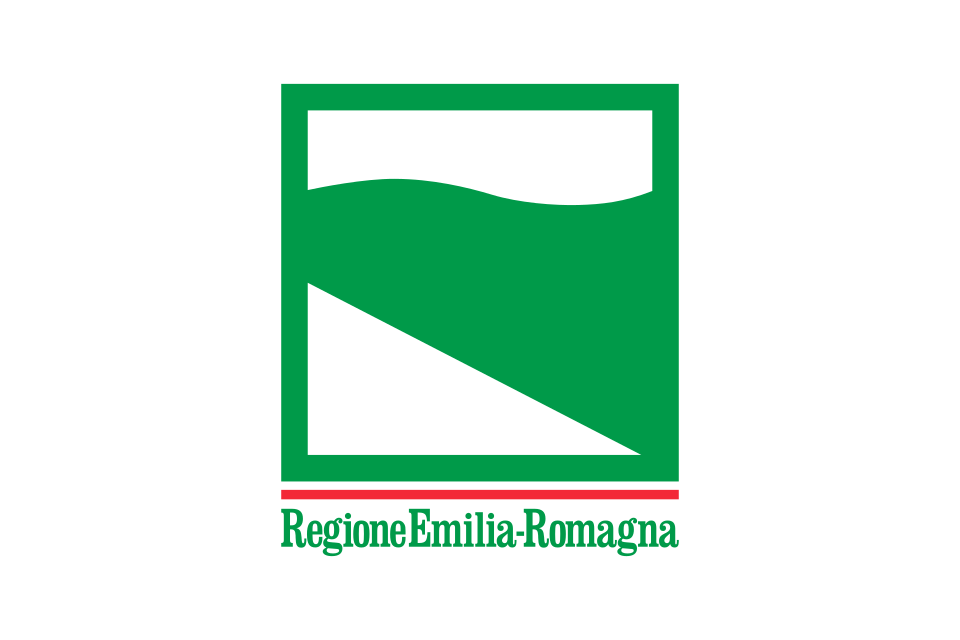
The commonly displayed Emilia-Romagna regional banner is white, with a distinctive green stylised outline of the region, a red bar and the words Regione Emilia-Romagna.
Its outline and colours are useful for identification even when the flag is seen at a distance.
What does the central symbol mean?
The emblem was developed as a graphic interpretation of the region’s shape and landscape. Its sweeping curve evokes the Po and the natural environment, while the straighter line suggests human routes and work.
The mark is a stylised territorial shape, not an animal or a letter.
What do the colours mean?
Green connects the mark to the fertile Po Valley; white gives the geometric image space; red is used as a horizontal accent beneath the emblem. The result looks more like a modern civic identity than an old heraldic shield.
Not every element has a separately documented allegorical meaning; where an interpretation is uncertain, the design itself is the safest guide.
How did the design develop?
The emblem predates several of the flag variants displayed in practice. Listings commonly give 4 November 1995 as the modern regional flag date; sources can also distinguish a de facto banner from formal emblem specifications.
The regional emblem and the date of its use on a flag are not necessarily the same historic event.
Where is the region?
Emilia-Romagna extends across northern Italy from the Po basin to the Adriatic, with Bologna as its capital and historic centres such as Parma, Modena, Ravenna and Rimini.
The capital is Bologna, but the flag represents the regional administration and the territory around it.
Regional flag versus city flags
The name combines Emilia and Romagna, but the regional flag is not simply two older regional flags joined together. Readers should not confuse it with separate flags promoted for Romagna as a cultural region.
A city’s civic arms can contribute to a regional emblem without making the two banners interchangeable.
How to identify or reproduce it
The commonly displayed Emilia-Romagna regional banner is white, with a distinctive green stylised outline of the region, a red bar and the words Regione Emilia-Romagna.
Use the original illustration linked in the sources for exact proportions and intricate heraldic details; avoid replacing official symbols with approximate clip art.
Frequently asked questions
Is Emilia-Romagna an independent country?
No. It is an Italian region and its flag does not replace the national Italian tricolour.
What does its main symbol represent?
The emblem was developed as a graphic interpretation of the region’s shape and landscape. Its sweeping curve evokes the Po and the natural environment, while the straighter line suggests human routes and work.
When was the regional flag adopted?
4 November 1995 (commonly dated).
What is the regional capital?
Bologna.
Is the flag the same as the capital’s city flag?
The name combines Emilia and Romagna, but the regional flag is not simply two older regional flags joined together. Readers should not confuse it with separate flags promoted for Romagna as a cultural region.
Sources and image credit
Regional flags of Italy — descriptions and linked legal references
Wikimedia Commons: Flag of Emilia-Romagna (de facto).svg. Image source, original creator and licensing terms are listed on the file page. The PNG here is a resized rendering of the source SVG.
For educational use; not an official government website. Reviewed 20 November 2026.