Western Australia Flag: Black Swan, Yellow Circle & History
Why does Western Australia’s state flag feature a black swan on a yellow circle? Learn the 1870–1875 history, the 1953 change of direction, and how it differs from other Australian state flags.
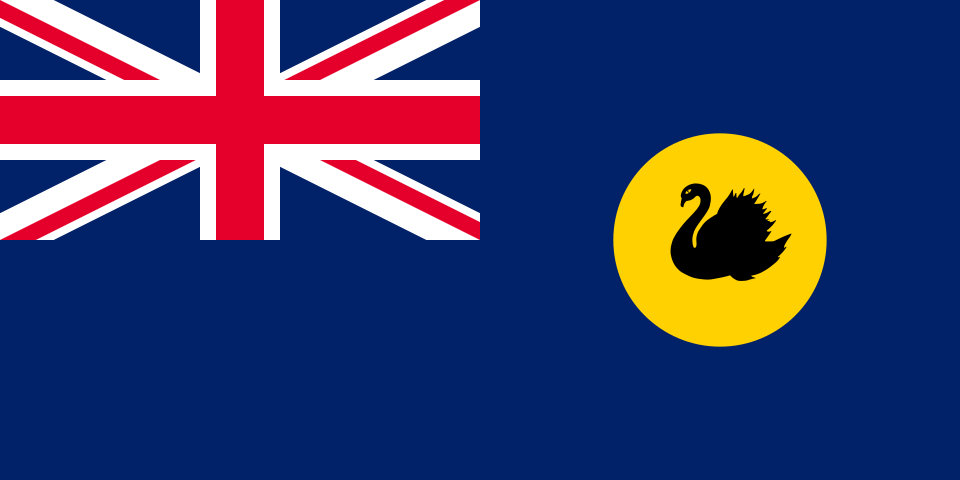
Western Australia covers the vast western part of the Australian continent, with Perth as its capital. The state’s flag is recognizable because its badge features one native bird rather than stars, a crown or a heraldic lion. The swan is set against a vivid yellow disc, giving the simple silhouette high contrast against the blue flag.
The Western Australian Government’s symbols history traces the black swan through early colonial seals, stamps and nineteenth-century governor correspondence. Australia’s national flags reference explains a frequently missed change: the black swan’s orientation was reversed in 1953.
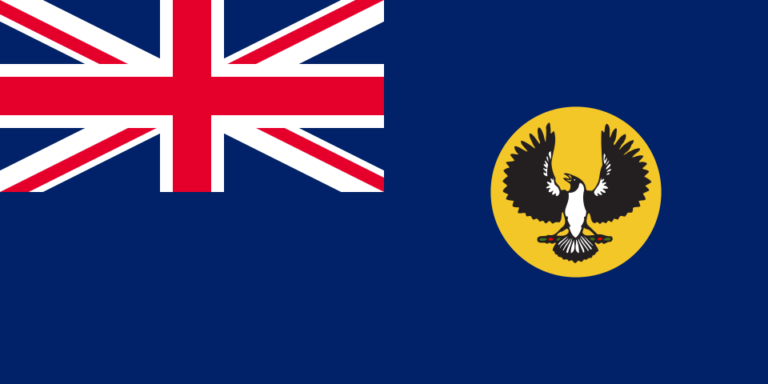
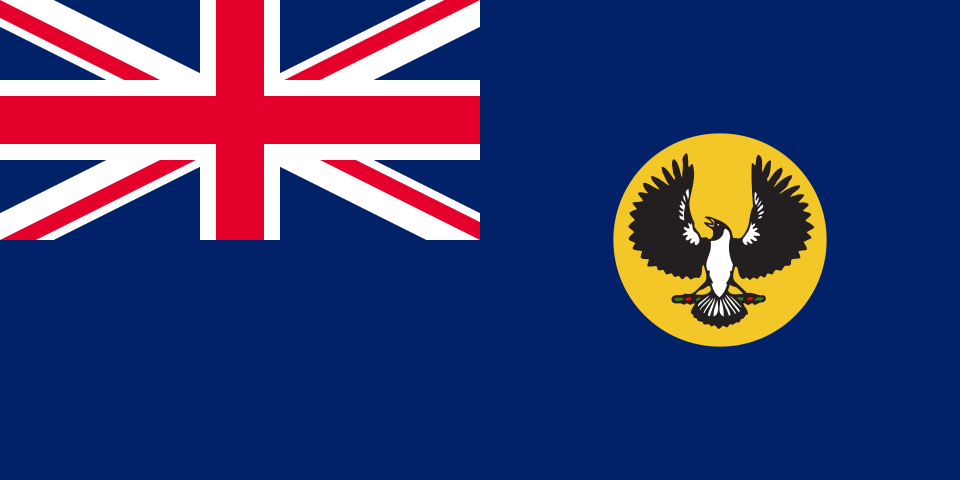
This guide distinguishes the state banner from Australia’s national flag and from the South Australian piping shrike flag, which also has a yellow circular badge but a different bird.
Western Australia flag at a glance
The state flag uses a dark-blue field and the Royal Union Flag in its upper-left canton, with a yellow roundel showing a swimming black swan in the opposite half. The swan is oriented toward the flagpole in the current version. The badge, rather than the blue field, identifies Western Australia.
| Flag feature | Description |
|---|---|
| State | Western Australia (capital: Perth) |
| Flag type | British Blue Ensign |
| Upper hoist | Union Jack |
| Badge | Yellow circular field |
| Animal | Black swan (Cygnus atratus) |
| Badge proposed | January 1870 by Governor Frederick Weld |
| Use confirmed | November 1875 by Governor William Robinson |
| Design revision | Swan reversed toward hoist in 1953 |
Why is a black swan on the Western Australia flag?
The black swan is a native Australian waterbird and a long-standing emblem of Western Australia, particularly the Swan River area around Perth. The species has black plumage with a red bill; its silhouette stands out clearly on the yellow circular badge.
The Swan River name dates to a 1697 Dutch maritime expedition led by Willem de Vlamingh, who encountered black swans in the estuary. The birds had, of course, been known to Aboriginal peoples long before European explorers arrived. The Western Australian government records local Noongar stories connecting black swans with ancestral traditions.
The swan became familiar on colonial documents, banks, newspapers and postage stamps. Western Australia’s first postage stamps, issued in 1854, featured the bird. It was therefore an established local identifier before the Blue Ensign badge received formal discussion and approval.
The black swan was separately proclaimed Western Australia’s official bird emblem on 25 July 1973. That later date should not be mistaken for when the swan first appeared on the state flag.
What does the yellow circle mean?
The yellow circle is the state badge’s background, providing a contrasting field for the black silhouette of the swan. In nineteenth-century correspondence, Governor Frederick Weld submitted a design with a black swan on yellow to distinguish Western Australian government flags from the blue ensigns of other colonies.
It is sometimes called a golden disc or roundel. The color should not be described as a separately legislated symbol for one named desert, mining field or sun without evidence. It functions primarily as the heraldic background for the local bird emblem.
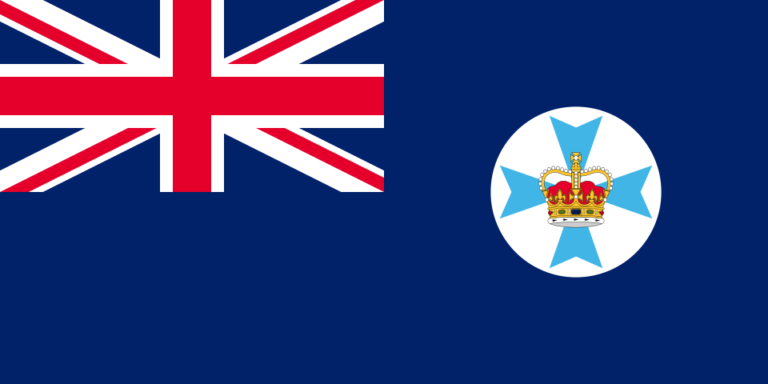
Other states have white or yellow circular badges. Queensland uses a white disc with a blue Maltese cross and crown, while South Australia has a yellow disc featuring a piping shrike. Identifying the bird is more reliable than using badge color alone.
How did the black swan become the state’s flag badge?
British colonial government vessels commonly used the Blue Ensign, adding a badge that identified the colony. Western Australia had used the black swan for decades before Governor Frederick Weld formally submitted a badge design on 3 January 1870.
Weld explained that the colony had been known as the Swan River Settlement and that the black swan had long been its recognized device. Governor William Robinson reaffirmed the black swan badge in a dispatch of 27 November 1875. The Australian Government notes that the swan had appeared on the Blue Ensign before 1870.
These dates describe stages of official confirmation, not a claim that the flag was invented on one afternoon. The wider black swan tradition reaches back through early colonial seals and printed material, while the state flag’s naval-style design reflects British imperial maritime conventions.
Western Australia became a state of the Australian Commonwealth in 1901, but its Blue Ensign and swan were retained as the regional identifier.
Why did the black swan change direction in 1953?
On the earlier version of Western Australia’s flag, the swan faced away from the flagpole. In 1953 it was reversed to face the hoist, bringing the position into line with heraldic convention. The Australian Prime Minister’s Department and the Parliament of Western Australia both describe this specific change.
The old and current designs have the same blue field, Union Jack and yellow swan badge; it is the orientation of the swimming bird that differs. Old flag photographs or museum objects can therefore show what looks like a reversed bird without necessarily being a printing mistake.
When identifying a modern flag, imagine the flagpole at the viewer’s left. The black swan should face back toward that pole. On the reverse side of a sewn flag, shapes may appear mirrored through the fabric, so check whether the photograph shows the obverse or reverse before declaring an image historically incorrect.
Why is there a Union Jack in the corner?
Western Australia’s Blue Ensign preserves the British naval and colonial flag format used in the nineteenth century. The Union Jack occupies the upper hoist corner, while the colony’s distinctive badge was placed in the fly half.
The flag remains a state symbol within Australia rather than a British national or sovereign state flag. Australia’s national flag also carries a Union Jack, but its other devices are the large Commonwealth Star and the Southern Cross constellation, not a black swan.
Blue Ensign layouts are also used in New South Wales, Victoria, Queensland, South Australia and Tasmania. That common background reflects a shared administrative origin; the fly-side badges tell you which Australian state is represented.
Western Australia vs. South Australia and Tasmania
Western Australia uses a black swan inside a yellow disc. South Australia has a black-and-white piping shrike, a magpie-like bird, on a yellow roundel. The two can look similar when the flag is very small, but the swan has a long curved neck while the piping shrike spreads its wings or perches on a branch.
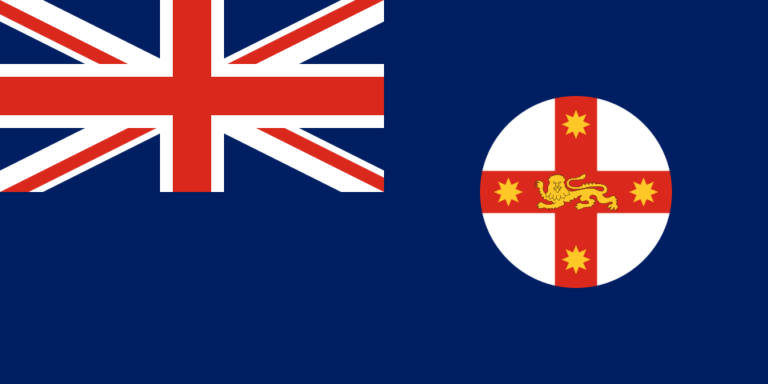
Tasmania uses a white disc with a red heraldic lion rather than a bird. The New South Wales flag displays a white disc with red cross, four gold stars and central lion, and Queensland’s badge is a blue Maltese cross with crown.
For a student comparison chart, crop in on the badges and ask which contains a waterbird, a piping shrike or a lion. This approach teaches the state-specific identity instead of encouraging guessing based on the shared Union Jack.
How to draw or identify the Western Australia flag
Begin with a dark-blue flag twice as long as it is high. Place the Union Jack in the upper corner nearest the pole, as on other Australian Blue Ensigns. Draw a yellow circle centered in the right half, then add a black swan silhouette inside it.
The swan should have a long curved neck, recognizable swimming posture and face the flagpole on the current design. The disc is yellow or gold, not white. Do not replace the swan with a bird spreading two large wings; that would resemble South Australia instead.
Use an official state image if exact proportions, heraldic orientation or flag protocol matter. For an educational activity the blue field, yellow roundel and black swan are the three most useful distinguishing features.
Frequently asked questions
What bird is on the Western Australia flag?
A black swan (Cygnus atratus), the state’s bird emblem.
Why is the circle yellow?
Yellow is the contrasting field of the official black-swan state badge.
When did WA adopt the swan badge?
It was submitted for official recognition by Governor Weld in 1870 and confirmed by Governor Robinson in 1875; swan imagery was already in use earlier.
Why does the swan face left?
The modern design faces toward the hoist or flagpole after a change in 1953.
Is the flag the same as South Australia’s?
No. South Australia features an Australian piping shrike rather than a black swan.
What does the Union Jack represent?
It reflects the historical British colonial Blue Ensign design.
Does the WA flag have stars?
No Southern Cross or Commonwealth Star is displayed on the WA state flag.
When did the black swan become WA’s bird emblem?
The black swan was proclaimed the state’s bird emblem in July 1973, much later than its use as a badge.
Is Western Australia a country?
Western Australia is a state within the Commonwealth of Australia.
Official sources and illustration credits
Government of Western Australia — symbols of WA
Australian Government — state and territory flags
Australian Government — Symbols of Western Australia
Western Australian Parliament — symbols fact sheet
Wikimedia Commons — WA flag vector
Western Australia flag image from Wikimedia Commons, converted to PNG for display. South Australian comparison from Commons. Refer to the linked source-file pages for licensing and attribution details.
The illustrations are PNG renderings of the linked Wikimedia Commons flag vectors and are for educational identification. Consult each source-file page for its specific license, attribution, and any official-emblem usage conditions. Sources checked November 2026.