South Australia Flag: Piping Shrike Bird & Yellow Disc Meaning
What is the black-and-white bird on the South Australia flag? Learn the piping shrike’s significance, its yellow badge, 1904 adoption and differences from Western Australia’s swan.
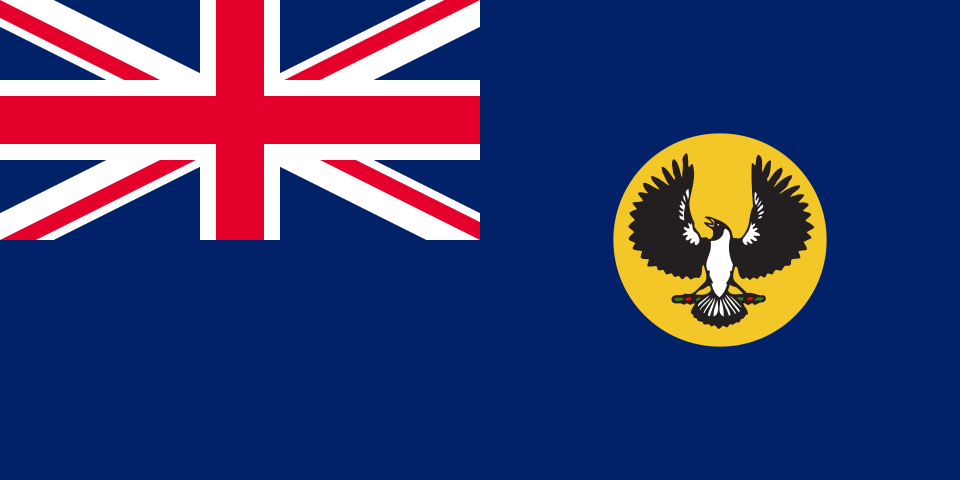
The South Australia flag is sometimes confused with Western Australia’s banner because both use a Blue Ensign and a yellow circular badge bearing a black bird. The birds are different: South Australia features an Australian magpie-type bird known as a piping shrike, whereas Western Australia has a black swan.
The South Australian Department of the Premier and Cabinet identifies the badge and its formal heraldic description. The flag itself was authorized on 13 January 1904; the piping shrike badge appeared in the government gazette the following day.
Distinguishing those two dates is useful, as different sources cite either 13 or 14 January when discussing the introduction of the design. This guide follows the official state’s separate descriptions of the flag and badge instead of treating them as contradictory.
South Australia flag at a glance
South Australia’s dark-blue state flag retains the Union Jack in the upper hoist. The badge in the opposite half shows a black-and-white Australian piping shrike on a branch in a yellow roundel. The bird image was adopted as the colonial badge in the early twentieth century.
| Flag feature | Description |
|---|---|
| State | South Australia (capital: Adelaide) |
| Type | British Blue Ensign |
| Upper hoist | Union Jack |
| Roundel | Golden yellow |
| Bird | Australian piping shrike, white-backed magpie |
| Other badge detail | Gum-tree branch |
| Flag authorized | 13 January 1904 |
| Badge gazetted | 14 January 1904 |
What bird is on South Australia’s flag?
The bird is called an Australian piping shrike, also known as the white-backed magpie. It is a distinctive black-and-white bird associated with South Australia. The official state badge shows the bird with its wings in a stylized position while it stands on a gum-tree branch.
The colloquial name “piping shrike” does not mean the flag depicts a crow or an ordinary European shrike. It refers to the Australian magpie, a bird well known for its varied melodic song. The official description specifically identifies the form as a piping shrike.
The original state badge was drawn in 1904 by Robert Craig of the School of Arts. Another drawing was made in 1910 by Harry P. Gill, who was principal of the School of Arts. These historical artworks help explain why slightly different bird poses appear in old reproductions.
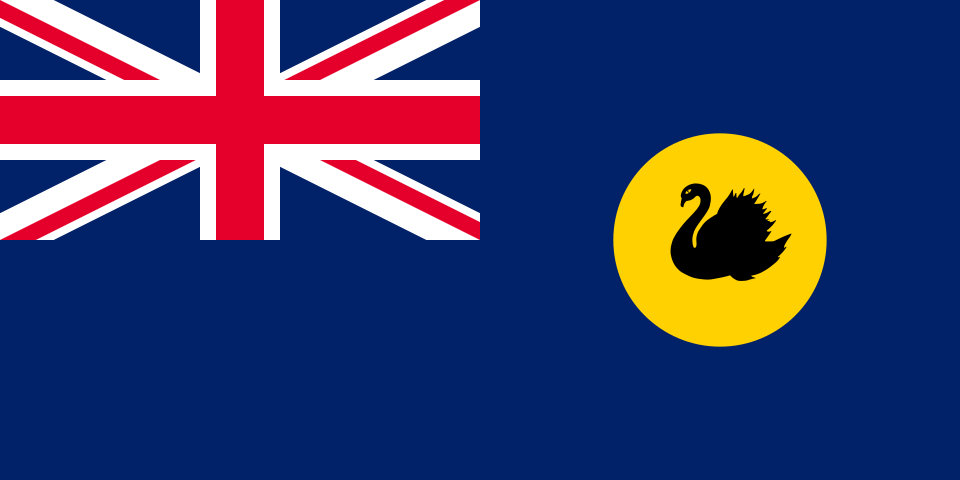
At a distance the bird is a dark shape on yellow, but in a proper illustration its white patches and magpie-like body distinguish it from the black swan used on the Western Australia flag.
Why is the badge a yellow circle?
The yellow or golden disc is part of the formal heraldic badge, described by the South Australian Government as a rising sun or golden roundel on which the piping shrike is displayed. The golden field is not a fourth horizontal stripe; it is the backdrop of the state badge.
Sun-like disks appear in other flags, but South Australia’s badge has its own legal description. A simple icon of a yellow circle without a recognizable piping shrike would not provide enough information to distinguish it from Western Australia’s black swan badge.
Official state colors were separately adopted in 1982 as blue, red and gold. Their adoption date should not be mistaken for the creation of the state flag in 1904. The golden badge color has a much earlier flag history.
What is the branch beneath the piping shrike?
The bird is shown standing on a piece of gum tree, another distinctly Australian feature. The government’s heraldic description refers to the bird standing on a gum-tree staff or bough, with red and green elements.
The branch is a small visual detail that may disappear in low-resolution images. It helps establish that the badge was an intentional heraldic composition rather than an arbitrary bird photograph pasted onto a golden disc.
For an educational drawing, make the bird and yellow circle recognizable first, and then include the branch when space permits. An accurate official reproduction should use the full state badge rather than a simplified or differently colored commercial illustration.
When was the South Australia state flag adopted?
The South Australian Department of the Premier and Cabinet states that the state flag was authorized by proclamation on 13 January 1904. The separate state badge was announced in a proclamation gazetted on 14 January 1904.
Both dates appear in references to the flag because the state banner relies on the piping shrike badge. They are adjacent dates in one adoption process, not evidence that there were two completely unrelated flags introduced a year apart.
South Australia had earlier Blue Ensign badges before 1904. The 1904 piping shrike replaced previous badge arrangements and remains the design associated with the state today. The government’s records also document the original 1904 drawing and 1910 revision by art-school staff.
South Australia became an Australian state through Federation in 1901; the piping shrike flag was adopted shortly afterward. It is a state flag within Australia, not a separate national flag.
Why does South Australia’s flag contain the Union Jack?
South Australia’s British-style Blue Ensign developed from the maritime flag traditions used by Australian colonies. The Union Jack in the upper corner represented the colony’s British constitutional history, and the individual badge identified which colony was represented.
After Australia became a federation, the state continued using a flag based on that Blue Ensign arrangement. Its Union Jack should be understood as historical flag design rather than evidence that modern South Australia is a British overseas territory.
The national Australian flag also uses a Union Jack, but has a Commonwealth Star and Southern Cross instead of the piping shrike roundel. These additional devices are the simplest clues for distinguishing the national and state flags.
South Australia vs. Western Australia and Tasmania flags
South Australia and Western Australia both place a black bird in a yellow circular badge. The differences are substantial. The South Australian piping shrike has a compact black-and-white magpie-like appearance and stands on a small branch; the Western Australian black swan is a swimming waterbird with a long neck.
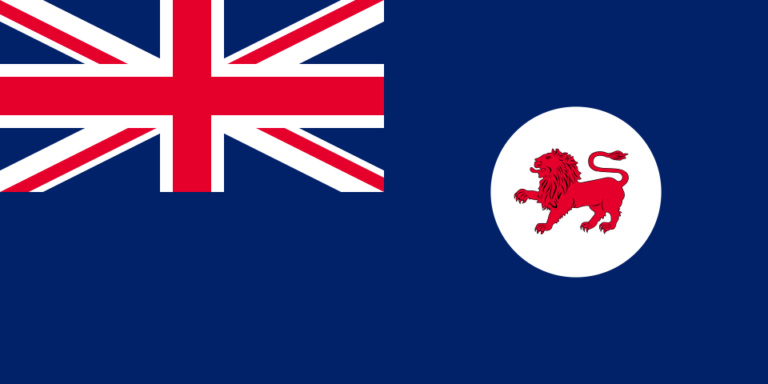
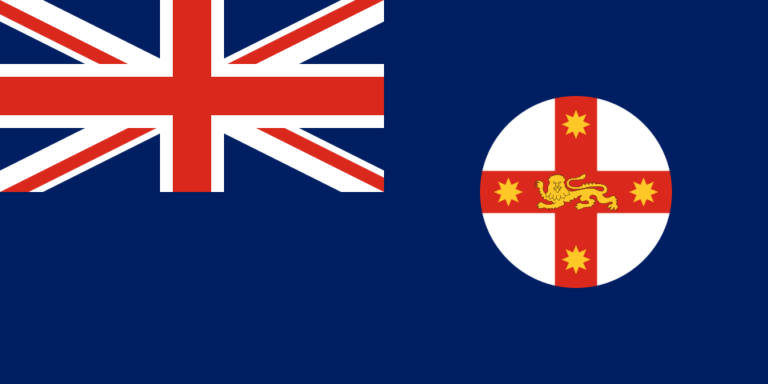
By contrast, Tasmania uses a white circle and a red lion, not a yellow roundel with a bird. Victoria’s Blue Ensign displays five Southern Cross stars and a crown without any large white or yellow disc.
These similarities make a useful cluster of Australian state flag articles. Our Western Australia guide explains the swan’s changing orientation in 1953, and the Tasmania guide explains the 1876 lion badge and its later official use.
How to draw the South Australia state flag
Draw a dark-blue rectangle, with the Union Jack in the upper corner nearest the pole. On the right half draw a large yellow circle. Place a black-and-white piping shrike inside it, standing on a short gum-tree branch and showing the distinctive magpie-like body and wing shape.
Do not substitute a swan with a curved neck or a red heraldic lion. The yellow disc alone does not identify South Australia: the bird matters. When comparing flags in a classroom, ask students to count which state flags use animals and which use crowns or stars.
For a precise flag graphic, the South Australian Government’s insignia information should take priority over souvenir patterns. Changes in feather coloring or body pose may make an image less faithful to the prescribed badge even when its blue field and Union Jack are correct.
Frequently asked questions
What bird is on the South Australia flag?
An Australian piping shrike, commonly called a white-backed magpie.
Is the bird a black swan?
No. The black swan appears on Western Australia’s flag.
When was South Australia’s flag adopted?
The state flag was authorized on 13 January 1904; the piping shrike badge was gazetted on 14 January 1904.
What does the yellow circle represent?
It is the golden roundel or rising-sun field of the state badge, contrasting with the piping shrike.
What is the bird standing on?
A stylized gum-tree branch in the official heraldic design.
Why is the Union Jack present?
The flag retained the historic British Blue Ensign structure used in Australian colonies.
Does South Australia’s flag contain stars?
No Southern Cross or Commonwealth Star forms part of the piping shrike badge.
Are South Australia and Western Australia flags identical?
No. They share a Blue Ensign and yellow roundel, but feature different birds.
Is the piping shrike a state emblem?
Yes. The piping shrike is the official state badge used on the flag and in other state symbols.
Official sources and illustration credits
South Australia DPC — State flag and badge
Australian Government — symbols of South Australia
Australian Government — state and territory flags
Wikimedia Commons — South Australia flag
The South Australia flag illustration was rasterized from Wikimedia Commons; Western Australia comparison from Commons. Flag shape and 1904 badge terminology verified against the South Australian government.
The illustrations are PNG renderings of the linked Wikimedia Commons flag vectors and are for educational identification. Consult each source-file page for its specific license, attribution, and any official-emblem usage conditions. Sources checked November 2026.