Victoria State Flag: Southern Cross, Crown & Union Jack
Why does Victoria’s flag show five Southern Cross stars beneath a royal crown? Explore its 1870, 1877 and 1901 design changes and compare it with Australia’s national flag.
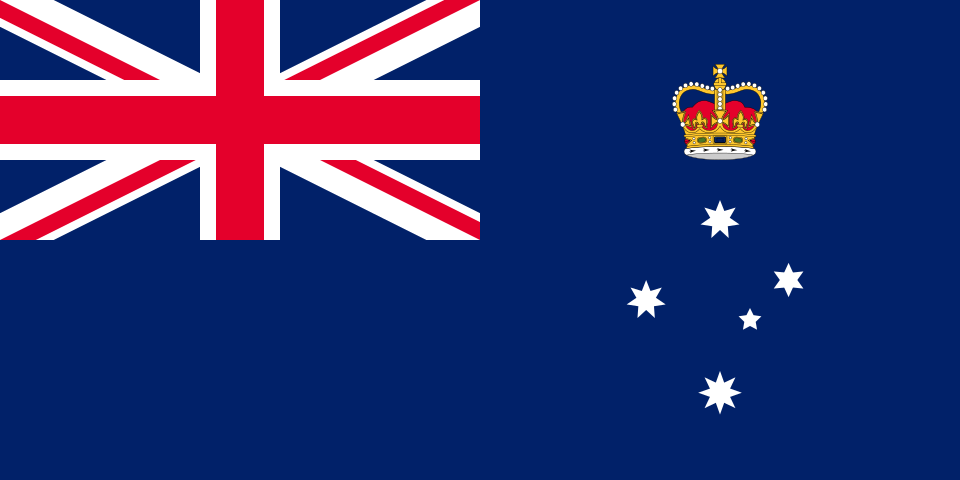
Victoria is Australia’s southeastern mainland state, with Melbourne as its capital. The state flag resembles the national Australian flag, but a large royal crown sits above the Southern Cross, and there is no separate Commonwealth Star under the Union Jack.
The Victorian Government’s historical flag page lists the actual stages of its development, including a naval inauguration in February 1870, a new design with crown in 1877 and a crown-specification change in 1901. The Public Record Office Victoria also explains older colonial flags and their relationship to the current banner.
Readers comparing state flags should focus on the crown-and-stars badge and the absence of NSW’s disc or Queensland’s Maltese cross. This guide separates those visual facts from the broader Australian national design.
Victoria state flag at a glance
Victoria’s flag has a dark-blue field, Union Jack canton, and the five-star Southern Cross on the outer half. A royal crown appears above the constellation. This badge reflects nineteenth-century Victorian colonial symbolism and survived the creation of the Australian federation.
| Feature | Explanation |
|---|---|
| State | Victoria, Australia (capital: Melbourne) |
| Background | British Blue Ensign |
| Upper hoist | Union Jack |
| Fly symbol | Five white stars of the Southern Cross |
| Above stars | Royal crown |
| Southern Cross badge | 1870 |
| Crown added | 12 November 1877 |
| Crown specification | St Edward’s Crown, documented in 1901 |
Why are five Southern Cross stars on Victoria’s flag?
The five stars represent the Southern Cross (Crux), one of the best-known constellations in the Southern Hemisphere. It is a useful celestial symbol in Australian traditions, navigation and visual identity. Victoria’s colonial government adopted the five-star badge in 1870.
The Victorian Government’s 1870 description explicitly calls the five white stars the Southern Cross. That source is more reliable than assigning each one to a modern city, a state division or an individual political ideal. Their relative placement follows a constellation motif, though artistic star points and crown details have been refined over time.
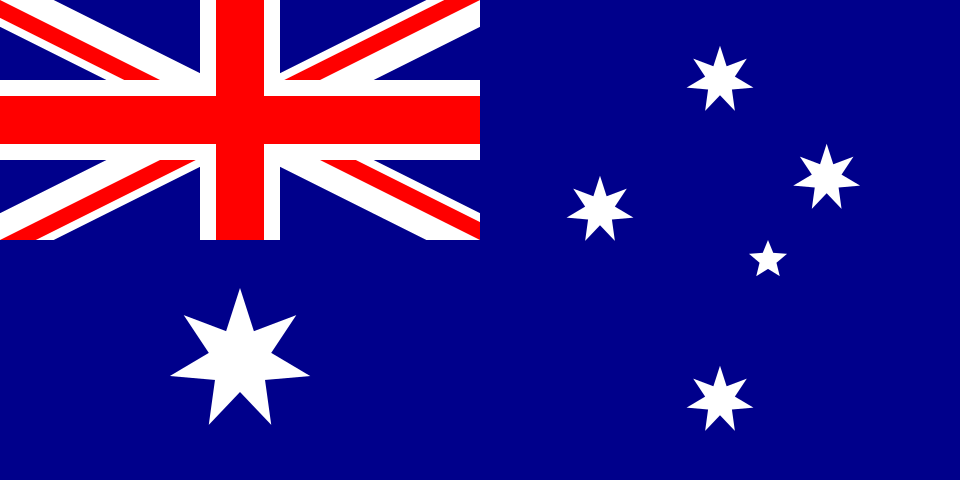
Australia’s national flag also depicts the Southern Cross, but adds a separate large Commonwealth Star below the Union Jack. Victoria’s state flag instead puts the crown above the five-star constellation. If a flag photograph is cropped, look for the crown to avoid confusing it with the national design.
How many stars are on Victoria’s flag?
Five white Southern Cross stars. In a standard illustration, these stars are separate from the royal crown. The flag does not contain a sixth large Commonwealth Star at the hoist, so counting stars is a useful quick identification test.
What does the royal crown mean?
The crown on the Victoria state flag reflects the monarchy and the colonial government’s historic British constitutional connection. It was added as a major element of the state badge in 1877, placed over the Southern Cross rather than replacing the stars.
The crown is not a separate depiction of a modern Victorian city landmark. It is a heraldic royal crown, and its particular form has changed according to royal and historical conventions. The Victorian Government notes that the 1901 documentation specified the St Edward’s Crown.
A simplified illustration can show a small crown, but an exact official-use design should follow the government artwork because details such as the arches, jewels and cap distinguish different crown types. A plain five-star Southern Cross on blue without the crown can represent an earlier period rather than the current state design.
How the flag changed in 1870, 1877 and 1901
1870: Victoria formally proclaimed a colonial badge of five white Southern Cross stars, and contemporary reporting describes a ceremonial flag raising aboard the colony’s warship HMVS Nelson. The stars were part of a colonial Blue Ensign design.
1877: On 12 November the governor directed that the Blue Ensign should show the five white stars surmounted by an Imperial Crown. This added a major visual feature that still identifies Victoria today.
1901: After Australian Federation, Victoria changed from a colony to a state. Government correspondence specified the use of St Edward’s Crown on the design. Public Record Office Victoria research examines how the flag’s crown imagery has evolved from earlier versions.
These dates belong to different stages of the flag’s evolution. Saying the modern crowned Victoria flag was adopted unchanged in 1870 skips the important 1877 crown addition. Saying it was created only in 1901 ignores the earlier Southern Cross colonial emblem.
Victoria state flag vs. Australia national flag
Both flags use a blue background, a Union Jack canton and white Southern Cross stars, so it is understandable that they can look similar. But the national Australian flag has a large white seven-pointed Commonwealth Star below the Union Jack, while Victoria’s state flag does not.
Victoria instead displays a royal crown above the constellation in the outer half of the flag. Australia’s national flag does not use that royal crown above the Southern Cross. These differences are more dependable than guessing from shades of dark blue or the overall shape of the stars.
For more detailed national design history, read our Australia flag reference. The national flag identifies Australia as a whole; Victoria’s banner serves state-level institutions and Victoria-specific civic uses.
Why does Victoria’s state flag use a Union Jack?
The Union Jack comes from British maritime flag conventions under which Victoria, originally a British colony, used a blue ensign with an identifying colonial badge. The style remained after federation in 1901, even as Victoria’s status changed from colony to state.
Today the state flag is an Australian subnational symbol. The historic British canton does not make Victoria a sovereign country or imply that its residents have a single political opinion about the monarchy. The Blue Ensign design is a retained feature of its documented heraldic and administrative history.
The flags of New South Wales and Queensland use the same basic canton and blue field, but with different state badges. In practice, the right half of the flag identifies which state is represented.
Victoria vs. NSW vs. Queensland: how to tell them apart
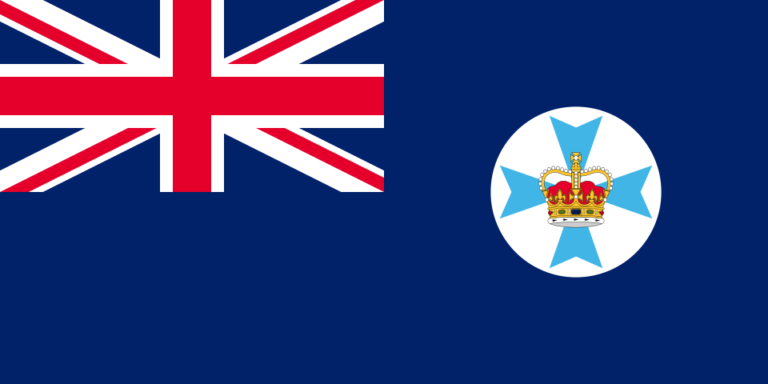
On Victoria’s flag, the five white Southern Cross stars are placed directly on the blue field under a crown. On NSW’s flag, the badge is a white disc with St George’s cross, four gold stars and an English lion. On Queensland’s flag, the white disc has a blue Maltese cross and a royal crown.
These features are distinctive even when flags are flown together. NSW and Queensland both use circular badges, but only NSW adds a lion. Victoria lacks the white disc entirely. The Australian national flag adds a separate Commonwealth Star and no crown.
For a comparison worksheet, present all four flags side by side, ask students to count the white stars on the blue field and locate any crowns. The exercise shows why an observer should not identify a flag based only on the presence of a Union Jack.
When is Victoria’s flag used?
Victoria’s flag is flown at government offices, civic institutions and state events. It can appear beside Australia’s national flag and other official banners according to the applicable flag protocol. Schools, museums and community events may also show it when discussing Victorian identity.
In a photograph of Melbourne, a Victorian state flag should be identified by its constellation and crown. The national Australian flag may fly nearby, sharing the same blue and British heritage but a different badge arrangement.
Official flag use may be subject to directions on dimensions and precedence. This educational article concerns history and visual identification, not a replacement for Victorian or Australian government display protocol.
How to draw the Victoria state flag correctly
Draw a wide dark blue rectangle with the Union Jack occupying the upper hoist. In the outer half, arrange five white stars in a Southern Cross pattern, and place a royal crown above the constellation.
Do not add a separate large Commonwealth Star below the Union Jack; that is a defining feature of the Australian national flag. Do not enclose the five white stars in a circular disc; those discs belong to other states’ badge layouts.
For a close reproduction, use official Victoria government artwork to achieve the correct star placement and crown shape. For a children’s identification exercise, the crown-over-stars combination is the most important element to preserve.
Frequently asked questions
What is on the Victoria state flag?
A Union Jack canton, five white Southern Cross stars and a royal crown above the stars on a dark blue field.
How many stars are on Victoria’s flag?
Five, representing the Southern Cross constellation.
Why is there a crown?
It represents royal and British colonial heraldic traditions; the crown was added to the Victorian badge in 1877.
When was Victoria’s flag adopted?
A five-star badge was proclaimed in 1870, the crown was added in 1877, and the crown’s form was specified in 1901.
Is Victoria’s flag the same as Australia’s national flag?
No. Australia has a large Commonwealth Star below the Union Jack and no crown above its Southern Cross.
What is the difference between Victoria and Queensland flags?
Victoria has five white stars under a crown, while Queensland has a white circular badge with a blue Maltese cross and a crown.
Does Victoria’s state flag have the Commonwealth Star?
No. That separate large star appears on the Australian national flag.
Is Victoria an independent country?
No. Victoria is an Australian state, with Melbourne as its capital.
Why does the flag have the Union Jack?
It retains the British Blue Ensign design used by Victoria as a colony.
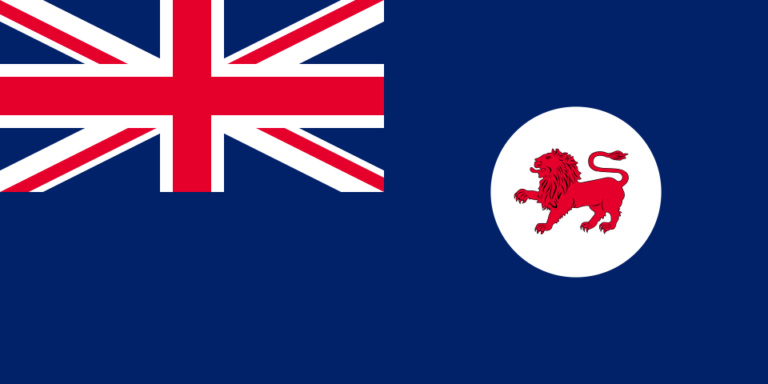
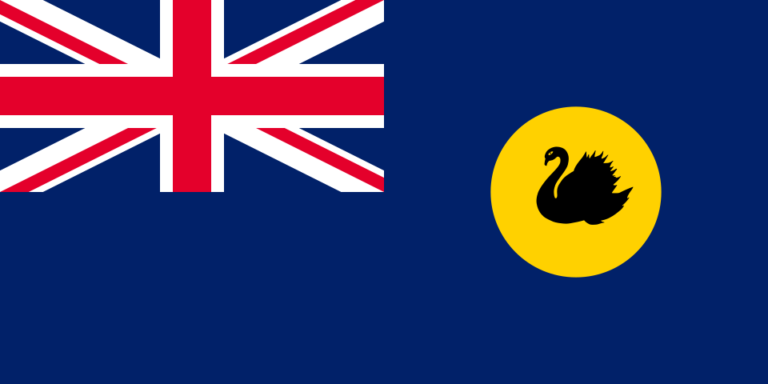
Victoria’s Southern Cross-and-crown badge differs from the animal motifs of Western Australia (black swan), South Australia (piping shrike) and Tasmania (red lion), all on Blue Ensign backgrounds.
Official sources and illustration credits
Victoria Government — About the Victorian flag, 1870–1901 history
Public Record Office Victoria — Crown and Kangaroo: Victorian Flags
Wikimedia Commons — Victoria flag vector
Wikimedia Commons — Australian national flag
Main image of Victoria’s current state flag from Wikimedia Commons (public-domain flag artwork); Australian national comparison from Commons. Both were rasterized from SVG and imported with credit.
Flag illustrations are PNG renderings of credited Wikimedia Commons images stored in the FlagExplorers media library, not photographs of one particular physical historical flag. Institutional emblem use may have separate requirements. Details reviewed November 2026.