Ontario Flag: Union Jack, Red Ensign & Maple Leaves Meaning
Why does Ontario’s flag still have a Union Jack, a red background and three gold maple leaves? Explore its 1965 adoption and how it differs from the Canadian flag.
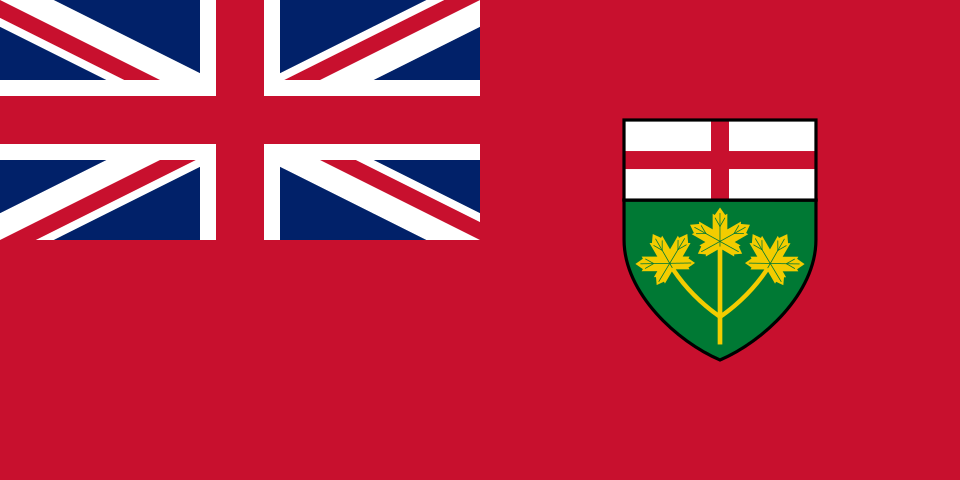
Ontario’s flag can look surprising beside Canada’s familiar red-and-white maple leaf. It retains the British Union Jack and an older red ensign layout, reflecting the province’s history and the period in which the design became law. This is not an outdated Canadian national flag; it remains Ontario’s distinct provincial flag.
The Legislative Assembly of Ontario identifies the Union Jack and the shield of arms as its defining elements. The Ontario Flag Act specifies the official proportions and position of those devices. The design’s closeness to the Canadian Red Ensign makes the history particularly useful for learners comparing past and present flags.
Ontario is a province of Canada, whose current national flag is the separate red-and-white eleven-pointed maple leaf design. This guide focuses on Ontario’s provincial history and the meaning of its shield.
Ontario flag at a glance: red ensign and shield
The provincial flag has a red field, the Royal Union Flag in the upper-left quarter by the flagpole and an Ontario shield centered on the half farthest from the pole. The shield combines a red cross and three golden maple leaves; the full arms of Ontario are not drawn on the flag.
| Flag feature | Description |
|---|---|
| Province | Ontario, Canada |
| Adopted | April 1965 |
| Background | Red ensign |
| Hoist canton | Royal Union Flag / Union Jack |
| Fly badge | Ontario shield of arms |
| Shield elements | Red St George cross, 3 gold maple leaves on green |
| Legal ratio | Length twice width (2:1) |
| Historical influence | Canadian Red Ensign and British heraldry |
Why does Ontario’s flag have the Union Jack?
Ontario’s ensign includes the Royal Union Flag, commonly called the Union Jack, in the upper corner nearest the pole. Its historic role reflects Britain’s colonial connection with the territory that became Ontario and with Canada more broadly.
The presence of the Union Jack does not mean Ontario is currently a separate British colony. Canada is an independent constitutional monarchy with its own national and provincial symbols. Several Canadian provincial flags retain British heraldic elements because those features were part of their historic designs.
The Union Jack is also found in the flag of British Columbia, but the rest of that flag is completely different. British Columbia displays a golden crown and a sun above waves, while Ontario uses a red ensign with a distinct provincial shield on the fly side.
Is the Union Jack in the top left or top right?
With the flagpole at the left and the flag facing the viewer in its conventional front display, the Union Jack fills the upper-left corner. The area is known as the canton. Mirror-flipped images can make it appear to be at the wrong end, so use official artwork for educational graphics.
What do Ontario’s three golden maple leaves mean?
The Ontario shield has two heraldic parts. Across the upper section is a red Saint George’s cross on white, linked to English heraldic tradition. In the lower green field are three golden maple leaves, which are distinctly Canadian botanical symbols.
The three leaves are not separately assigned to Toronto, Ottawa and another city by the Flag Act. They form a heraldic arrangement that was granted as part of Ontario’s arms in the nineteenth century.
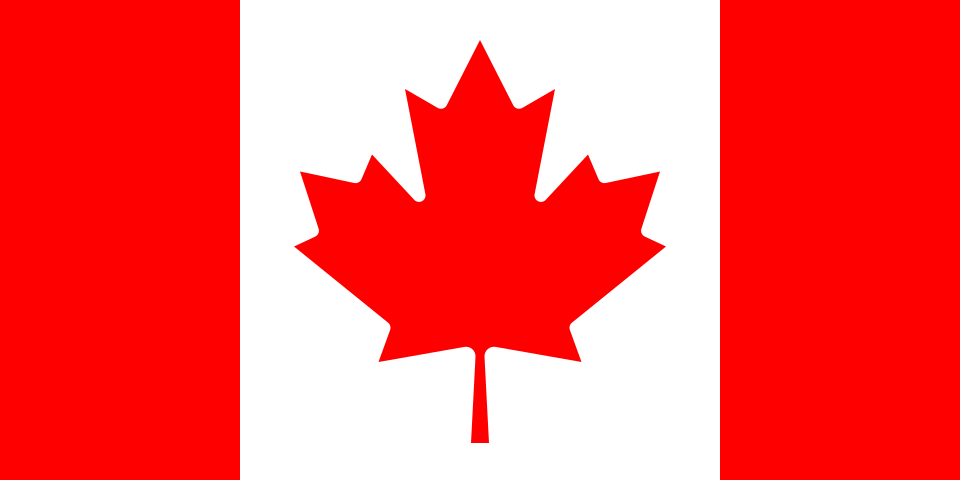
Because the shield contains three leaves, photographs sometimes cause people to mistake Ontario’s provincial flag for a Canadian flag with multiple maple leaves. The national flag adopted in 1965 instead displays one stylized red maple leaf with eleven points on a central white panel.
Ontario’s full coat of arms includes additional supporting figures and a crest, but the provincial flag displays only the shield. That visual simplification makes it a recognizable ensign while preserving the key provincial emblem.
Why is Ontario’s flag a red ensign?
The red ensign was a major part of Canadian flag history before the modern maple leaf was adopted. A Canadian Red Ensign with a Union Jack canton and a coat-of-arms badge was widely used as a Canadian national symbol, though its exact official status changed by context and period.
In 1965 Canada introduced the new maple-leaf national flag. Ontario chose a separate provincial red ensign, retaining the familiar layout and replacing the Canadian badge with Ontario’s provincial shield.
Ontario’s flag was therefore adopted during the changeover rather than simply remaining an unchanged national Canadian flag. The Ontario Flag Act describes the desired design as based on the Canadian Red Ensign but with Ontario’s arms. The government and heraldic register confirm that choice.
This makes Ontario’s banner a useful classroom example of how national and provincial flags can reflect connected but distinct constitutional histories.
When was Ontario’s provincial flag adopted?
Ontario’s Legislature approved the provincial flag in April 1965. Canada’s maple leaf had become the national flag in February of the same year. Ontario’s legal design received approval for incorporating the Royal Union Flag, and the Flag Act set the official proportions and shield placement.
The Legislative Assembly timeline records the adoption. The legal Act describes the red field and flag dimensions: twice as long as it is wide, with the Union Jack in the upper staff quarter and the provincial arms shield on the other half.
The date explains a common misconception: Ontario did not fail to update a national flag after 1965. Its legislature deliberately selected a recognizable provincial ensign while the new Canadian flag became the national standard.
Ontario flag vs. Canada and British Columbia
The Canadian national flag uses a red maple leaf centered on white, with red vertical outer panels. Ontario instead uses an almost entirely red background with a Union Jack and heraldic badge. These flags are both official, but serve different levels of government.
British Columbia’s provincial flag also includes the Union Jack, yet it occupies the whole upper portion with a crown in its center. Wavy blue-and-white bands and a yellow sun fill the lower portion, signaling the Pacific coast. Ontario has no blue waves or sun on its official provincial flag.
Quebec’s Fleurdelisé is another useful comparison: a blue field with one white cross and four white fleurs-de-lis, inspired by French heritage. Together the three provincial flags show how diverse Canadian historical symbols can be.
Where and when is Ontario’s flag displayed?
The Ontario flag appears at provincial government buildings, the Legislative Assembly, public events and civic institutions. Depending on the context it can be flown beside the Canadian national flag, municipal flags and other official banners.
Exact flag precedence is addressed by Canadian and Ontario protocol rules. A provincial flag can be an important identity symbol without replacing Canada’s national flag. When producing educational materials, identify both flags clearly rather than treating the presence of a Union Jack as evidence of a different present-day country.
The provincial shield is also used in other Ontario symbols. A shield alone on a document or coat of arms should not automatically be confused with the complete provincial flag, which includes the red field and Union canton.
How to draw and identify Ontario’s flag
Draw a wide red rectangle approximately twice as long as it is high. Place the modern Union Jack in the upper quarter nearest the flagpole. In the far half of the red field put a small shield with a red upright cross on white above three gold maple leaves on green.
Do not place a single large red leaf in the center: that is Canada’s national flag, not Ontario’s. Do not replace the three maple leaves with an animal or a sun; those are unrelated provincial heraldic elements.
For a quiz, show Ontario beside British Columbia and Canada. The most reliable cues are the different placements of the Union Jack and whether the bottom of the flag contains a heraldic shield, wavy ocean lines or a central maple leaf.
Frequently asked questions
What is the flag of Ontario?
A provincial red ensign with the Union Jack in the upper hoist and Ontario’s shield on the fly.
Why does Ontario’s flag have the Union Jack?
It reflects the province’s British colonial and heraldic history.
What are the three yellow leaves?
Three golden maple leaves on green, part of Ontario’s provincial shield of arms.
When was Ontario’s flag adopted?
By the provincial legislature in April 1965.
Is Ontario’s flag the old Canadian flag?
It resembles the Canadian Red Ensign but replaces the former Canadian badge with Ontario’s shield, making it a distinct provincial flag.
Is Ontario’s flag the same as British Columbia’s?
No. B.C.’s flag has a large Union Jack and crown at the top, with a yellow sun and blue-white waves below.
What is Ontario’s flag ratio?
It is twice as long as it is high, a 2:1 ratio under the Ontario Flag Act.
Does the flag have a coat of arms?
It shows Ontario’s shield of arms, rather than the complete coat of arms with supporters and crest.
Why doesn’t it use the red eleven-point maple leaf?
That design is Canada’s national flag, adopted in February 1965; Ontario selected a separate provincial design.
Unlike Ontario’s Red Ensign, the Alberta flag has a solid blue field with a mountain-and-wheat landscape shield. The Nova Scotia flag instead uses a blue diagonal St Andrew’s cross on white and a Scottish royal lion.
Official sources and image credits
Legislative Assembly of Ontario — Ontario’s symbols
Legislative Assembly of Ontario — Flag adoption timeline
Ontario Flag Act
Canadian Heritage — Ontario provincial symbols
Governor General — Heraldic record of Ontario flag
Wikimedia Commons — Ontario flag
Ontario flag rendition from Wikimedia Commons, rasterized to PNG. Canadian comparison illustration from Commons in the existing FlagExplorers media library. Refer to source pages for attribution and rights.
Flag graphics are PNG versions of the linked Wikimedia Commons images, imported into the FlagExplorers media library. Official flags are civic symbols and their use can be subject to protocol or emblem restrictions independently of image copyright. Checked November 2026.