California Bear Flag Display Rules: Schools, Public Buildings, Events and Half-Staff
California’s statutory display requirements, procurement and practical guidance.
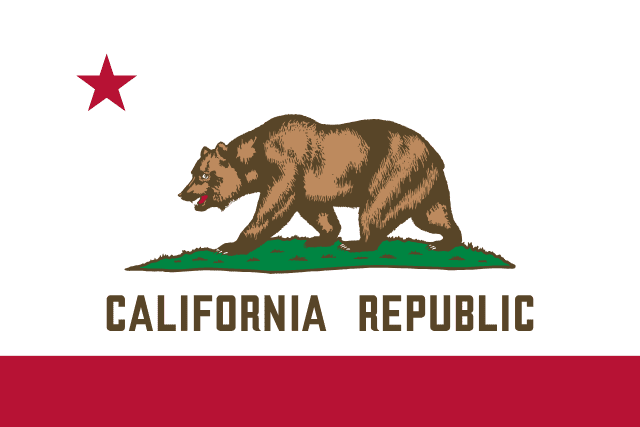
California Government Code sections 430–439 set out requirements for displaying the United States and California flags, including public buildings, schools, courtrooms and certain outdoor events. Section 436 calls for flags of the same size, the national flag above the Bear Flag on a shared pole and the national flag in first place of honor. The law also contains a US-made purchasing rule for state and local government agencies. This guide separates those requirements from practical installation advice and time-specific half-staff orders.
For the flag’s design and history, see our California Bear Flag guide.
Display rules at a glance
| Main state law | Government Code §§430–439 |
|---|---|
| Shared pole | United States above California |
| Flag sizes when used together | Same size under §436 |
| Public premises | Specified by §§430–431 |
| Outdoor games and performances | Specified by §432 |
| Government purchasing | US-made flags under §434.7 |
| Half-staff | Check current decree and applicable facility guidance |
Start with the location: which California display rule applies?
California’s display chapter is unusually useful because it addresses different kinds of premises and activities individually. It does not merely describe a flagpole arrangement. A school administrator, courthouse facilities manager and sports venue operator may need to consult different sections.
The first distinction is between section 430, which concerns courtroom and commission-session locations, and section 431, which concerns a wider range of public and educational premises during business hours. Section 432 addresses designated outdoor events. Section 433 addresses particular processions.
A person organizing a private gathering should not assume that every requirement for public facilities automatically applies to a private home. Conversely, an institution covered by the statute should not assume that the absence of a particular flag at another building demonstrates that display is optional.
Make a brief description of the proposed use before selecting the relevant provision. Include the owner or operator of the property, whether the venue is a school, government facility or event site, whether flags will be indoors or outdoors and whether the display shares space with a national flag.
For an unusual site, the relevant question may be whether the building or activity actually falls within a statutory category. A flag’s size and position will not resolve that question. Consult the institution’s designated authority where the classification is unclear.
The official chapter provides a useful starting point for these decisions. Check the current text rather than relying exclusively on a flag vendor’s general etiquette article. A rule taken from another state may not address California’s particular public display requirements.
The examples in this guide are practical scenarios, not a comprehensive legal determination for every building or event. When a facility’s own policy or a current directive provides additional instructions, check how those instructions relate to the applicable law.
Schools, colleges and universities
Section 431 expressly includes educational premises, covering public and private schools as well as universities and colleges within its stated categories. The provision names several possible display locations, including entrances, grounds and administrative buildings.
A school planning a replacement flagpole should begin by identifying the existing designated display and the viewing direction. If the site has a main pedestrian entrance and a separate vehicle entrance, choose a practical position consistent with the school’s responsibilities rather than assuming that every entrance requires a separate installation.
For a campus with several buildings, the facilities office can keep a list of flag locations and their condition. That record can identify an overlooked or deteriorated display and help avoid unnecessary duplication of equipment purchases.
A daily school routine might designate a responsible adult to check the flags before classes, supervise student participation where appropriate and ensure the flags are handled safely. The routine should include a plan for staff absences, holidays and instructions issued by the relevant authorities.
If a school uses a single pole, confirm that the pole and attachments can safely accommodate both flags at their proper positions. The two textiles must not interfere with each other. A pole designed for one small flag may not be suitable for adding another without evaluating the hardware.
Where an outdoor flag arrangement is complemented by indoor displays, check both their purpose and orientation. A classroom poster is an educational reference; it is not automatically a substitute for the particular premises display required by the law.
For procurement by a public school district, California’s separate government purchase rule also matters. The purchasing officer should distinguish the origin of the finished flags from the location of the seller, and request suitable product documentation.
An administrator does not need to reconstruct the flag’s historical bear or measure its artistic details every morning. The main operational checks are the correct contemporary design, condition, presence, size and place of honor, followed by any applicable display directive.
Courtrooms, public buildings, parks and inspection stations
For courtrooms and places where state, county or municipal commissions hold sessions, section 430 addresses installation and maintenance of both flags. Plan the flag arrangement as part of the room’s furnishing, rather than as an improvised decoration on meeting days.
Consider a commission that moves temporarily to another room during building repairs. A responsible facilities manager can check whether the temporary session venue falls within the relevant requirement and make sure any required flags are ready before the meeting begins.
Section 431 applies to listed premises during business hours, including public buildings and specified state parks, inspection stations and highway maintenance facilities. Its highway maintenance provision includes a qualification about personnel being available to handle the flags. Read the complete subsection when planning a remote site.
For a park, flagpole maintenance can be affected by wind, salt air, temperature changes and seasonal staffing. A daily checklist that works at a city hall may need adaptation at a remote park entrance. Safety and maintenance planning are operational matters distinct from the flag’s legal design.
Section 434 places acquisition and installation responsibilities on the public officials charged with furnishing covered publicly owned places. It is useful to identify the actual responsible department so that replacement or maintenance issues are not passed indefinitely between building management and program staff.
A flag condition register can include the location, pole identifier, flag dimensions, installation date, inspection date and replacement schedule. These records are a practical management suggestion, not an additional recordkeeping duty established by the cited section.
When assessing compliance, confirm that the flag is prominently positioned as required for that site. A flag hidden behind a temporary advertising board or inaccessible construction barrier may not serve its intended display purpose even if the cloth itself is correctly made.
Consult the current Department of General Services administrative guidance where it applies to state buildings. Local agencies and other institutions may have their own procedures, so distinguish state-building administrative instructions from universally applicable statutory requirements.
Stadiums, races, open-air performances and parades
Section 432 provides a separate display requirement during activities at designated open-air sites and race tracks. Event organizers should review that provision before preparing an outdoor sporting or performance venue rather than considering flags only at a formal opening ceremony.
A stadium’s existing display may be maintained by a facility contractor, while the event producer controls the temporary stage. Establish which team is responsible for the flags. An organizer cannot necessarily tell whether the venue’s installed equipment is in service simply by examining a seating plan.
For an outdoor performance, identify flag locations relative to the audience, sound equipment, temporary structures and emergency access routes. Do not attach a large textile to a lightweight stand not designed for outdoor wind loads.
Where a venue uses flags of several visiting nations or states, review the national flag position and relevant federal guidance in addition to the California provision. Different categories of flag may require different treatment. A municipal banner or sponsor’s pennant is not a national flag.
Section 433 concerns the front of processions involving specified military and public-service organizations. It should not be generalized into a claim that every informal parade in California has identical statutory obligations. Check the list of covered organizations and the event’s own protocol.
For a civic parade involving a police or fire department, the event plan should identify the flag-bearing group and the staging sequence before participants arrive. A simple diagram showing the direction of travel is less ambiguous than a note saying to position a flag on the left.
The federal flag code distinguishes the position of a national flag in a procession from its location in a stationary grouping. Consult the relevant portion of that code rather than using a two-pole building diagram to determine marching order.
A rehearsal or pre-opening inspection can verify the flags’ presence, dimensions, condition and precedence. Keep the official display separate from decorative banners and commercial signage so that the public can clearly recognize the national and state symbols.
Display the Bear Flag with the United States flag
California’s section 436 specifies equal size when the national and state flags are used together. On a shared pole, the national flag takes the upper position, and the state flag must be arranged so that it does not obstruct any portion of the national flag.
The equal-size language is particularly worth noting because some other states use guidance phrased in terms of approximate equality or a state flag no larger than the national flag. Do not copy those states’ wording and label it the California requirement.
For a procurement example, if an institution selects a national flag with nominal dimensions of three feet by five feet, specify matching nominal dimensions for the California flag. Confirm the selected pole’s capacity and mounting arrangements for the paired display.
The national flag’s position of first honor applies whether or not the two flags share a pole. For separate staffs, consult the federal flag code and the facility’s relevant guidance to identify the correct position in the specific grouping. The observer’s viewpoint is particularly important when planning two neighboring staffs or an indoor platform.
An outdoor display photographed while the wind is moving may appear uneven because one flag is extended and the other is folded. Check actual purchased dimensions, attachment positions and staff arrangement instead of estimating flag size from that momentary appearance.
For an indoor display, identify the position of the audience and the speaker separately. The speaker’s right is the audience’s left when they face each other. An installation plan should label the relevant viewpoint directly.
The national flag’s precedence should also be preserved when a city flag or agency banner is added. Do not assume that the third flag can occupy the highest point simply because the event is sponsored by that municipality or agency.
The Bear Flag’s artwork itself should be the current California design. Its ordinary horizontal front view has the red star in the upper hoist and the red stripe along the bottom. Historical republic flags and modern decorative bear logos may be relevant in a historical exhibition but are not substitutes for the current state flag.
Government purchases: the US-made requirement
Section 434.7 establishes a purchasing condition for national and California flags acquired by state or local government agencies from January 1, 2017. The statute requires those flags to be made in the United States and defines the covered local government agencies.
This is a condition about the flag being purchased, not merely the address of the retailer. A vendor located in California may offer goods produced in more than one country. Conversely, a seller based outside California may offer a US-made flag.
Include the requirement in the purchasing description. Ask the vendor for documentation identifying the origin of the finished flag where necessary under the institution’s procurement procedure. Do not assume that a patriotic description or a picture of the United States establishes country of manufacture.
The purchasing rule has its own scope. It should not be generalized into a claim that all privately purchased Bear Flags must be US-made. Private consumers, organizations and government agencies may have different applicable obligations.
A public institution replacing worn flags can check the size, materials, seams, grommets and origin in one procurement process. The correct dimensions and suitable outdoor fabric are useful because a flag that is incompatible with its staff may require an unnecessary second purchase.
If a flag is supplied through a bundled facility-maintenance contract, identify who actually purchases it and check the applicable contract and agency rules. The statutory condition should not be ignored simply because the purchase does not appear as a separate invoice in the program office.
Avoid treating the manufacturing condition as a quality certification. A flag can meet the origin rule yet still be the wrong size, depict an incorrect bear or be unsuitable for a windy location. Inspect the delivered item against the order and reference artwork.
Record discrepancies before putting the flag into service. If a shipment contains several flags with different dimensions, verify each pair that will be flown together. This avoids discovering a mismatched set during a public ceremony.
Half-staff orders: read the scope, not just the date
The Department of General Services administrative guidance addresses half-mast display at state buildings. Current presidential or gubernatorial directions and applicable facility instructions are essential for determining whether a specific lowering is required.
An announcement may apply to all state buildings, or it may identify particular agencies or facilities. For example, the governor’s Workers’ Memorial Day proclamation in April 2026 names particular state premises. That announcement illustrates why a reader should check the actual scope rather than assuming every half-staff order is statewide and identical.
The dated proclamation is an example only. It is not an instruction to lower flags today or on the corresponding date in a different year. Check the current governor’s office announcements and other applicable directives.
For a facility operating a flag duty roster, record the source, affected flag or flags, covered location, start time and end time. Assign responsibility for both lowering and returning the display to full staff. When a notice ends after a weekend, confirm that the responsible staff member will actually be present.
For an adjustable pole, follow the applicable ceremonial procedure for raising to the peak and lowering to the designated mourning position. For a fixed wall-mounted flag or a pole that cannot safely be adjusted, consult the facility’s protocol authority rather than inventing a substitute mourning arrangement.
Where both flags share a pole, preserve national precedence and consult the particular instructions for the configuration. A person should not try to create an additional attachment position on a damaged halyard or climb the pole without proper equipment.
An archive of past notices can help an institution understand earlier ceremonies, but the archive should not function as a current status feed. Dates, recipients and facility scope can differ even for announcements concerning similar commemorations.
The safest operational approach is to verify the current directive, document its scope and follow the applicable procedure. A flag history article or an undated social-media image is not a substitute for an official current instruction.
Facility inspection checklist and common misunderstandings
Start with the location and identify the applicable section of the California display chapter. Next establish who is responsible for acquisition, display and maintenance. This matters more than collecting generic flag etiquette tips from other jurisdictions.
Check the current Bear Flag against a reliable reference. If it carries an altered slogan, an unfamiliar bear or an extra emblem, determine whether the object is intended as historical artwork, a decorative flag or the current state flag.
For a paired display, compare the actual dimensions and the national flag’s place of honor. On a shared pole, make sure the state flag remains below and cannot obstruct the national flag. Review the equipment condition before attaching either.
If a covered government agency purchases a replacement, include the US-made condition. Retain the relevant vendor evidence with other purchasing records. For a private purchase, distinguish that statutory agency rule from the consumer’s own preferences.
Check current notices before making any temporary change to the flags’ height. Make sure someone is assigned to restore normal display when the notice expires. Inspect flags regularly for wear and follow appropriate safety procedures in severe weather.
Finally, distinguish the legal requirements from practical recommendations. A maintenance log and viewing-direction diagram are useful tools, but the chapter does not itself prescribe every operational form or inspection interval discussed here. Consult the current official code and relevant institutional guidance for formal decisions.
Frequently asked questions
Which flag goes higher on one pole?
The United States flag must be above the California flag.
Do the two flags have to be the same size?
Section 436 states that they shall be the same size when used together.
Do private schools appear in the display law?
Yes. Section 431 includes public and private schools within its specified categories.
Does the government purchase rule apply to private customers?
Section 434.7 addresses state and local government agency purchases.
Sources and reference
California Legislative Information: Government Code, Chapter 3
Department of General Services: State Administrative Manual §1330.8
California State Capitol Museum: Bear Flag
Governor of California: official proclamations and news
Governor’s 2026 Workers’ Memorial Day proclamation: example of specified facility scope
US Flag Code, 4 USC §7: position and manner of display
Government Code §436, alternate statutory text
Reference artwork: existing Flagpedia/FlagCDN public-domain flag illustration. Original practical examples; reviewed November 2026.