Bern Canton Flag: Black Bear, Golden Diagonal and Red
The Bern canton flag explained: design, historical symbolism, origin, other Swiss flags it resembles and a simple identification guide.
The Canton of Bern stretches from the Bernese Oberland and Alps to parts of the Swiss Plateau and Jura. Bern is the cantonal capital and also the federal city’s seat of Swiss government. Below are the flag’s meaning and historic background, together with a comparison of commonly confused cantonal banners.
Bern flag at a glance
| Place | Canton of Bern, Switzerland |
|---|---|
| Local name | Bern / Berne |
| Capital | Bern |
| Flag origins | Bear emblem recorded in the Middle Ages |
| Design | The bear is the long-standing heraldic emblem of Bern, used in its civic and cantonal identity for centuries. |
| Typical flag shape | Square cantonal banner |
Flag design and key details
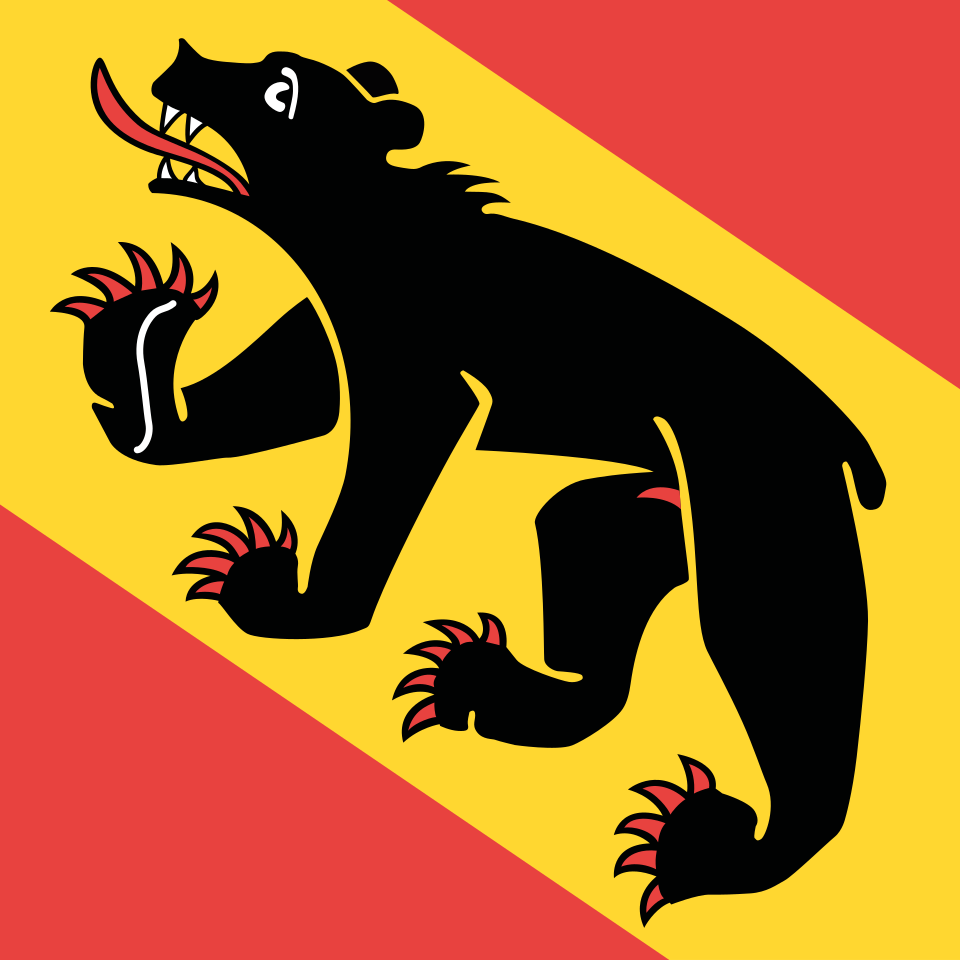
Bern’s square cantonal flag has a red field crossed by a broad golden-yellow diagonal band. A black bear walks along that band, with red claws and tongue. The image is both an animal emblem and a distinctive diagonal colour design.
A Swiss canton banner is typically displayed in a square format. Its orientation, lettering and heraldic charges are part of correct identification, not optional decorative additions.
What does the emblem represent?
The bear is Bern’s historic heraldic animal and is central to the city’s name and identity in traditional accounts. The flag animal is not a polar bear or a decorative mascot: it is the long-established Bernese bear of the canton arms.
The direction and placement of the bear are part of the heraldic design. The number of visible claws and fine outline details can vary between authorised artistic renderings.
Colours and symbolism
The golden band separates the red corners and provides high contrast for the walking black bear. The original medieval colours are armorial conventions rather than modern environmental symbolism.
Some popular colour meanings are modern explanations. Where a medieval written justification is lacking, historic heraldry is a more reliable basis than claims about landscapes or personality traits.
Origins and historical background
The Bernese bear appears in medieval civic heraldry, and the canton became part of the Old Swiss Confederacy in 1353. Its flag grew out of older Bernese banners, rather than being created for Swiss tourism or modern sporting events.
A medieval symbol is not the same as a modern political independence claim. The banner today represents a canton within Switzerland’s federal system.
Where is the canton?
The Canton of Bern stretches from the Bernese Oberland and Alps to parts of the Swiss Plateau and Jura. Bern is the cantonal capital and also the federal city’s seat of Swiss government.
Local name: Bern / Berne. Cantonal capital: Bern. The flag denotes the canton as a whole, not merely one municipal building or attraction.
How to tell similar flags apart
Appenzell’s two cantonal flags also show black bears, but their backgrounds are white, and Ausserrhoden adds letters. Bern’s bear walks on a wide yellow diagonal across a red square.
These distinguishing details are especially useful when a canton flag appears next to other cantons in a parade, tourist display or educational worksheet.
How to draw the flag correctly
Bern’s square cantonal flag has a red field crossed by a broad golden-yellow diagonal band. A black bear walks along that band, with red claws and tongue. The image is both an animal emblem and a distinctive diagonal colour design.
Begin with a square outline. Preserve the colour order, and copy complicated animal or religious emblems from a sourced vector rather than approximating their line work.
Frequently asked questions
Why is there a bear on Bern’s flag?
The bear is the long-standing heraldic emblem of Bern, used in its civic and cantonal identity for centuries.
What is the capital of the canton?
Bern.
When did this flag originate?
Bear emblem recorded in the Middle Ages.
Is Bern an independent country?
No. It is one of Switzerland’s 26 cantons.
Is the canton flag the same as Switzerland’s national flag?
No. The Swiss national flag uses a white upright cross centred on red. Appenzell’s two cantonal flags also show black bears, but their backgrounds are white, and Ausserrhoden adds letters. Bern’s bear walks on a wide yellow diagonal across a red square.
Where can I find a usable image?
The Wikimedia Commons file linked below provides the exact flag artwork and its source details; laws governing official insignia may apply separately from copyright.
Sources and image credit
Swiss cantonal flags and heraldry — historical reference and dates
Swiss canton heraldry and legal specifications — references to cantonal legislation
Wikimedia Commons — Flag of Canton of Bern.svg. Scaled PNG illustration of cantonal insignia. Commons identifies Swiss official cantonal arms as public-domain official works, but use of official emblems may be legally restricted separately from copyright; consult the specific file for author, status and conditions.
Switzerland’s national flag — white cross, red field and federal identity.
Independent educational guide, not an official cantonal publication. Sources reviewed 20 November 2026.