Andalusia Flag: Green, White, Green & Hercules Meaning
Why is Andalusia’s flag green, white and green? Learn the origins of the Arbonaida, Hercules and the two lions, and how the 1918 Ronda Assembly shaped its modern design.
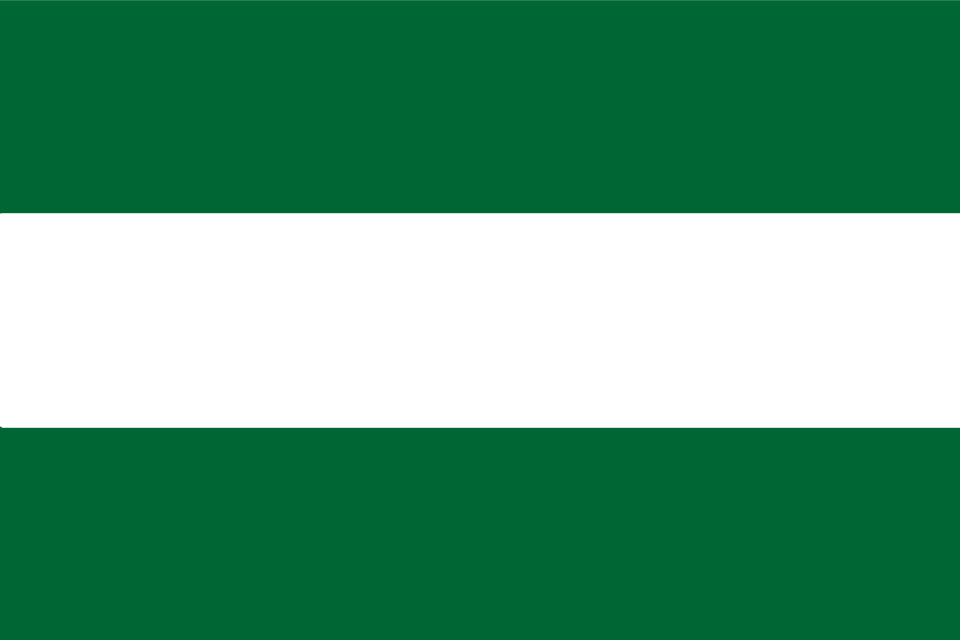
Andalusia occupies much of southern Spain, including Seville, Málaga, Granada and Córdoba. Its horizontal green-white-green flag is quite different from the national red-and-yellow Spanish flag. Readers frequently recognize the stripes but cannot identify the small emblem in the center. That figure is Hercules, a mythological hero connected to the region’s traditional imagery.
The Junta de Andalucía provides a primary reference for the flag and the coat of arms. The regional government explains the role of the Assembly of Ronda in 1918 and the contribution of Blas Infante, a central figure in the development of modern Andalusian regional identity.
This guide describes the historic symbolism and legal framework, rather than treating green-and-white decorations at a football match as proof that every visual variant is a legally exact official flag.
Andalusia flag at a glance: design and origins
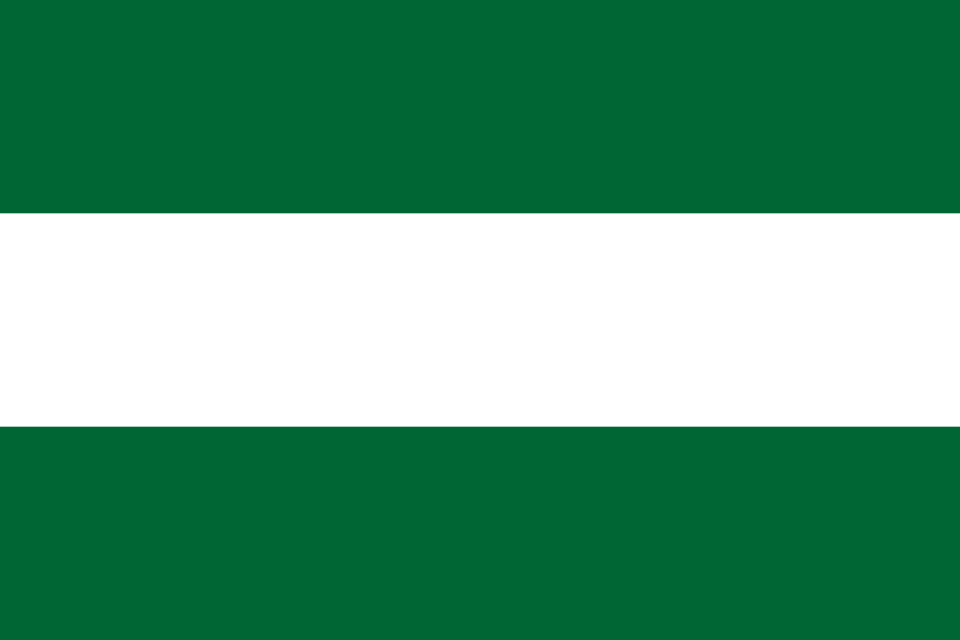
A simple Andalusian tricolour has three equally sized horizontal stripes. The official display may include the coat of arms in the centre of the white band. Its emblem is derived from a proposal made by Blas Infante and endorsed through the 1918 Ronda movement, later formally defined under regional law.
| Flag feature | Description |
|---|---|
| Autonomous community | Andalusia (Andalucía), southern Spain |
| Bands | Green, white, green, all equal height |
| Nickname | Arbonaida, a popular name for the flag |
| Modern symbolic milestone | Assembly of Ronda, 1918 |
| Regional emblem | Hercules with two lions between columns |
| Motto | Andalucía por sí, para España y la Humanidad |
| Current official status | Autonomous-community flag under the Statute of Autonomy |
What do the three green-white-green stripes mean?
The flag is composed of equal horizontal bands, with green at the top and bottom and white in the centre. This arrangement is documented by the Junta de Andalucía and described in the autonomous statute. A drawing with a larger white band or with the stripes vertical does not correctly reproduce the stated layout.
Andalusian interpretations often associate green with hope and the land, and white with peace. These readings are reinforced by the region’s anthem, which directly connects its green and white flag to aspirations for peace and hope. The poetic reading should be distinguished from claims that a particular shade was chosen solely to represent one landscape, dynasty or ancient ruler.
The nickname Arbonaida has become common in regional culture, but identifying the flag accurately requires only the three bands. When the emblem is printed over the white centre, it adds fine heraldic detail without altering the order of the stripes.
Why are Hercules, two lions and columns on the flag?
The centre emblem depicts Hercules, the mythological Greek-Roman hero, accompanied by two lions and two columns. The Columns or Pillars of Hercules refer to the Strait of Gibraltar region, a powerful historical geographical symbol linking the Mediterranean and Atlantic.
The Andalusian government describes the emblem as an expression of the strong but youthful spirit of the people, with Hercules holding and overcoming the lions. The wording used by Blas Infante includes a call for Andalusia’s own effort, for Spain and for humanity. This makes it more than a generic drawing of an ancient warrior.
Children studying the coat of arms should note the difference between a mythological figure used symbolically and a claim that Hercules literally founded the modern autonomous community. The region’s emblem uses myth to communicate cultural identity; its current legal form is a twentieth-century development.
What does the motto say?
The phrase is Andalucía por sí, para España y la Humanidad, often rendered “Andalusia for itself, for Spain and for Humanity.” The government’s historical documents note the refinement of the wording over time. It should not be shortened in an exact emblem reproduction or mistaken for the national motto of Spain.
Why was the 1918 Assembly of Ronda important?
The 1918 Assembly of Ronda was a major event in the development of the modern Andalusian regionalist movement. It approved proposals for symbols including the green-and-white flag. Blas Infante was a significant contributor to the movement and to the public presentation of its flag, anthem and coat of arms.
That does not mean that the colors had no history before 1918. Regionalists drew on older local visual traditions and accounts of green-and-white standards. The crucial difference is that Ronda gave a recognizably modern composition a defined political and cultural role.
Andalusia’s flag became part of its statutory symbols with the establishment of democratic autonomy after Spain’s transition to democracy. The legal recognition of the flag and the separate detailed definition of the emblem belong to that modern autonomous framework, even as the regional flag’s symbolic history reaches further back.
How did the flag become official after Spain’s transition?
Andalusian autonomy expanded after the end of the Franco dictatorship, culminating in its first autonomy statute in 1981. The statute recognized the established green-white-green arrangement, while a separate regional law defined the anthem and coat of arms in accordance with the 1918 Ronda proposals.
The revised Statute of Autonomy in 2007 continued to identify the three equal bands as Andalusia’s flag. Its use in public buildings, civic celebrations and regional institutions reflects the modern constitutional autonomy of Andalusia within Spain.
Many contemporary public flags display the regional arms at the centre of the white band. You may also see a plain tricolour at demonstrations, on private buildings and in sporting events. The distinction affects how detailed the printed emblem is, not which set of colors identifies the region.
How is Andalusia’s flag different from other Spanish regional flags?
The Valencian Community flag has red and yellow horizontal stripes plus an ornate blue hoist band, while Andalusia uses only green and white horizontal bands. The Balearic Islands flag combines red and yellow stripes with a purple castle canton, and the Canary Islands flag has three vertical stripes in white, blue and yellow.
At a glance, the green-white-green Andalusian tricolour can resemble other regional or international flags with similar color combinations. Count the bands, check their order and look for the Hercules emblem in the official form. The green central stripe on Nigeria’s national flag is a vertical-panel design and not the Andalusian pattern.
The national Spanish flag uses horizontal red-yellow-red, with a wide yellow centre. The different color sequences make the two easy to separate even at small sizes.
When is the Andalusia flag displayed?
The flag is visible at regional government offices, schools, civic buildings and local celebrations. February 28, Andalusia Day, is a particularly prominent time for its display, commemorating the 1980 autonomy referendum.
Display arrangements at public bodies follow the applicable Spanish and Andalusian legal requirements. The regional flag does not supersede Spain’s national flag, and it is not the flag of a separate sovereign country.
When making educational graphics, include the plain green-white-green version for rapid recognition, but show the detailed coat-of-arms version alongside it for government and historical context. Avoid claiming every banner without arms is a different territory.
How to draw the Andalusia flag correctly
Draw a horizontal rectangle and divide its height into three equal parts. Color the upper and lower bands green and leave the central band white. That gives a clean three-stripe version suited to a simple flag-identification worksheet.
For an official illustrated version, place the regional emblem at the centre of the white stripe. Hercules should be between the two columns and interacting with the lions, with the relevant inscriptions. Use government reference artwork if exact reproduction is needed: a simplified stick figure should not be labeled as a precise official coat of arms.
A helpful classroom exercise is to compare Andalusia with Valencia and the Canary Islands, asking students to identify the green-white-green flag, the blue-crowned red/yellow flag and the vertical white-blue-yellow flag.
Frequently asked questions
What are the colors of Andalusia’s flag?
Three horizontal equal stripes: green, white and green.
What does the white stripe symbolize?
White is commonly associated with peace in Andalusian symbolism and the region’s anthem.
What does the green color symbolize?
Green is linked to hope in Andalusian symbolism, as reflected in the anthem; other historic associations also exist.
Who is the man with the lions on the flag?
Hercules, a mythological hero shown with two lions between the Pillars of Hercules.
What is the motto on the flag?
Andalucía por sí, para España y la Humanidad.
When was the Andalusia flag introduced?
The green-white-green design was approved at the Assembly of Ronda in 1918 and later became part of Andalusia’s official autonomy symbols.
Is Andalusia’s flag the same as Spain’s?
No. Spain’s national flag is red-yellow-red, while Andalusia’s regional flag is green-white-green.
Does the Andalusian flag always have the coat of arms?
The three-band flag is a recognizable regional design, while the coat-of-arms form is prominent in institutional use.
When is Andalusia Day?
February 28, remembering the 1980 autonomy referendum.
Official sources and image credits
Junta de Andalucía — official symbols
Junta de Andalucía — Flag history, 1918 Ronda
Andalusian official law on anthem and arms
Wikimedia Commons — Andalusia flag image
Wikimedia Commons — plain tricolour
The regional flag rendering comes from Wikimedia Commons; its simplified green-white-green companion from Wikimedia Commons. Converted to PNG for consistent sizing; refer to each file page for attribution and rights.
Illustrations were imported into the FlagExplorers media library as PNG renditions of Wikimedia Commons source files. Graphic reproduction should observe any separate institutional use of protected official emblems. Sources checked November 2026.