Colombia vs Ecuador vs Venezuela Flag: Yellow, Blue and Red Compared
Side-by-side national flag identification, visual differences, historical context and practical examples.
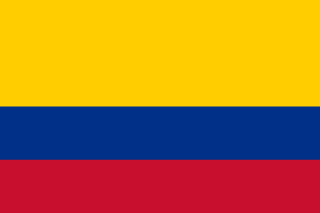
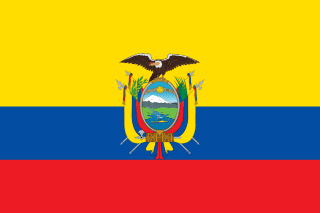
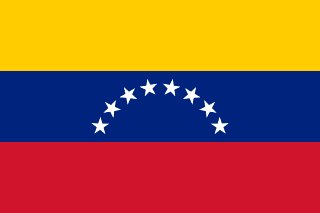
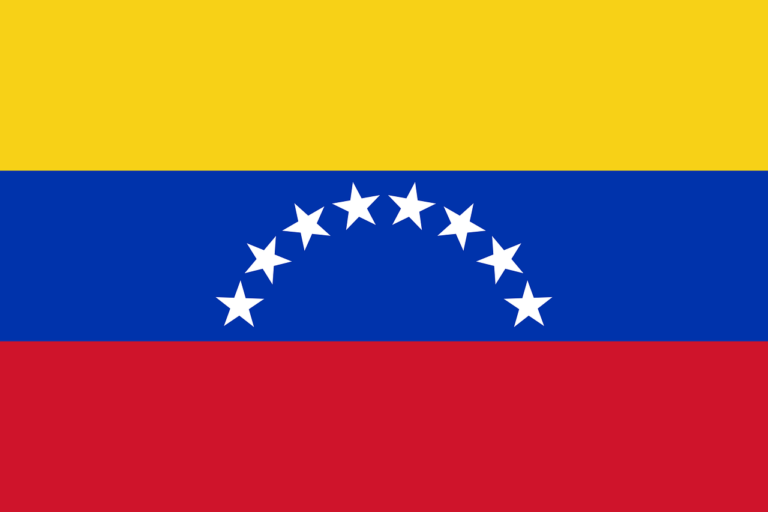
Colombia, Ecuador and Venezuela share yellow, blue and red horizontal stripes through a common independence-era flag tradition. Colombia’s plain national flag has a double-height yellow band and no emblem. Ecuador’s commonly displayed national flag has the same unequal band heights and its national coat of arms. Venezuela uses three equal-height bands with an arc of eight white stars on blue. State, civil and maritime variants complicate some identifications, especially where Ecuador’s plain tricolor is used.
Comparison at a glance
| Feature | Colombia | Ecuador | Venezuela |
|---|---|---|---|
| Stripe heights | 2:1:1 | 2:1:1 | 1:1:1 |
| Ordinary reference emblem | None | National coat of arms | Eight white stars |
| Yellow area | Half of height | Half of height | One-third |
| Stars | None | None | Eight in arc |
| Shared origin | Independence tricolor | Independence tricolor | Independence tricolor |
How to identify the three flags at a glance
The fastest first test is the height of the yellow band. In the Colombian and Ecuadorian designs, yellow occupies the entire upper half of the underlying rectangle. Blue and red each occupy one-quarter of the height. In Venezuela’s flag the three main bands are equal, so yellow ends one-third of the way down rather than halfway.
Then inspect the blue band. Venezuela places eight white five-pointed stars in a curved arrangement there. On the standard Colombian national flag the bands are plain. In the Ecuadorian flag commonly used in international country collections, the national coat of arms overlaps the colored areas near the center.
When only a small portion of a flag is visible, the yellow band’s height can be difficult to judge. The stars provide a particularly useful clue for Venezuela, provided the central region is not hidden by folds. Colombia and Ecuador may require a closer examination of the center.
Do not assume that every yellow-blue-red flag without an emblem is Colombia. Ecuador also has plain tricolor usage in particular contexts, and historical flags may differ from the standardized designs used today. The absence of an emblem is not always sufficient evidence when the two unequal-band arrangements are otherwise identical.
The illustration captions on this page identify the common national reference versions. If you are classifying a real photograph, look for the full flag, the relative band heights, any stars or arms, and a reliable country name or setting before assigning it to a national collection.
Compare the bands with a measured construction
Consider three rectangles each thirty centimeters wide and twenty centimeters high. These dimensions are an educational common canvas chosen to isolate band-height differences; they do not assert that every official flag variant has the same legal aspect ratio.
In the Colombia drawing, measure ten centimeters down from the top. Draw a horizontal line across the full width. Measure another five centimeters down to establish the boundary between blue and red. The yellow field is ten centimeters high, and the blue and red fields are each five centimeters high.
Use exactly the same band-height construction for the Ecuador drawing. The two plain colored bases are identical when drawn in the same colors and proportions. Reserve space for Ecuador’s coat of arms if the exercise depicts the familiar arms-bearing national reference version.
For Venezuela, divide the vertical dimension by three. The yellow, blue and red bands each measure six and two-thirds centimeters. Mark the first boundary about 6.67 centimeters down and the second approximately 13.33 centimeters down. Use the full height when calculating both boundaries so rounding does not accumulate.
Venezuela’s stars are placed on the blue stripe in an upward-convex arc. Use the official reference for the exact positions rather than distributing the stars in a straight line. They are white and five-pointed. The stars should not be enlarged until they overlap the yellow or red stripes.
If learners compare only the base colors, the Colombian and Ecuadorian drawings may be indistinguishable. Venezuela remains distinguishable from its band heights even before its stars are added. This illustrates the difference between an underlying flag geometry and an emblem added to that geometry.
For a digital illustration, make each band a filled rectangle with exact fractional coordinates and put the stars or coat of arms in separate layers. The coat of arms is detailed artwork, so use a documented reference rather than inventing a generic oval shield or replacing the condor with an unrelated bird.
Colombia’s plain tricolor and its meanings
The Colombian national flag is often the simplest member of the comparison group. Yellow forms its large upper band, followed by blue and red in equal smaller bands. The common civil national flag contains no coat of arms or stars.
The Colombian Ministry of Foreign Affairs provides an explanation of the colors in the context of the country’s national identity. It connects yellow with abundance, natural wealth and principles such as sovereignty; blue with the seas linking Colombia to other peoples; and red with life, strength and national aspirations. Other historical accounts sometimes emphasize independence-era sacrifice. Attribute interpretations rather than treating every traditional explanation as a legal construction rule.
Colombia has official flags for particular governmental and maritime uses. Some include emblems or additional devices. The fact that the ordinary flag is plain does not mean every Colombian flag must be plain in every context.
A Colombian coat of arms contains elements associated with the nation’s history and geography, but it should not be inserted into the center of the ordinary tricolor merely to make that design more distinctive. The main national flag and a particular service flag are different visual records.
For identification purposes, a broad yellow band and an otherwise plain arrangement are consistent with the Colombian national flag. If a photograph is taken at a Colombian government institution or a clearly labeled international event, the setting can confirm that identification. Without context, retain the possibility of a plain Ecuadorian flag.
The separate Colombia flag guide explains its symbols and history in greater detail. The comparison here concentrates on how its plain colored base relates to the two neighboring national designs.
Ecuador’s coat of arms: the central difference
Ecuador’s National Assembly describes the national tricolor with a yellow band twice as high as either of the other two. This is the same band-height structure as Colombia. The central coat of arms on the commonly illustrated national flag provides the strongest distinguishing feature.
The Ecuadorian arms have a large condor above an oval shield. The shield contains a landscape, including mountains and a river, together with a vessel and other historical symbols. The complete design also incorporates surrounding heraldic elements. These details are specific to Ecuador and should not be replaced by a simplified generic national emblem.
In a small flag icon, the arms may appear as a patch of color rather than a recognizable landscape. Zooming in can reveal the condor and oval shield. If the emblem is too small to identify but visibly exists in the center, Ecuador is a likely candidate within this group.
Historical accounts supplied by the Ecuadorian presidency distinguish successive flag designs and legal decisions. In 1860, the yellow-blue-red arrangement was restored under Gabriel García Moreno. A legislative decision in 1900 reaffirmed the tricolor. These milestones should not be conflated with every earlier use of the shared independence-era colors.
The plain tricolor is also associated with Ecuador in civil usage. This means that the most common rule, Colombia has no arms and Ecuador has arms, is useful for standard country icons but is not a universal identification rule for every flag in use.
When a source describes an Ecuadorian civil or state flag, preserve that distinction in the caption. A historical photograph or a simplified drawing may omit the arms for a legitimate reason. Conversely, an incorrectly reproduced Ecuadorian icon may omit the emblem unintentionally. Context and source provenance matter.
A detailed lesson can compare the Ecuadorian arms with Colombia’s separate coat of arms. Both countries have national heraldic symbols, but their emblems are not interchangeable. The presence of a shield alone is only the first stage in identifying a particular design.
Venezuela’s eight stars and equal bands
Venezuela is the easiest of the three flags to distinguish geometrically because the yellow band does not occupy half of the flag. The Venezuelan foreign ministry cites the flag law describing three equal horizontal bands and eight white five-pointed stars in the center blue band.
The stars are arranged in an arc with the curve rising toward the yellow band. They should not be placed in the yellow area or spread into two separate rows. Count all eight stars in a modern national reference illustration.
The number of stars changed in 2006, when an eighth star was added to the earlier seven-star arrangement. The change is connected to the historical recognition of Guayana in the independence-era symbolism. A seven-star Venezuelan flag can therefore be a valid historical design, not automatically a drawing mistake.
The state-use version also contains the national coat of arms toward the upper hoist. Ordinary civil reference artwork may omit the arms while retaining the eight stars. This provides another example of the importance of distinguishing a flag’s variant from a completely different national flag.
The common identification test is to look for the curved white star group. Colombia’s ordinary flag has no such arc, and Ecuador’s arms-bearing flag uses a central heraldic scene instead. Even where all three flags use similar colors, the Venezuelan star group is visually distinctive.
A photograph taken before 2006 may show seven stars and should be dated appropriately. A contemporary display can also contain older flags for historical or political reasons. Counting the stars is useful for identifying the design, but it does not by itself establish the date on which a photograph was taken.
For formal drawings, use the official dimensions and current artwork relevant to the intended flag variant. The educational comparison should preserve the equal band heights and the eight-star arc without inventing a precise statutory star-spacing formula.
Why the three flags share the same colors
The common palette originates in the independence movement in northern South America. Francisco de Miranda is associated with an early yellow-blue-red tricolor, which became influential in the Venezuelan independence movement and the broader revolutionary period.
The state often called Gran Colombia united territories that now form Colombia, Venezuela, Ecuador and Panama. Its history belongs to the early nineteenth century, when political boundaries and institutions were changing after independence from Spanish rule. Flags associated with that republic used the related tricolor tradition.
The dissolution of Gran Colombia around 1830 did not erase the shared color heritage. The successor states developed their own institutions and national symbols, retaining yellow, blue and red while making choices about stripe heights, emblems and other distinguishing details.
This history is different from a coincidental resemblance between flags selected in unrelated regions. The three national designs are part of a documented related tradition. Nevertheless, the modern flag of one country must not be described as simply the national flag of another with an optional decoration.
For a classroom timeline, place Miranda’s early tricolor and the independence movement first. Add the formation and dissolution of Gran Colombia, then the individual national design milestones. Ecuador’s restoration of the tricolor in 1860 and Venezuela’s star-count change in 2006 demonstrate that the designs continued to evolve.
Panama, which was part of Colombia until 1903, uses a different red-white-blue quartered national flag. Its distinct design reminds readers that sharing part of a political history does not require preserving the same flag palette forever.
Avoid overinterpreting color origin stories when documentary evidence is uncertain. Popular accounts about the exact personal inspiration for each color can be entertaining, but they are not needed to establish the documented relationship between the three national tricolors. The historical link is stronger than any single anecdote about why an individual selected yellow, blue or red.
Civil flags, state flags and historical versions
A national flag comparison should identify which kind of flag is being compared. The ordinary national reference design used in international flag directories may not be the same as a specialized maritime, military or governmental ensign.
Colombia’s plain reference tricolor is the simplest example. A state or maritime flag may include a badge or an emblem associated with that use. Adding a coat of arms to any tricolor does not automatically make it Ecuadorian; the specific emblem and context must be examined.
Ecuador’s commonly displayed national flag includes the coat of arms. The unadorned tricolor can also appear in civil contexts, making it potentially indistinguishable from Colombia’s plain flag without a label or other evidence.
Venezuela retains its white star arc on the blue band in its modern national design. A coat of arms in the upper hoist indicates a different official-use version. The star group remains a much more useful recognition feature than simply noting the presence or absence of an emblem.
Historical images add a second dimension to the comparison. A flag with seven Venezuelan stars, an old Colombian badge or a previous Ecuadorian flag arrangement should be captioned with its period when known. Do not silently modernize a historical source by replacing its image.
In a database, store current national flags, civil variants, state variants and historical versions as separate records where the evidence supports them. The relationship between records can be represented explicitly rather than merging all images that share a palette.
When a reader asks which national flag they have seen, the correct response may be a conditional answer: the band geometry narrows the possibilities, while the emblem, stars or setting resolves the remaining uncertainty. That is preferable to offering a misleadingly simple rule that fails for legitimate variants.
Practical recognition exercises and common mistakes
For a first exercise, show students three outlines without colors. Mark the first horizontal division halfway down on two and one-third down on the other. Ask which base belongs to Venezuela. The answer depends on geometry rather than the meaning of any color.
Next color all three outlines yellow, blue and red. Add a labeled Ecuadorian coat of arms to one of the unequal-band flags and an eight-star arc to the equal-band flag. Ask learners to identify the standard reference designs and explain their reasoning.
Now remove the Ecuadorian emblem in a second illustration. Ask whether the remaining plain unequal-band flags can be distinguished with certainty. The correct conclusion is that their appearance alone may no longer settle the question. Country labels and context become important.
A map-based exercise can connect the three designs to their countries in northern South America. This reinforces geography and historical relationships without suggesting that the modern states have the same borders as Gran Colombia.
Common drawing mistakes include making all three yellow bands the same height, placing Venezuela’s stars in the wrong stripe, using seven stars in an illustration intended to depict the current Venezuelan flag, and confusing the national coat of arms of Ecuador with that of Colombia.
For sports scores, travel materials and other small graphics, always include the country name or an unambiguous label. The resemblance is strong enough that a cropped picture may be difficult to interpret. A reliable caption is not an admission of bad design; it is a basic aid to accurate and accessible information.
Remember the practical sequence: check band height, look for the star arc, inspect any coat of arms, and verify the context if the design is plain. This method identifies the most common references while respecting the legitimate exceptions.
Frequently asked questions
Which flag has eight stars?
Venezuela’s current national flag.
Which flags have a double-height yellow band?
Colombia and Ecuador.
Why are they similar?
They share an independence-era tricolor tradition associated with Miranda and Gran Colombia.
Can Colombia and Ecuador look identical?
Yes, where an Ecuadorian plain tricolor is displayed, context may be necessary.
Sources and artwork
Colombian Ministry of Foreign Affairs: national symbols
Ecuador National Assembly: national flag day and band dimensions
Ecuador Presidency: flag history
Venezuelan Ministry of Foreign Affairs: national flag law
Flag artwork: Flagpedia / FlagCDN, public-domain reference artwork. Colors on screen are illustrative. Independent educational comparison; no official endorsement implied. Reviewed November 2026.