Belgium vs Germany Flag: Black, Yellow and Red Compared
Side-by-side national flag identification, visual differences, historical context and practical examples.
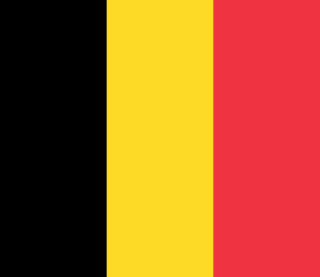
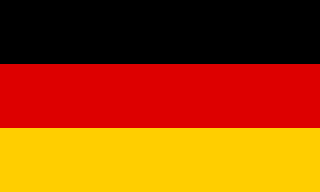
Belgium’s national flag has vertical black, yellow and red stripes from the hoist. Germany’s national flag has horizontal black, red and gold stripes from top to bottom. The colors are similar, but the direction and order are different. Belgium usually has yellow in the middle and red at the outer edge; Germany has red in the middle and gold at the bottom.
Comparison at a glance
| Feature | Belgium | Germany |
|---|---|---|
| Stripe direction | Vertical | Horizontal |
| First stripe | Black at hoist | Black at top |
| Middle stripe | Yellow | Red |
| Last stripe | Red at fly | Gold at bottom |
| Plain national flag emblem | None | None |
| Typical official/reference ratio | 13:15 ceremonial/reference; 2:3 common | 3:5 |
How to recognize the flags instantly
The biggest difference between the Belgian and German national flags is not the exact shade of yellow or gold. It is the orientation of their bands. Belgium’s bands are vertical, extending from the top edge to the bottom edge of the usual rectangular illustration. Germany’s bands are horizontal, running from the hoist to the fly.
In the usual front view, Belgium places black beside the pole, yellow in the center and red at the free edge. Germany places black across the top, red in the middle and gold across the bottom. The center stripe is therefore a useful second test: yellow indicates Belgium and red indicates Germany.
This second test also works when a flag is rotated ninety degrees in a graphic or displayed vertically at a public event. Rotating Germany’s flag may place black at one side, but the red stripe stays between black and gold. Rotating Belgium’s flag may make the bands horizontal, but yellow remains between black and red.
A common mistake is to identify any black, yellow and red tricolor as Germany. The colors alone do not establish the country. Another mistake is to arrange Germany’s horizontal stripes as black, gold and red because that is the order used in the Belgian flag.
Use the pair of features together: direction in the standard front view and the color of the middle stripe. That rule can distinguish the two even when a photograph contains only part of the flag, provided enough of the central band and its neighbors can be seen.
Yellow and gold: what the color names actually mean
The German flag’s colors are conventionally described as black, red and gold. The gold stripe is normally rendered as a yellow or golden-yellow color on cloth and screens; it is not required to appear as metallic foil. The term gold is part of the historical and constitutional description of the color combination.
Belgium’s national colors are black, yellow and red. The yellow in its flag is often reproduced in a bright shade. Both designs can therefore appear to have a very similar palette, particularly when printed with the same inks or displayed on the same device.
It is tempting to tell the flags apart by claiming that Germany always uses a darker or more orange yellow. That is not reliable. Fabric batches, printing and digital artwork can differ, and photographs taken in different light can exaggerate or reduce the distinction.
The most accurate color comparison is between official references under similar viewing conditions. Even then, the colors are less useful than the geometry. The middle stripe remains red for Germany and yellow for Belgium regardless of ordinary variations in saturation.
If making a classroom picture, use a clearly distinguishable black, red and yellow or gold. Do not add gradients or metallic textures inside the bands simply because the German color is called gold. The plain national flags are made from solid colored areas.
For formal production, refer to the appropriate government specifications rather than copying a color code from an unrelated sports icon. An educational color sample can be useful without being a universal standard for official textiles or printed materials.
Why Belgium uses black, yellow and red
The Belgian federal government’s account connects the flag colors with the heraldic shield of the former Duchy of Brabant. The shield included a gold lion on a black ground, with red details such as claws and tongue. This provides a documented historical explanation for the combination of colors.
The Belgian Revolution in 1830 and the creation of the modern Belgian state form the setting in which the national tricolor emerged. Early revolutionary displays and the eventual standardized national flag should be distinguished from each other when reading historical sources. The modern design has its own established stripe arrangement.
A national flag based on heraldic colors does not necessarily retain the full heraldic figure. Belgium’s national flag reduces the palette to three plain vertical bands; the Brabant lion does not appear on the ordinary national tricolor.
This is why the flag of a Belgian province or region can share some of the colors while displaying a lion or another emblem. It may draw on related local heraldic traditions but represent a different jurisdiction. The flag of Flanders, for example, is not merely a decorated version of the Belgian national flag.
Belgium’s constitutional description names the national colors. The arrangement recognized in modern flag usage is black at the hoist, yellow in the middle and red at the fly. It is useful to distinguish the wording of constitutional provisions from the actual reference illustrations used for display.
Belgium’s national history and local heraldic background are different from the history of Germany’s black-red-gold movement. The color resemblance is therefore not enough to establish a common origin for both flags. The two designs communicate different national identities.
Why Germany uses black, red and gold
The German Bundestag traces black, red and gold through the history of movements for national unity and liberty in the nineteenth century. These colors became associated with political aspirations that developed across the German-speaking states before the establishment of the modern Federal Republic.
The nineteenth-century Hambach Festival and the Frankfurt National Assembly are important milestones in the history of black-red-gold. They help explain why the modern flag cannot be understood solely as a decorative tricolor selected for visual harmony.
Germany used other national flag arrangements during different political periods. In particular, the black-white-red tricolor associated with the German Empire is historically distinct from the black-red-gold design used by the Weimar Republic and the modern Federal Republic.
After World War II, the Federal Republic established black, red and gold as its federal colors. The German Democratic Republic used the same basic tricolor with a state emblem added in 1959. The emblem is a major identifying feature of the historical East German flag.
German reunification in 1990 extended the Basic Law to the eastern federal states. The plain black-red-gold flag became the national flag of reunified Germany. A picture with the historical East German emblem should therefore be labeled according to its actual period and political context.
The ordinary current national flag does not contain a federal eagle. A flag bearing an eagle shield may belong to a government service variant or another official context. The exact status and rules of such a flag should be checked before using it as a general national symbol.
When comparing Germany with Belgium, the relevant historical point is that the two color traditions have independent explanations. Germany’s colors are strongly tied to movements for unity and democratic political identity, while Belgium’s colors derive from Brabant heraldry and the formation of the Belgian state.
Compare flag proportions without confusing display variants
The German national flag is conventionally constructed with a height-to-length ratio of three to five. On a thirty-centimeter-high drawing, the horizontal length is fifty centimeters, and each of its three equal horizontal bands measures ten centimeters high.
Belgium is frequently illustrated using an unusually near-square official reference ratio of thirteen to fifteen. At twenty-six centimeters high, such a drawing measures thirty centimeters long. Each vertical stripe would then be ten centimeters wide.
In practical use, however, many Belgian national flags are made in the more familiar two-to-three proportions, especially in international displays. It is therefore not safe to identify a flag as Belgian or German solely by how close it looks to a square. The orientation and middle stripe are much more dependable.
A useful drawing exercise is to create Belgium and Germany at the same vertical height while retaining each selected reference proportion. This lets students see the differences in both the ratio and the colored area arrangement rather than forcing them into identical frames.
On a website, use a container that fits the whole flag without stretching it. If a Belgian near-square reference is expanded horizontally to match Germany’s ratio, the three bands remain equal but the appearance changes. The distortion does not transform the flag into Germany, yet it reduces the accuracy of the representation.
For an event organizer, the relevant dimensions may depend on the specific display rules and supplier’s approved specifications. Do not infer that every rectangular Belgian flag with a non-ceremonial ratio is unofficial. Consult current national guidance if the flags are being prepared for formal use.
Draw both national flags step by step
For a standard German drawing, begin with a rectangle thirty centimeters long and eighteen centimeters high. Measure six centimeters down from the top, then twelve centimeters. Draw the two horizontal lines across the full width of the rectangle.
Fill the upper area black, the middle area red and the lower area gold. Each region should measure thirty by six centimeters. There is no coat of arms in the ordinary national flag. Do not place a gold stripe between black and red.
For the near-square Belgian reference, draw a rectangle thirty centimeters long and twenty-six centimeters high. Measure ten and twenty centimeters from the left edge and draw two vertical lines through the whole height. Fill the first area black, the middle yellow and the final area red.
Place the two finished drawings side by side with the hoist clearly marked on each. Compare the center bands before comparing the color shades. The Belgian central band is vertical and yellow; the German central band is horizontal and red.
A second classroom exercise can rotate both papers ninety degrees. Ask learners which feature changes and which feature stays the same. The vertical or horizontal orientation changes relative to the page, but the middle stripe remains the same color. This is why the center stripe offers a useful clue for unusual displays.
For a third exercise, calculate the colored areas. Each band occupies one-third of the total flag area in either design. Equal areas do not imply the same arrangement, and the location of those areas is essential to identifying the symbols.
Digital drawings are equally straightforward: create three equal rectangles, position them according to the appropriate axis, and use matching boundaries without gaps. Export with the aspect ratio locked. Add the country name outside the image rather than modifying the flag itself.
Other black, red and yellow flags to consider
Uganda’s national flag uses repeated horizontal stripes in black, yellow and red, together with a central emblem containing a crested crane. The repeated six-stripe pattern and the central figure separate it from both Germany and Belgium.
Angola’s flag uses red and black horizontal fields with a yellow central emblem. Its basic geometry has two major colored fields, not three equal stripes. A crop may make the shared colors appear similar, but the complete flag contains an unmistakable additional design.
The Aboriginal Flag of Australia also uses black, red and yellow, with a yellow disc at the center. It is a different symbol with its own history and official status. It should not be mistaken for a tricolor merely because the three color names match.
A flag of a Belgian province or German state may display a coat of arms and different stripe arrangements. If you see an eagle, lion or shield, check the jurisdiction and usage rather than assuming that the image is a variant of one of the two plain national flags.
Historical flags also require careful dating. The German Empire’s black-white-red design and the former East German flag can appear in historical references. They are not the current plain national flag of reunified Germany.
The comparison process is therefore to count the bands, determine their direction, inspect the center and identify any emblem. With those features, the majority of black-red-yellow flags can be separated before any subtle color matching is required.
Identification in photographs, sports and international displays
A flag outside a building may hang downward rather than extend in the wind. If you see its colors arranged unusually, find the attachment edge and inspect the center band. The Belgian flag’s yellow center remains between black and red, while Germany’s red center remains between black and gold.
For a sports scoreboard, look at the country code or team label as well as the image. A poorly cropped flag may obscure one band, but a reliable label can confirm the intended country. Do not choose a team solely from a partial block of black and red pixels.
In printed geography materials, assign Belgium and Germany to separate records and preserve the correct arrangement for each. A color-only classification could group them correctly as similar palettes while still being insufficient to identify them individually.
A display of neighboring countries may use uniform flag dimensions for practical reasons. In that case, the proportions are deliberately normalized and should not be treated as a primary country identifier. The stripe direction and center color remain the strongest clues.
The basic distinction can be taught in a single sentence: Belgium is black-yellow-red vertically, Germany is black-red-gold horizontally. For a photograph of an unusual orientation, remember the middle band. This combination of rules is more dependable than relying on the exact hue of the yellow or gold stripe.
Frequently asked questions
Is Belgium’s flag horizontal?
The standard national flag has vertical bands.
Which flag has red in the middle?
Germany.
Which flag has yellow in the middle?
Belgium.
Are the colors historically related?
The similar palette has distinct documented historical origins in the two countries.
Sources and artwork
Belgian Federal Government: flags of Belgium
German Bundestag: the federal flag
Flag artwork: Flagpedia / FlagCDN, public-domain reference artwork. Colors on screen are illustrative. Independent educational comparison; no official endorsement implied. Reviewed November 2026.