Limousin Flag: Black Ermine Spots, White Field & Red Border
Discover Limousin’s historical banner, heraldic symbols, distinctive colours and how the old province relates to today’s French administrative regions.
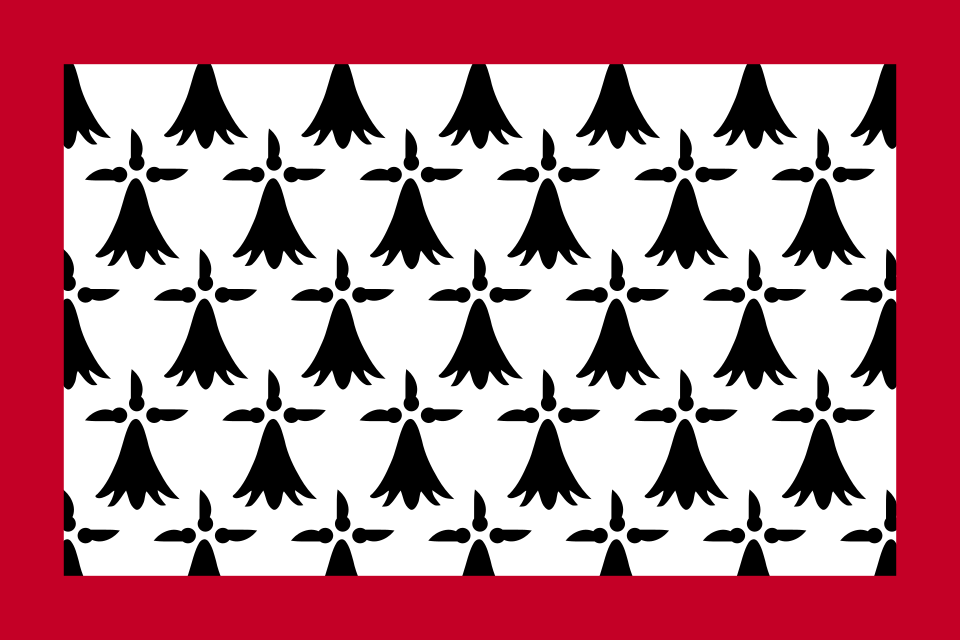
Current status: Historical province and former French administrative region; its territory is now mainly within Nouvelle-Aquitaine following the 2016 reform. Limousin lies in west-central France, traditionally associated with the Corrèze, Creuse and Haute-Vienne departments. Limoges is the best-known major city, while Tulle and Guéret are important departmental centres. The article focuses on this distinct traditional emblem, rather than relabelling a modern French regional council’s logo.
Limousin flag at a glance
| Historic area | Limousin, France |
|---|---|
| Flag classification | Traditional / historical province or cultural flag |
| Key places | Limoges; Tulle; Guéret |
| Origins | Arms linked to historic Viscounts of Limoges; heritage use |
| Main design | They represent heraldic ermine fur, associated with the historical heraldry of the Viscounts of Limoges and related noble houses. |
| Modern administration | Historical province and former French administrative region; its territory is now mainly within Nouvelle-Aquitaine following the 2016 reform |
What does the traditional flag look like?
The traditional Limousin banner uses an ermine field—a white background covered with repeated small black ermine-tail shapes—and a continuous red border around the outer edge. It is a banner of arms, not a black-and-white modern logo.
The exact pattern shown on the illustration should be named, since many historical French areas have more than one provincial arms banner or later cultural flag.
What do the symbols mean?
The black ermine spots come from heraldic fur, which represents stylised stoat tails on white winter fur. The design is associated with the historic house of Penthièvre and the Limoges viscounts, linking Limousin’s arms to Breton dynastic heraldry.
The black marks are not birds or ordinary ink dots. Their three-pointed medieval stylisation is characteristic of the heraldic ermine tail; historical artists have drawn the shapes with different levels of detail.
Meaning of the colours
White and black create the ermine pattern, while a red border called a bordure gules frames the field. The red edge is an essential difference from the plain ermine device of some Breton traditions.
Heraldic colours identify families, territories and political traditions. Not every conventional colour can be reliably translated into a modern value or environmental association.
History of this regional emblem
Limousin’s provincial arms were assigned or described through heraldic scholarship connected with the Viscounts of Limoges. The former French regional council made use of the ermine-and-red-border emblem, but the administrative region of Limousin ceased to exist independently in 2016.
The age of an old coat of arms and the much later administrative reforms that reshaped French regions are separate historical questions.
Where is the historical area?
Limousin lies in west-central France, traditionally associated with the Corrèze, Creuse and Haute-Vienne departments. Limoges is the best-known major city, while Tulle and Guéret are important departmental centres.
French historical provinces have never had perfectly fixed modern boundaries. A name on a heritage flag does not automatically name today’s elected regional council.
Traditional flag vs current French region
Historical province and former French administrative region; its territory is now mainly within Nouvelle-Aquitaine following the 2016 reform
This featured banner is explained as a historical or cultural design. Current regional administrations may use other flags, official logos, coats of arms and civic branding.
Similar French flags compared
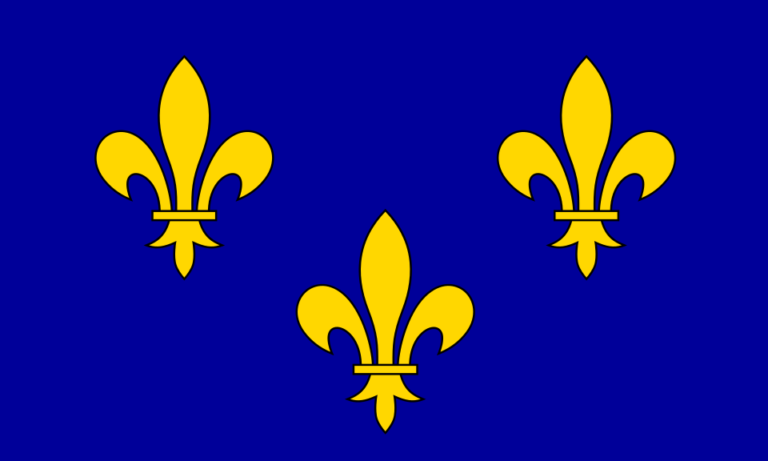
Brittany’s Gwenn ha Du has black-and-white horizontal stripes and ermine marks only in a canton. Limousin uses an all-over white ermine field bordered in red. Berry also has a red border but a blue centre with three gold lilies rather than ermine.
For identifying a historical French flag, look closely at the placement of lilies, the shape of any red border, the number of animals or castles, and whether the background is quartered.
How to reproduce the illustrated flag
The traditional Limousin banner uses an ermine field—a white background covered with repeated small black ermine-tail shapes—and a continuous red border around the outer edge. It is a banner of arms, not a black-and-white modern logo.
Download the original vector artwork from Wikimedia Commons if precise curves, medieval charges or heraldic border details are important. Do not substitute an unsourced illustration of a different historical variant.
Frequently asked questions
Why does Limousin’s flag have black ermine marks?
They represent heraldic ermine fur, associated with the historical heraldry of the Viscounts of Limoges and related noble houses.
Is this currently an official French region flag?
Historical province and former French administrative region; its territory is now mainly within Nouvelle-Aquitaine following the 2016 reform The artwork above is a historical or traditional design.
Which city helps locate the historic region?
Limoges; Tulle; Guéret.
What is the origin of the emblem?
Arms linked to historic Viscounts of Limoges; heritage use.
Is this France’s national flag?
No. France uses the blue-white-red vertical tricolour as the national flag. This is a local heritage design.
Is the image freely reusable?
Check the linked Commons file for the specific artist’s licence, any required credit and separate restrictions governing official symbols.
Sources and image credit
Limousin traditional flag: historic and heraldic sources
French territorial flag index — historical and current designs
Traditional flags versus flags and logos of modern French regions
Wikimedia Commons image: Flag of Limousin.svg. Scaled SVG-to-PNG rendering. Verify creator, licence and any attribution requirements from the original file before reusing the image.
French national flag — blue, white and red explained.
Independent educational guide. It does not claim to be an official publication of a regional council. Reviewed 20 November 2026.