Isle of Skye Flag: Celtic Ring Cross, Birlinn & Five Oars
Why does the Skye flag have a golden Nordic cross interlaced with a white ring and a traditional boat? Explore the five peninsulas and 2020 island flag vote.
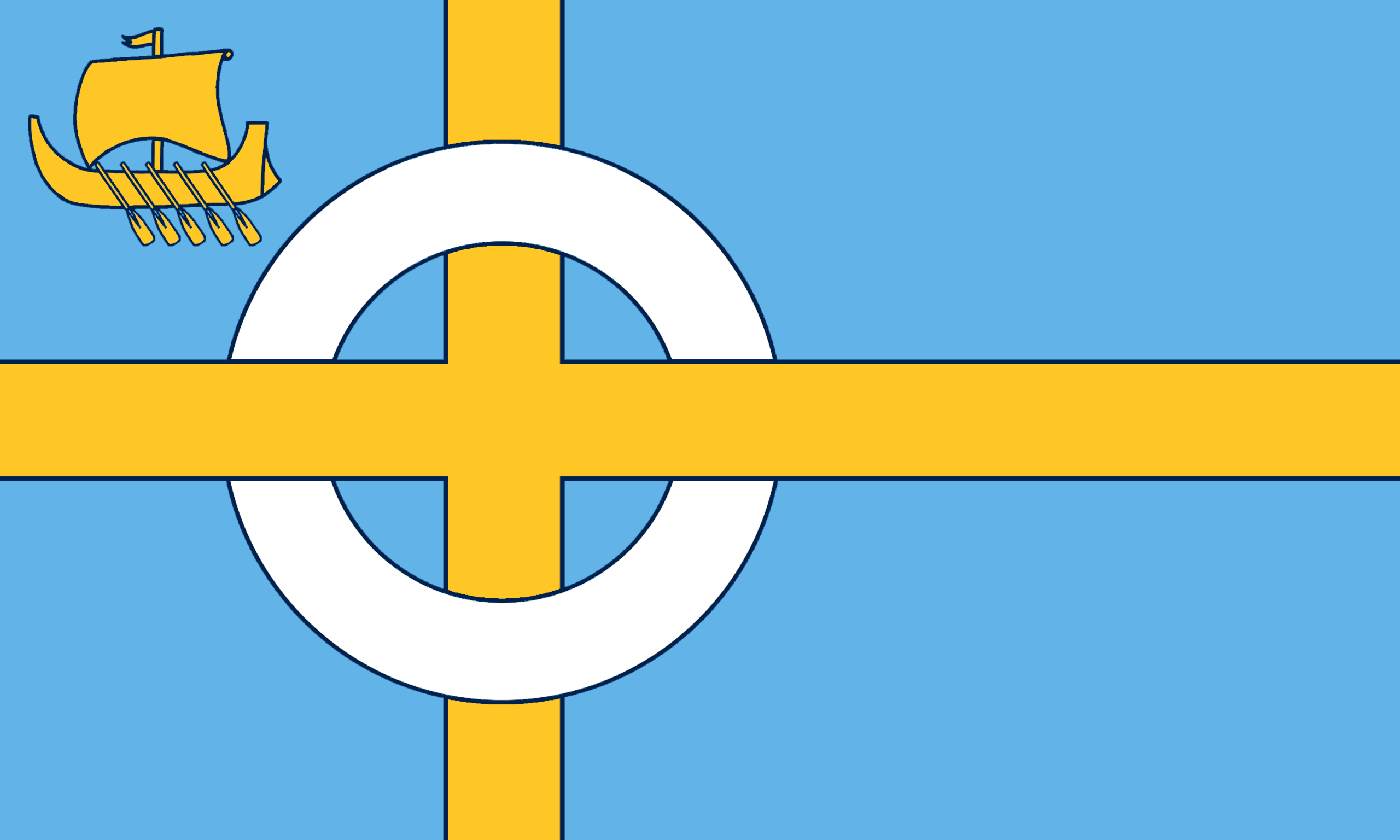
Why does the Skye flag have a golden Nordic cross interlaced with a white ring and a traditional boat? Explore the five peninsulas and 2020 island flag vote. This guide identifies the precise flag pattern and distinguishes documented contemporary symbols from older legend or heraldic tradition.
The principal reference is the Flag Institute UK Flag Registry, which records the design, proportions and historical description. Public flag registration and governmental national-flag recognition are different categories.
Skye flag at a glance
| Feature | Details |
|---|---|
| Place | Isle of Skye, Inner Hebrides, Scotland |
| Flag Institute date | 24 September 2020 |
| Unveiling | 24 August 2020, Portree |
| Designer | Calum Alasdair Munro, then aged nine |
| Field | Light blue |
| Cross and ring | Gold Nordic cross and white Celtic ring |
| Top-left symbol | Golden birlinn with five oars |
| Oars symbolize | Trotternish, Waternish, Duirinish, Minginish, Sleat |
| Registry code | UNKG7465 |
The regional or island designation used here follows the UK Flag Registry’s own categorization. The flag can be recognized and displayed as a community symbol without changing the region’s constitutional status.
appearance
What does the Isle of Skye flag look like?
The field is pale blue, crossed by a thick yellow Scandinavian cross. A large white ring interlaces the cross’s centre, turning the image into a stylized Celtic cross. In the upper-left canton sits a golden traditional sailing boat.
cross
Why combine a Scandinavian cross with a Celtic ring?
The two shapes evoke Skye’s Scottish Gaelic and Norse-influenced past. The yellow Nordic cross provides an overall framework while the white ring makes the central form look like a Celtic stone cross.
boat
What is a birlinn?
A birlinn is a traditional wooden sailing and rowing vessel associated with the Hebrides and the medieval maritime Kingdom of the Isles.
oars
Why does the galley have five oars?
The Flag Institute says the five oars refer to Skye’s five ‘wings’ or peninsulas: Trotternish, Waternish, Duirinish, Minginish and Sleat.
blue
Why is the background light blue?
Light blue is connected to Skye’s name and to the colours of its shinty team, according to the Flag Institute.
designer
Who designed Skye’s island flag?
Calum Alasdair Munro, a nine-year-old pupil at Bun-sgoil Cille Mhoire in north Skye, designed the winning flag.
dates
Why are two 2020 dates reported?
The Flag Institute lists 24 September 2020 as the formal flag date and separately describes an unveiling in Portree on 24 August 2020 after delays related to the pandemic.
comparison
Skye vs Caithness and Sutherland flags
Caithness has a blue Nordic cross on black with a golden galley and raven. Sutherland combines black saltire and Nordic cross on white with a yellow star.
drawing
How to draw the Isle of Skye flag
Fill a 3:5 rectangle light blue, add an off-centre yellow Nordic cross, then overlay a white interlaced ring at its centre. Add a small golden birlinn at the upper-left.
Frequently asked questions
When was the Skye flag formally dated in the registry?
24 September 2020.
Who designed it?
Calum Alasdair Munro, aged nine at the time.
What is the boat called?
A birlinn, a traditional Hebridean vessel.
Why are there five oars?
They refer to five Skye peninsulas or ‘wings’.
What does the ring mean?
It helps transform the Nordic cross into a Celtic ringed cross.
What colour is the background?
Light blue.
Where was the flag unveiled?
Portree.
Is Skye’s flag the same as Scotland’s?
No; it is an island community flag, not the national saltire.
References and image credits
Flag Institute — Skye flag, UK Flag Registry
Featured flag artworkRegistered PNG artwork reproduced from the same Flag Institute flag page. The Registry states its illustrations are free to download and reuse. Used for educational flag identification, without any implied governmental endorsement.
Factual review dated November 2026. Historical and symbolic claims are attributed to the Registry and, where relevant, labelled as tradition.