Glamorgan Flag: Three White Chevrons on Red & Welsh History
What do the three white chevrons represent on Glamorgan’s historic flag? Learn Iestyn ap Gwrgant, Morgannwg and the earliest recorded heraldic use.
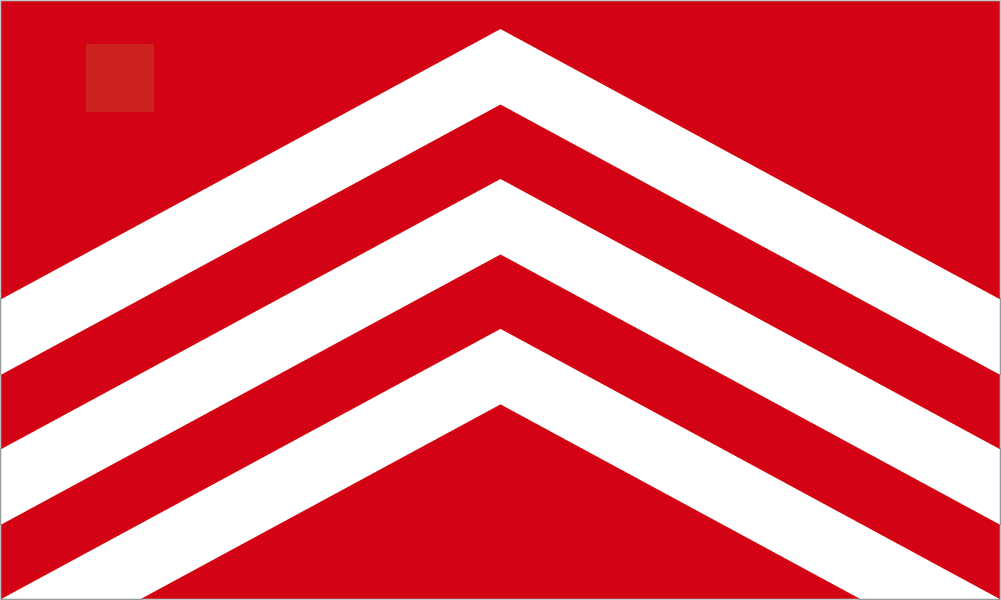
What do the three white chevrons represent on Glamorgan’s historic flag? Learn Iestyn ap Gwrgant, Morgannwg and the earliest recorded heraldic use. The details below distinguish traditional attributions and later records from modern flag registration, and explain the visual elements using identifiable evidence.
The primary reference is the Flag Institute’s UK Flag Registry entry. Historic county flags may remain in use even where today’s local-government boundaries differ from earlier county boundaries.
Glamorgan flag at a glance
| Feature | Details |
|---|---|
| Historic county | Glamorgan / Morgannwg, south Wales |
| Field | Red |
| Main emblem | Three broad white chevrons |
| Attributed ruler | Iestyn ap Gwrgant (c.1045–1093) |
| First recorded family use | Lleision d’Avene, 12th century |
| Local identity | Morgannwg and its historic county successors |
| Registry code | UNKG7438 |
| Ratio | 3:5 |
Scope: This guide concerns the registered historic county flag and its symbolism. In British vexillology, registration by the Flag Institute is a recognized reference for community designs; it is not by itself a separate governmental grant of national sovereignty.
appearance
What does the Glamorgan flag look like?
The entire flag is red, with three thick white chevrons stacked vertically. Each chevron forms a pointed roof-like V in heraldic geometry.
chevrons
What is a chevron?
A chevron is an inverted-V-shaped or peaked band used widely in heraldry. Glamorgan’s flag repeats three white ones against red.
iestyn
Who was Iestyn ap Gwrgant?
Iestyn ap Gwrgant, a ruler associated with Morgannwg, is the person to whom later heraldic authorities attributed the three-chevron arms.
evidence
When do the chevrons first appear in records?
The Flag Institute identifies Iestyn’s descendant Lleision d’Avene as the first recorded user of the emblem in the twelfth century.
motto
Does the Glamorgan flag have a motto?
The associated family and Glamorgan tradition includes the Welsh motto ‘A Ddioddefws A Orfu’, commonly rendered ‘He who suffers, triumphs’.
history
How did the design survive into modern use?
A number of South Wales local authorities incorporated the three chevrons into their later civic heraldry, maintaining the emblem’s public visibility.
geography
Is historic Glamorgan the same as a current council area?
Historic Glamorgan covers an extensive part of south Wales, including cities, valleys and coastal communities now governed through several different local authorities.
comparison
Glamorgan compared with Anglesey and Pembrokeshire
Anglesey features three golden lions and a gold chevron on red. Pembrokeshire uses a broad yellow cross on blue with a central Tudor rose.
drawing
How to draw the Glamorgan flag
Fill a rectangle red and draw three equal-thickness white chevrons across it, points directed upward as in the reference artwork.
Frequently asked questions
How many white chevrons are on Glamorgan’s flag?
Three.
What is the background colour?
Red.
Who is associated with the arms?
Iestyn ap Gwrgant in traditional attribution.
When are they first documented?
The twelfth century, through the family of Lleision d’Avene.
Is a dragon on the flag?
No, only three white chevrons.
Does the Glamorgan motto appear on the flag?
No.
Is Glamorgan a sovereign country?
No, it is a historic county of Wales.
How is it different from Anglesey?
Anglesey has gold lions and a gold chevron; Glamorgan has three white chevrons.
Sources and illustration credits
Flag Institute — Glamorgan flag (UK Flag Registry)
Image:Registered PNG flag illustration downloaded from the Flag Institute’s Glamorgan entry. The Institute states its Registry’s flag artwork is free to download and reuse. Flag imagery is reproduced for independent educational identification, without an endorsement claim.
Source-checked November 2026. Historical arms attributed to ancient figures are distinguished from modern archival proof where appropriate.